How property executives are cashing in on the AI boom
Charter Hall is selling land to data centre developers at large premiums and leasing warehouses to its suppliers rather than building the facilities itself, and chief executive David Harrison is questioning whether the capital pouring into artificial intelligence will earn a return.
Instead, the company wants to capture the industrial demand that comes with building the facilities.
“I’m just happy to sell my land at massive premiums to data centre developers, which we’ve been doing consistently,” Harrison told the Property Congress in Brisbane on Wednesday.
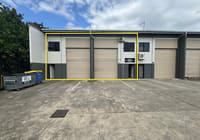
“The way we’ve been playing it is [to] get decent tenants that are suppliers to the growth in the construction of data centres, lease into my warehousing and maintain the 100 per cent occupancy,” he said. “That’s how we’re going to work.”
AI demand spreads beyond data centres
QIC Real Estate managing director Deborah Coakley said greater computing power could underpin industries such as medical research and clinical trials, giving landlords the chance to develop the specialised buildings and precincts that grow up around them.
She pointed to QIC’s involvement with quantum computing company PsiQuantum, and the potential to bring computing infrastructure together with universities and medical research.
“Does that require a lab? Of course it does,” she said. “Wouldn’t we love to build those labs for them? Of course.”
For Coakley, the opportunity lies less in the buildings that house the computing equipment than in the wider ecosystem that develops around them.
“That all requires real estate,” she said. “It requires real estate brains to put the site together, to manage those sites and bring precincts to life.”
Power is the bottleneck
Harrison said he was wary of investing in the data centres underpinning the boom, warning their immense electricity needs were fast becoming a major constraint. He pointed to NextDC, whose stock price dipped 40 per cent hours before his comments.
“We’ve just seen NextDC plummet today and go into a trading halt after having to announce that they’ve got delays in procuring power in Victoria,” he said.
His comments came as developers scramble to lock in the electricity needed to support the rapidly expanding computing capacity.
“In this country, everyone’s been running around going to the power suppliers trying to pre-purchase forward volume of energy to be able to power their data centres,” Harrison said. “They’re power-hungry things.”
He said the sheer scale of that consumption raised questions about how much data centre capacity the existing power system could absorb.
“I think this is a big problem,” he added.
Workers are now ‘competing against robots’
Harrison said AI and automation could reshape bargaining power between employers and employees and speed up the push to bring workers back to the office.
“Australians are not just competing with each other for a job,” he said. “They’re now competing against robots.”
Charter Hall’s own industrial portfolio showed how dramatically technology could shrink the workforce needed to run a building, he said.
“I can’t tell you the amount of industrial we’ve built in the last 15 years that has taken 300 and 400 people on site to maybe 30 because it’s all automated,” Harrison said.
The same shift could bear down on white-collar workers, he added, particularly if the economy softened and unemployment rose.
Five days back in the office
Domain president Jason Pellegrino echoed Harrison in a later session, saying AI was changing the competitive equation for employees.
But here’s the paradox: although there may be fewer workers, the ones that remain will be in the office, potentially improving office demand.
Domain and CoStar are moving staff back into the office and have taken new space in the Sydney CBD to support the shift.
“We’re probably the first technology company in Australia that is actually putting in our five-day office mandate,” he said.
The return-to-office push was not solely about employers regaining bargaining power, Pellegrino said; AI was also shortening the useful life of professional skills, making it more important for staff to keep learning from colleagues.
“You will need to be in an office to learn, to develop and grow,” he said. “The data that I’ve seen [indicates that] a skill you learned had a lifetime of roughly 20 years – that skill timeline, or the lifeline with AI, is dramatically dropping.
“So you want to be around people to make sure that you’re up and running and continuously learning.”