Australia’s self-storage pipeline faces reality check
Australia’s appetite for self-storage has spurred a rush of new development, but some projects are now being abandoned as developers find the sector isn’t as simple as “build it and they will come”.
Strong revenue growth during and after COVID drew new players into the sector, with developers from the office and industrial markets among those looking to capitalise on the boom.
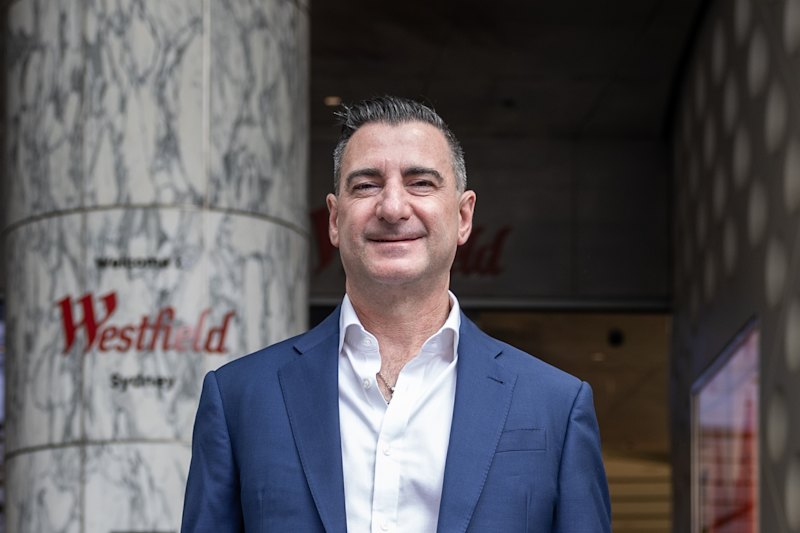
But Linda Sharkey, managing director of Four Leaves Property, said enthusiasm for self-storage had run ahead of the fundamentals in some locations.
“They’re missing the fact that you need to call upon a certain amount of people in the catchment to use it, and there are only so many people that need storage at any point in time,” Sharkey said.
That reality is beginning to show up in the development pipeline.
Four Leaves Property’s Q2 2026 Self Storage Supply Quarterly Review was tracking 125 projects across seven major markets – Sydney, Melbourne, Brisbane, Perth, Adelaide, Canberra and Auckland.
Sharkey said the comparable figure across those markets had since increased to 132, but the headline number hides a very different trend.
“What we are seeing happening is fewer completions, slower completions, more abandonments,” she said.
Some projects are reaching the point where expected revenue no longer supports development, while others were conceived by developers hoping to sell the completed facility to an operator, only for that buyer never to emerge.
“So, it’s less about the pipeline number coming down and more about the completion rate slowing down,” Sharkey said.
Rising supply resets pricing
Sharkey said that Australia’s net storage area typically grew by about 2 to 4 per cent a year.
However, demand accelerated sharply during COVID as household moves were disrupted, the housing market surged when restrictions eased, and small businesses increasingly turned to self-storage as a flexible alternative to longer commercial leases.
Revenue growth hit double digits in some markets, and the subsequent rush to add capacity pushed annual net storage area growth to about 7 to 8 per cent in some periods, according to Sharkey.
But more storage does not automatically create more customers.
New facilities often discount rates to fill available space. When several open in the same catchment, established operators can also be forced to respond.
“It sort of resets pricing,” Sharkey said.
She said pockets of temporary oversupply had already emerged in some outer growth corridors of Sydney and Melbourne.
Demand is also becoming less certain.
In a separate September analysis, Four Leaves warned that several of the forces that have traditionally driven storage demand were weakening.
Net overseas migration fell 5.6 per cent in the year to March, while dwelling approvals dropped 3.6 per cent in July. The analysis also warned that pressure on household budgets could see some customers reduce their storage or leave altogether.
Four Leaves stressed it was not predicting a collapse in demand, but said the industry could no longer assume population growth and housing activity would provide the same tailwinds as in previous years.
“There is space for more storage in this country,” Sharkey said.
“In fact, there’s probably space for a lot more storage. But it needs to be added over time.”
Catchment strength dictates viability
For developers, that makes choosing where to build increasingly important.
Sharkey said around 70 to 80 per cent of customers at a typical self-storage facility come from the local residential catchment.
Moving house, renovating, divorce, deaths and households splitting or combining are among the everyday events that create demand. Small-business use is growing, but residential customers remain dominant.
Sharkey compares the model to a shopping centre: a facility ultimately relies on attracting enough people from the area immediately around it.
That can create a property dilemma.
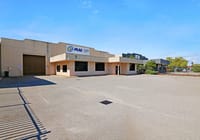
Industrial land may offer relatively affordable sites where self-storage is a permitted use, but locating too deep inside an industrial precinct can disconnect a facility from the residential customers it relies on.
“What you really want to be doing is having it on the verge or edge of an industrial area overlooking residential development, where people can see you and your customers are coming from that residential catchment,” Sharkey said.
Visibility matters too, with customers often remembering facilities they regularly drive past when they need storage.
In other words, a cheap site is not necessarily a good site.
“It’s not about just repurposing a site that doesn’t work for something else into storage because the zoning allows it,” Sharkey said.
“It’s about understanding the catchment, to make sure that there’s enough demand to warrant more supply in that area.”
Site quality separates winners
Sharkey said Australia remained well behind the far more mature US self-storage market, where development has slowed, and projects have been abandoned in areas where supply has outgrown demand.
“There are actually more US groups coming to Australia to develop now because their market is already, I suppose, at capacity,” she said.
For Australia, the lesson is not that the self-storage boom is over.
Rather, the industry may be moving from a period when strong growth made development relatively forgiving to one where the quality of the site, the strength of the catchment and the amount of competing supply matter much more.