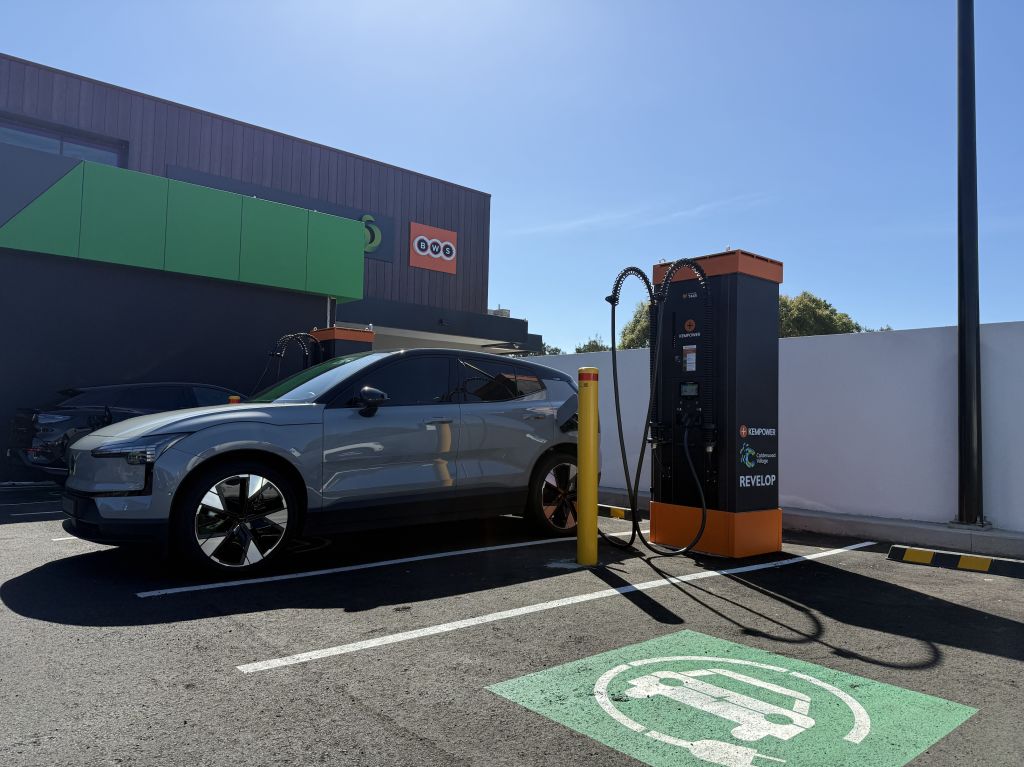
Shopping centres urged to fast-track EV charging infrastructure
Shopping centre owners and landlords have been called on to prioritise EV charging bays to keep pace with surging electric car sales.
Experts say EV parking infrastructure at retail hubs is sorely lacking, with many not having enough spaces and some having none at all. It comes as battery electric vehicles accounted for 23.3 per cent of all new car sales in June – up from 7.6 per cent at the same time last year – according to the Federal Chamber of Automotive Industries.
Shopping centres are well-placed to meet the charging needs of Australia’s growing EV fleet, says Vanessa Rader, head of research at Ray White Group.
“More shopping centres are definitely taking it seriously because, firstly, a lot of them have their own power generation with big solar and battery facilities, and secondly, because it’s an income stream,” she says.
“The main purpose is to increase dwell times in their shopping centres, and if there aren’t enough places along the road or in other spots, it makes sense for EV charging bays to be in a car park.
“In the past, they were always in some back corner. But now it needs to be really obvious that they’re there and it really encourages people to stop in, and to spend extra time in the shopping centre while they charge their cars.”
Record EV sales expose retail shortage
Tesla’s Model Y was the top-selling car in June with 8072 sales – a huge 133 per cent increase on June 2025, CarExpert data shows.
When it comes to brands, BYD was the second-best-selling brand for the third consecutive month, with 18,881 sales in June, just behind Toyota with 19,124 sales. BYD sales, including the popular models Sealion, Shark and Atto, jumped by 131 per cent.
The nation’s adoption of electric vehicles was spurred on by the fuel crisis caused by the conflict in the Middle East in March and April. However, infrastructure around the country has struggled to keep up.
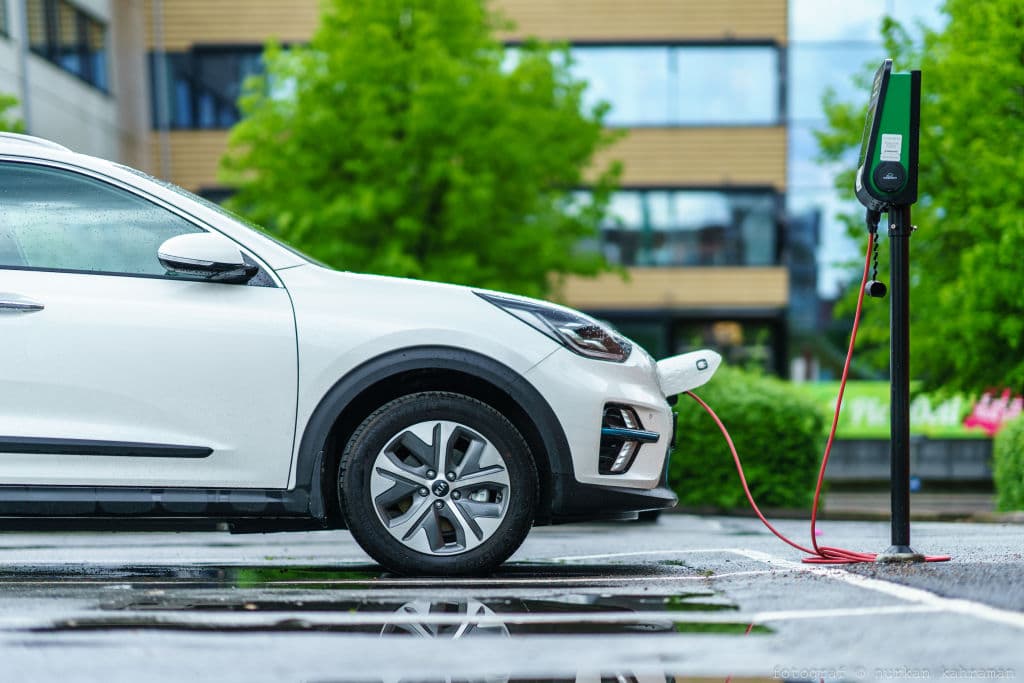
In its 2025 State of EVs report, the Electric Vehicle Council reported that there were 1272 high-power public charging locations, including those at shopping centres. High-power or DC charging points provide a 20 to 80 per cent charge in 20 to 40 minutes for a cost of between 40 and 90 cents per kilowatt-hour.
Retail precincts could make the most of this by treating chargers in the same way as any high-footfall amenity, Rader says. This includes investing in the right location with canopy cover, clear signage and app-integrated payment as baseline expectations rather than premium additions.
Public charging points will be the only option for some EV drivers, she says.
“If they haven’t got a fast charger installed at home, they’re just doing it through normal power, and it takes forever,” Rader says.
“It can be really difficult to install fast chargers, particularly in older facilities, because they need to have the power grid to access the power to support it. So until that happens, and because the take-up has been so rapid this year, there are more and more people out there who just need someone to charge their car.”
Fast chargers unlock customer dwell time
As part of a national rollout, Ampol’s AmpCharge is installing EV charging stations at petrol stations and shopping centres. In Melbourne, it is working on eight bays each at Lynbrook Village, Central West in Braybrook, Showground Village in Flemington, Campbellfield Plaza, Mornington Village and Millers Junction in Altona.
In Sydney, 11 bays will be built at Stockland Green Hills in East Maitland and eight bays each in Campbelltown Mall and Stockland The Gables in Box Hill.
However, it’s not just major metro shopping centres that need fast-charging infrastructure.
Revelop, the owner of more than 40 neighbourhood and sub-regional strip shopping centres and malls, is currently trialling four EV charging points at Calderwood Village in the Illawarra region.
The company has partnered with Jet Charge to install similar bays at 10 to 12 of its centres in the next six to 12 months.
Alex Michael, Revelop’s commercial manager, says the decision to install EV bays is driven by the opportunity to increase income.
“What changed our thinking was around dwell time,” he says. “There is no other shopping centre amenity that controls how long a customer can stay on site.
“A DC fast charger can keep someone with you for 30 to 40 minutes, and that customer is a captive spending customer.
“Once you see it that way, the charger stops being a cost line and becomes the most powerful retention tool you have in shopping centres today.”
Grid upgrades demand massive upfront capital
The question of installation cost can be entirely dependent on the availability of power. Even with a power connection, there needs to be enough energy from the local grid to feed the chargers.
“It could cost $50,000 to $70,000 for the actual hardware, the actual machine, then one of your bigger costs is actually the civil works that’s required,” Michael says.
“But then the highest cost actually comes back to the grid connection and the function that may be required to upgrade a board, especially if it’s an older board. If you don’t have a substation, you’re looking at upwards of $1 million for a brownfield site to actually put one in.
“We take the long view on it because it’s definitely not about the quick buck.”