Melbourne beats Sydney as Australia’s tightest retail CBD
Melbourne has edged out Sydney as the most in-demand retail city centre in Australia. Vacancy rates in the Victorian capital are now the lowest in the country at 8.5 per cent, followed by Sydney at 9.9 per cent.
Colliers data captured from 8302 tenancies on June 30 also shows Adelaide is a strong contender, with vacancy rates of 9.8 per cent. Elsewhere, Brisbane recorded 13.2 per cent vacancy, and Perth was the outlier at 21 per cent. The national average is 11.1 per cent.
The biannual survey of tenancies aims to track how retail precincts in Australia’s five major capital cities change over time, says Colliers senior retail research analyst Sam Ryan.
“Retail vacancy is no longer just a statistic; it’s a leading indicator of change,” he says. “Understanding where retailers are expanding, relocating and exiting is essential to identifying the precincts that will define the next chapter of Australia’s CBDs.”
Core retail strips tighten
Colliers researchers analysed vacancies in at least four different areas in each of the five major capitals to discover where retailers most want to set up shop.
In Sydney, the precinct with the lowest vacancy was Pitt Street at 5.9 per cent, followed by Circular Quay at 8 per cent, south CBD at 9.1 per cent, the western corridor (around York and Clarence streets) at 11.4 per cent, Barangaroo at 12.3 per cent, midtown and north (bound to the north by King Street, to the east by Elizabeth Street and Hyde Park) at 14.3 per cent, and Millers Point and Walsh Bay at 18.6 per cent.
Increased foot traffic in Sydney is supporting retail activity along with the revitalisation of the local dining scene, says Jo Windybank, Colliers manager, retail leasing, Sydney CBD.
“We’re seeing a real shift in the quality and diversity of leasing enquiry across the CBD,” Windybank says.
“Deals such as the Mercedes-Benz showroom at 39 Martin Place demonstrate that major brands are still willing to make a significant commitment to the city, while new entrants and experiential concepts are bringing fresh energy to the market.”
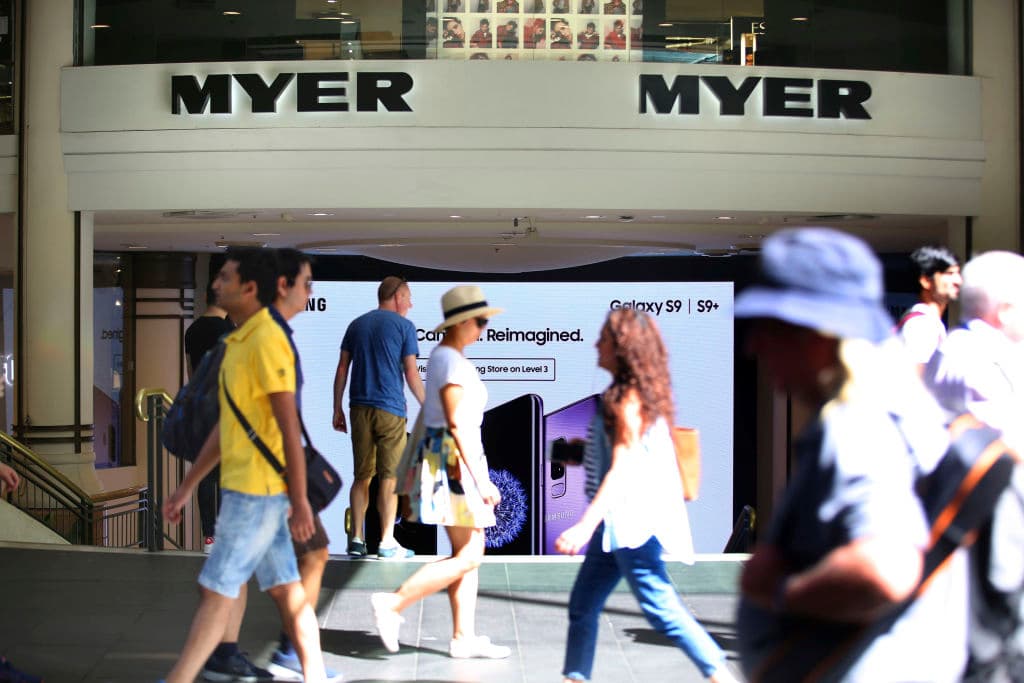
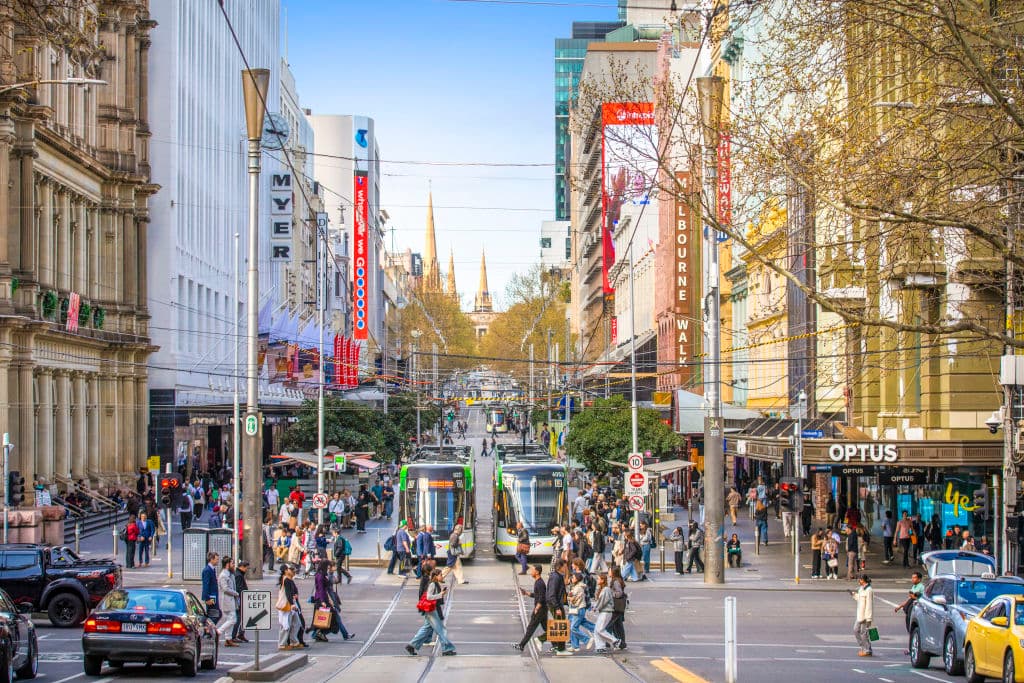
The Melbourne retail core at the Bourke Street Mall was the city’s most in-demand precinct at 7.1 per cent, followed by the “Paris end” or top of Collins Street at 7.8 per cent, Flinders Lane at 8.9 per cent, Chinatown at 9.4 per cent, the legal precinct centred around the Williams and Lonsdale street intersection at 10.4 per cent, and the southern end at 12.7 per cent.
Melbourne’s busy event calendar and the opening of new retail hubs such as Melbourne Walk are drawing shoppers to the city, says Ruby Koop, Colliers senior executive, retail leasing, Melbourne CBD.
“We’re seeing stronger foot traffic driven by major events, tourism and the city’s evolving experience-led offer, while pop-ups are giving emerging brands a low-risk way to test the market,” she says.
“With major investment underway at Melbourne Central, including its $170 million expansion, we expect that momentum to continue and draw even more people through the CBD.”
In Adelaide, retail vacancy was lowest in Rundle Mall at 8.2 per cent and highest at the north-west end at 18.5 per cent. Vacancy in Brisbane’s government precinct was the lowest in Australia at 4.1 per cent, and highest in the legal area at 20 per cent.
Perth’s lowest vacancy was at Elizabeth Quay at 9.4 per cent and highest at Murray Street Mall at 24 per cent, largely because of empty shops at Carillon City. The shopping centre was acquired by mining billionaires Andrew and Nicola Forrest in 2022 and is awaiting a major upgrade.
Transactions reach $11.9 billion
Transaction volumes reached $5.6 billion for the September quarter, bringing the year-to-date total to $11.9 billion. This has come despite significant economic uncertainties, including rate rises and geopolitical influences on fuel costs.
CBD precincts weren’t the only stars of the retail sector, with regional and neighbourhood centres accounting for 65 per cent of capital deployed year-to-date.
Large format retail recorded the strongest growth at 1.9 per cent, followed by regional and sub-regional centres at 0.6 per cent and neighbourhood centres at 0.5 per cent across the quarter.
Severe undersupply owing to elevated construction costs continues to be a problem for occupiers but an advantage for investors. Average gross face rents across all retail classes nationally rose by 0.7 per cent in the September quarter.
Increasing cost pressure on occupiers has resulted in an uptick in insolvencies, Ryan says.
“We’re seeing more occupier insolvencies because businesses are being squeezed from both sides,” he says.
“Costs such as wages, insurance and rent have increased while consumers are becoming more selective about discretionary spending. Smaller operators with tighter margins have less room to absorb these increases or pass them on to customers.
“For landlords, this reinforces the importance of having the right tenants in place and understanding whether their businesses are financially sustainable, rather than simply focusing on occupancy rates.
“That said, insolvencies aren’t affecting every part of the market equally, and well-positioned centres with a strong mix of essential retailers are continuing to hold up well.”