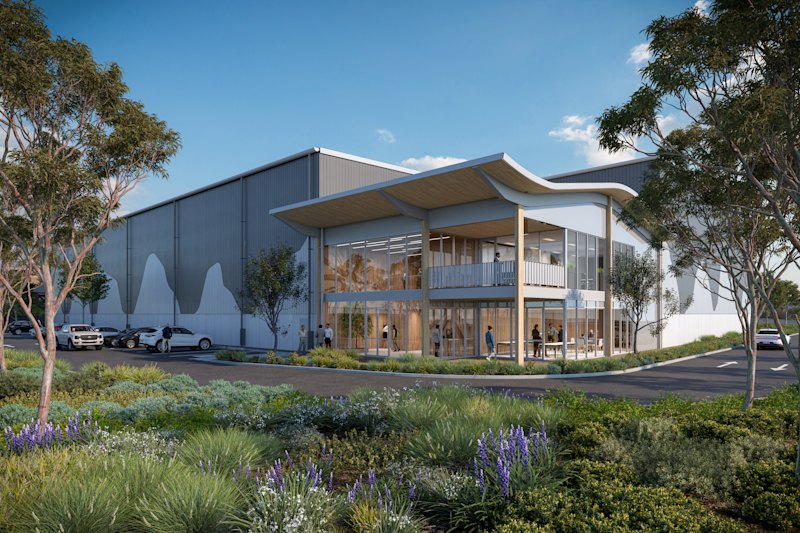
Australian large-format retail delivers record investment returns
It may be one of Australia’s youngest commercial real estate sectors, but large-format retail (LFR) is fast becoming one of its most successful.
Over the past 10 years, investment returns have reached 12.8 per cent a year, with returns predicted to hit 11 per cent, according to a CBRE report.
Investment returns were strongest in Sydney, followed by Brisbane, Adelaide, Melbourne and Perth. Rents have risen by 21 per cent nationally since 2020, with Sydney leading the charge at 31 per cent.
A shortage of appropriately zoned land, and high construction costs have seen vacancy rates tighten to 2.8 per cent.
National brands anchor sector resilience
Large-format retail is somewhat of a surprise performer given its beginnings as a discretionary and non-core asset class. But the sector has proved it can weather tough economic times as most tenants are national retailers and most centres contain a deepening diversity of brands, says Shane Cook, CBRE national director, large format retail leasing.
“The bottom line is that the retailers are doing an extremely good job despite headwinds, which probably, in my mind, adds to the resilience in the asset class,” he says.
“When you’ve got positive growth from an asset class coming off an extremely high sales-based turnover post-COVID … despite what’s going on with external factors, is a testament to the retailers.”
Recent sales have demonstrated the sector’s strength. The Chadstone Homemaker Centre sold for $86.025 million in January, in the biggest large-format retail transaction in Victoria since 2021.
In February, Charter Hall acquired a shopping centre portfolio, including the Morayfield Supercentre in Queensland’s Moreton Bay region, for a reported $126 million.
Huge sales have attracted investors, and this, along with constrained supply, has seen average national yields tighten moderately to 6.1 per cent in the past two years. CBRE forecasts yields will drop by 10 basis points by 2028.
The report found sales averaged more than $1200 million a year in the past 10 years, with the majority of transactions between $5 million and $50 million.

Car park pad-sites unlock value
Large-format retail got off and running in Australia during the 1970s, trading primarily as homemaker centres selling furniture and floor coverings. Today, it accounts for 35 per cent of all retail floor space and employs 470,000 people nationally.
Bunnings Warehouses makes up the lion’s share of large-format stores in Australia, followed by Repco and Supercheap Auto. Pet-supply stores are among the newest entrants to the sector and are performing well, with Petstock and Petbarn rounding out the top five stores.
Gyms are slowly making their mark in the sector, and CBRE expects food outlets to enter the market as well.
“LFR assets have big car parks, so where there’s a lot of value-add from a landlord point of view is taking a part of that parcel of land that’s probably under-utilised and creating another offering and obviously an income stream for the asset,” Cook says.
“So if you can take a big chunk of the car park and carve off 1000 square metres for a McDonald’s, a KFC, Wendy’s, GYG, what we’re seeing is that the yield when they go to market from a sales perspective is quite attractive. From a seller’s point of view, there’s actually a good financial outcome and benefit from yield for adding these things.”
CBRE data shows consumers prefer to shop in person at most large format retailers, particularly in the DIY market, with 80 per cent opting for bricks and mortar stores over e-commerce.
Zoning rules restrict brand expansion
Population growth and rising immigration numbers should ensure a rosy future for the large-format retail sector. However, a lack of uniformity in zoning regulations across states and territories looks set to impede the expansion of some brands.
“There’s a broad debate around the ways that planning is enforced in different states and how different they are,” Cook says.
“For example, there are brands that probably don’t fit within an LFR zone in NSW who would love to, but are considered under planning laws not to fit – TK Maxx is a good example of that. They could go into a Queensland property in an LFR 2000-plus-square-metre development and be approved to trade, yet in NSW they would be prohibited.”
However, there is still a lot of room for new large-format retail centres to grow into. The CBRE report shows gross lettable area per capita is 0.22 square metre. Sydney, Canberra and the regional areas of Queensland, NSW and Victoria are the most under-penetrated.