Barbeques Galore closure triggers large-format retail rush
The closure of iconic Australian retailer Barbeques Galore is likely to create a flurry of activity in the large-format retail sector, where vacancy rates are at 2.8 per cent nationally.
More than 60 stores are set to close after the retail chain announced this week that it could not secure a buy-out deal.
Large format retail experts say the sudden availability of store space in a tight market will spark huge interest.
Pent-up demand meets sudden big-box vacancy
“There’s a real supply constraint, which is great because it builds up a lot of demand and then when things like this happen and 60 stores effectively come on the market overnight, it creates a bit of a frenzy around, ‘Awesome, here’s the opportunity to open stores’,” said Shane Cook, CBRE’s national director of large format retail.
Cook said he has been fielding enquiries from large format retailers ever since news of Barbeques Galore’s closure broke on Tuesday this week (9/6/26).
“I’m getting emails quite frequently from major nationals going, ‘Shane, what barbecue sites can we jump into?’ and I’m not the only one,” he said.
“There’s definitely more demand from the retailers to open stores than there is supply being put into the market and as a result, we’re seeing a scenario where retailers are quite pent-up for opportunity.”
Changing tenant mixes and landlord leverage in a tight market
While Cook said there wasn’t more demand from any particular retailer or group of retailers, he said the wellness industry was rapidly expanding.
“Honestly, everyone’s active – automotive, pets, hardware, lighting, furniture, bedding, electrical, you name it,” he said.
“But every single gym is opening doors at the moment. It’s probably one of the easiest deals to do, the health and fitness at the moment, as far as demand.”
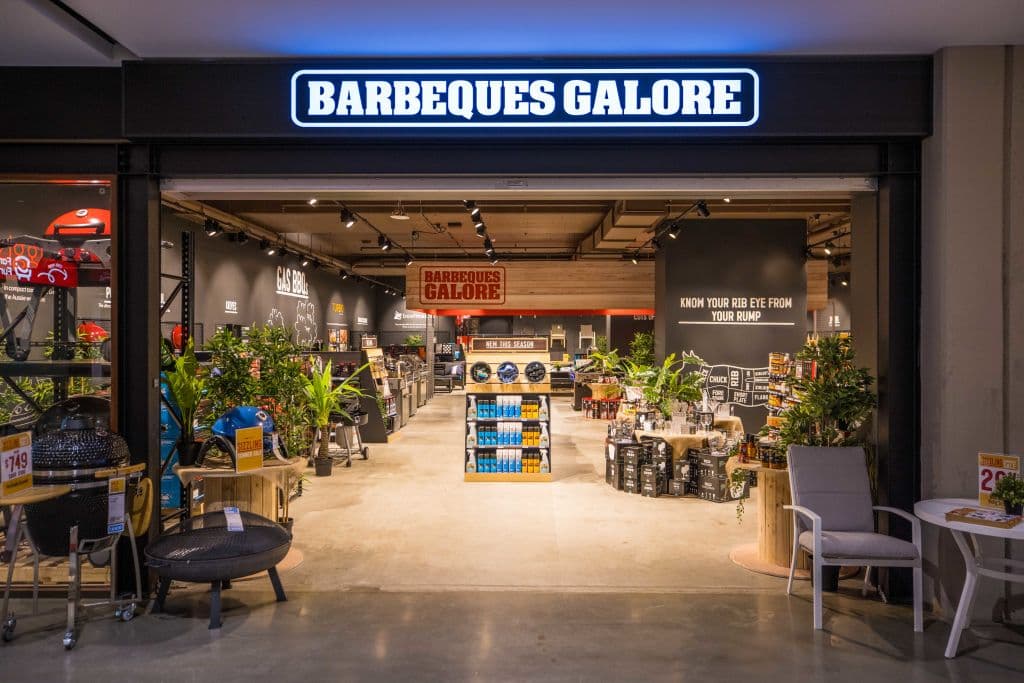
Cook is responsible for leasing the Barbeques Galore site at Sydney’s HomeHQ Artarmon and said it will be vacated in favour of a retailer with higher activation.
“It’s an exciting proposition for me because if I look at the sales performance within the centre, I think there’s a genuine opportunity to put something in that’ll do a better job on sales,” he said.
“So, comparing their performance to other retailers, it’s obvious to me that it’s not a centre issue and that we’ve got the opportunity to put something in there that’ll do a better job of bringing foot traffic and sales to the centre.”
The large-format sector’s record low vacancy levels have allowed landlords to be more choosy about their tenancy curation. However, the sector is dominated by major brands, so there are few new entrants to the market, with Kmart Home being one of the few big-box openings in recent times.
Based on data from the Large Format Retail Association Directory, Barbeques Galore stores average 792 square metres across all states and territories except Tasmania and the Northern Territory.
Philippa Kelly, chief executive of the Large Format Retail Association, said while the closure of the chain’s 62 stores was a sad event, it would open new opportunities for the sector.
“Any job loss is a terrible thing, any job loss and it has ripple effects, but for every shop that may close, hopefully there’ll be somebody moving in there and they’ll want to employ people,” she said.
The large-format retail sector employs 478,605 people in Australia, and its sites account for 21.7 million square metres of floor space nationally, according to association research.
Vacancy rates have spiralled downwards due to consumer demand for homemaker centres combined with a lack of available real estate and high construction costs.
“We hear about the cost of construction with housing, well, let me tell you, it’s not just housing – it’s everywhere and we’ve got the same problem,” she said.