M1 extension sparks Heatherbrae industrial boom
For decades, Heatherbrae has occupied a critical position on one of Australia’s busiest freight corridors, often associated with traffic congestion.
However, with the long-awaited extension of the M1 Pacific Motorway now fast-tracked and scheduled to open in late 2026, the Lower Hunter suburb is becoming one of regional NSW’s most closely watched industrial locations.
Eliminating the Sydney-to-Brisbane freight bottleneck
The $2.24 billion infrastructure project, jointly funded by the federal and state governments, will connect the motorway to Raymond Terrace and remove one of the final bottlenecks between Sydney and Brisbane.
Once complete, the extension will allow vehicles to bypass five major sets of traffic lights and the Hexham Bridge, reducing peak travel times and creating a more efficient route for freight operators. The reduction of traffic is expected to lower fuel consumption, minimise vehicle wear and tear and improve supply chain efficiency for businesses operating throughout the region.
With the extension set to be completed later this year, attention is already turning to Heatherbrae’s industrial precinct, where developers and investors are positioning themselves ahead of the infrastructure-led uplift.
Strategic value of the Heatherbrae industrial precinct
“Heatherbrae’s location is its primary asset,” Tim Woolf, national director at Colliers, said.
“It functions as a tri‑regional gateway linking the Port of Newcastle, the manufacturing hub of Tomago and the expanding aerospace precinct at Williamtown Airport. As accessibility improves, the precinct’s value proposition becomes increasingly compelling.”
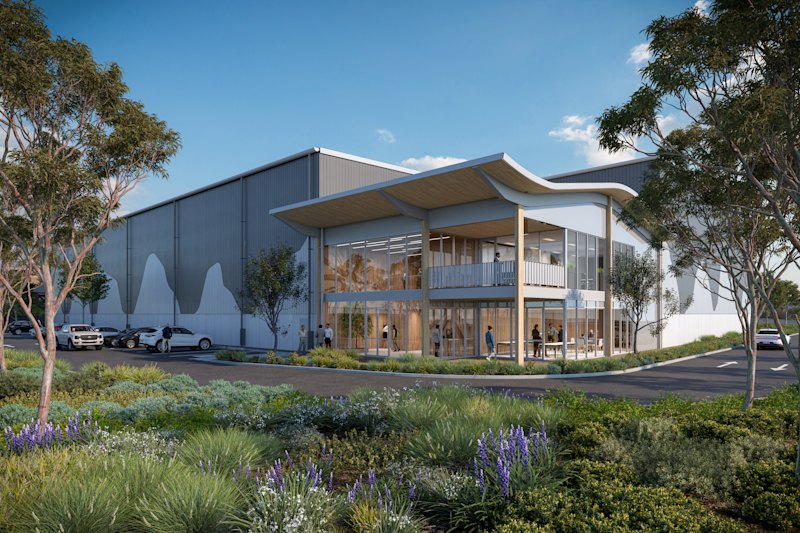
Industrial land within the precinct, particularly sites zoned E4 General Industrial, is attracting interest from logistics operators, manufacturers and third-party distributors seeking access to a location that sits at the intersection of several key economic drivers. Existing developments such as Kinross Estate, along with newer projects on Camfield Drive and Masonite Road, are already responding to demand by providing high-clearance warehouses and expansive hardstand areas designed to accommodate large freight vehicles.
Shifting demand in the Lower Hunter property market
The improved connectivity is also beginning to shift perceptions of the market. Traditionally, businesses seeking industrial accommodation in the Lower Hunter have gravitated towards established precincts such as Beresfield and Black Hill. However, Heatherbrae is increasingly being viewed as a viable alternative, with enquiry levels rising as businesses look to secure sites before values respond to the infrastructure upgrade.
“With the final bottleneck between Sydney and Brisbane scheduled to disappear, Heatherbrae is transitioning from a regional transit strip into a vital cog in the national supply chain,” Woolf said.
“This infrastructure investment delivers a transformative solution for the Lower Hunter logistics market and accelerates long-term economic growth across the region.”
Beyond the expected industrial take-up, increased freight activity and workforce growth are supporting demand for complementary commercial assets, including service stations, convenience retail centres and trade-related businesses. Investors have already begun targeting these asset classes in anticipation of increased vehicle movements and economic activity throughout the corridor.