Kmart unveils K Home store as demand for large-format retail space hits supply crunch
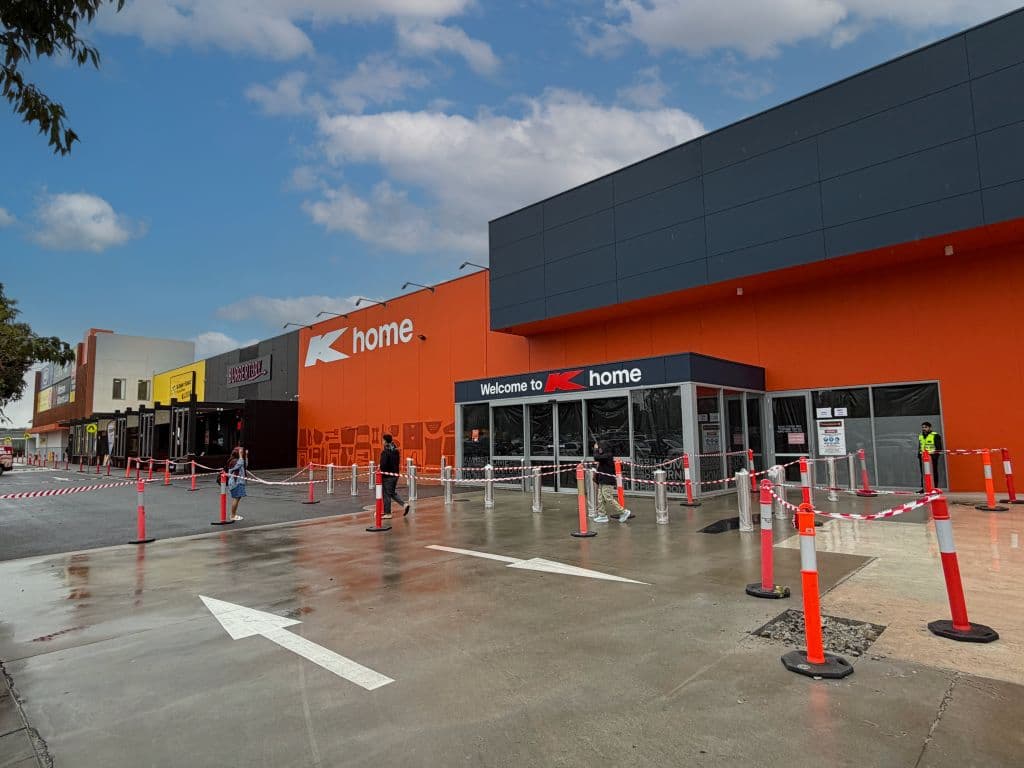
Kmart’s new-format homewares store, K Home, has made its Australian debut, signing a lease in the fast-growing Melbourne suburb of Box Hill.
The store will occupy a 3817-square-metre tenancy, replacing sporting goods retailer Decathlon and marking the first national trial of the dedicated K Home concept.
K Home signals a new direction for Kmart
The new-format store represents a significant shift in Kmart’s growth strategy, moving beyond its traditional full-line department store model to create a standalone destination focused exclusively on homewares, furniture and its popular Anko product range.
The concept will also provide customers with access to an expanded selection of furniture and homewares previously only available online, positioning Kmart more directly against major players like IKEA, Amart Furniture, Freedom and Harvey Norman.
The choice to launch in Box Hill is strategic, as the eastern suburb has become one of Melbourne’s fastest-growing metropolitan centres, with significant apartment development and a rapidly expanding population. More residents living in apartments creates demand for affordable homewares, storage solutions, furniture and household goods, which is exactly K Home’s target market.
The move comes as retailers face increasing challenges securing large-format retail space amid a shrinking development pipeline and historically low vacancy rates.
Retailers compete for scarce large-format space
Leedwell partner Chris Parry says the transaction highlights the growing imbalance between retailer demand and available supply.
“We’re continuing to see unprecedented demand from national retailers, but with a distinct lack of supply,” Parry says. “Opportunities of this scale and quality are becoming increasingly difficult to secure, particularly as new development has slowed and vacancy remains at historically low levels.”
Retail development activity has shrunk significantly since 2020, with new floor-space delivery reaching a 10-year low nationally in 2023. Across Australia’s large-format retail sector, there are about 365 centres with around 6 million square metres of floorspace, limiting the number of locations capable of accommodating major occupiers.
Despite a modest increase in Victorian vacancy from 2.5 per cent to 3.2 per cent, availability remains near historic lows, continuing to place upward pressure on competition for quality retail assets.
Despite the challenges to secure space, large-format retail is emerging as one of the fastest-growing asset classes for both private and institutional capital
JLL senior director of retail investments Stuart Taylor says the transaction reflects broader confidence in the large-format retail sector.
“They offer compelling investment fundamentals including strong tenant covenants, structural supply constraints, and historically low vacancy,” Taylor says.
“This leasing transaction exemplifies that appeal – a Wesfarmers-backed tenancy delivering category expansion into a tightly held market. It’s precisely these dynamics that are underpinning sustained leasing demand and rental growth across the sector.”