Melbourne CBD finds new rhythm as visitors replace workers
Melbourne’s CBD retail recovery is no longer waiting for office workers to return.
Tourists, students, families and weekend crowds are now driving the city’s trade, pushing retail vacancies to a four-year low and reshaping when, where and how retailers make money.
“So, the CBD was heavily reliant on office workers Monday to Friday … obviously, that’s all changed,” Fitzroys division director James Lockwood says.
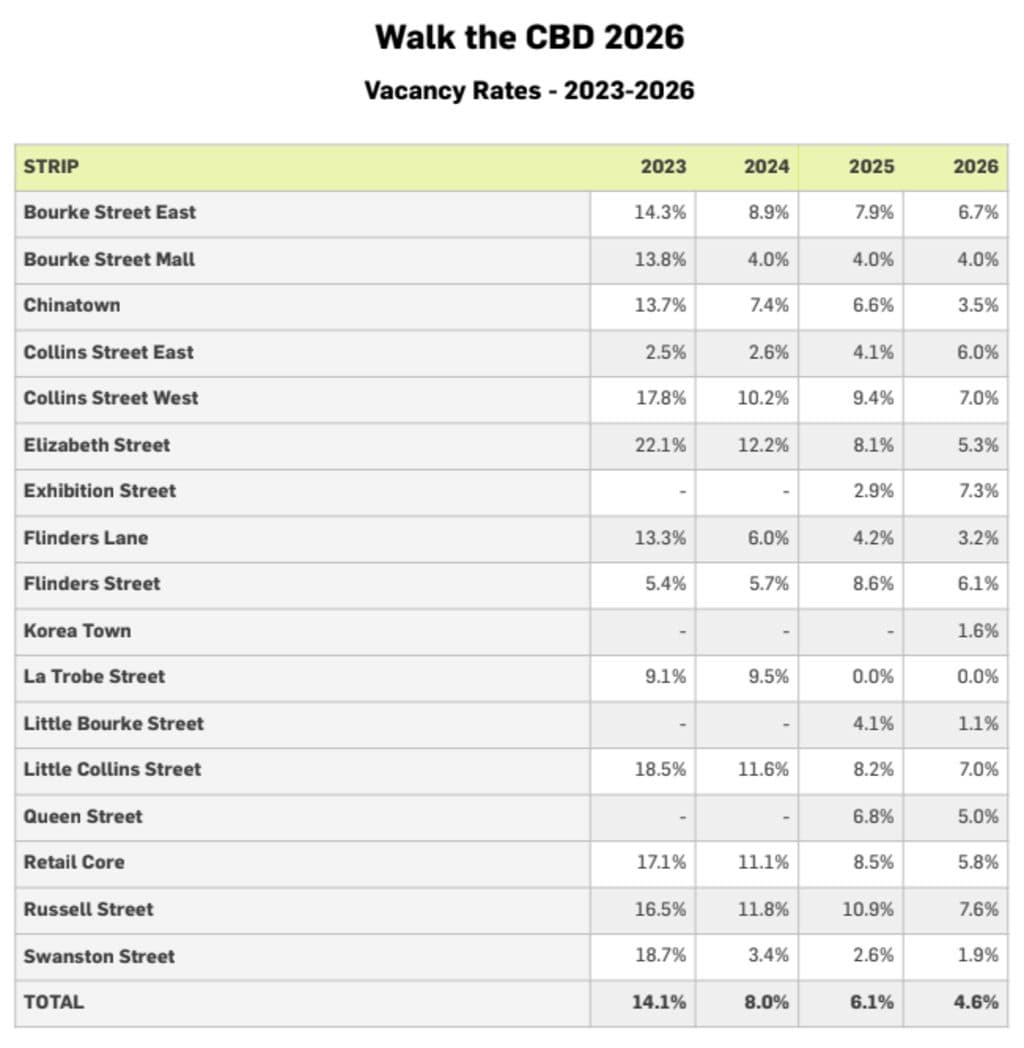
New data from Fitzroys’ Walk the CBD 2026 report shows retail vacancies have fallen for a fourth consecutive year to 4.6 per cent, down from 6.1 per cent a year ago and a sharp reversal from pandemic highs above 30 per cent.
The annual report tracks year-on-year vacancy rates and tenancy mixes across 14 of the CBD’s key retail precincts, taking a deep dive into the trends shaping the city’s retail recovery.
Retail recovers as the office market lags
The retail rebound is unfolding against a very different backdrop in the office market, where hybrid work and new supply continue to weigh on occupancy.
The Property Council of Australia’s January 2026 Office Market Report shows Melbourne CBD office vacancy rose to 19 per cent, up from 17.9 per cent six months earlier. It remains the highest office vacancy rate of any capital city CBD.
“I don’t think it’s moved much. We’ve got a terrible vacancy rate in office,” Lockwood says.
But retail vacancies have continued to fall, pointing to a growing divide between the WFH movement and retail performance.
The five-day trade has shifted
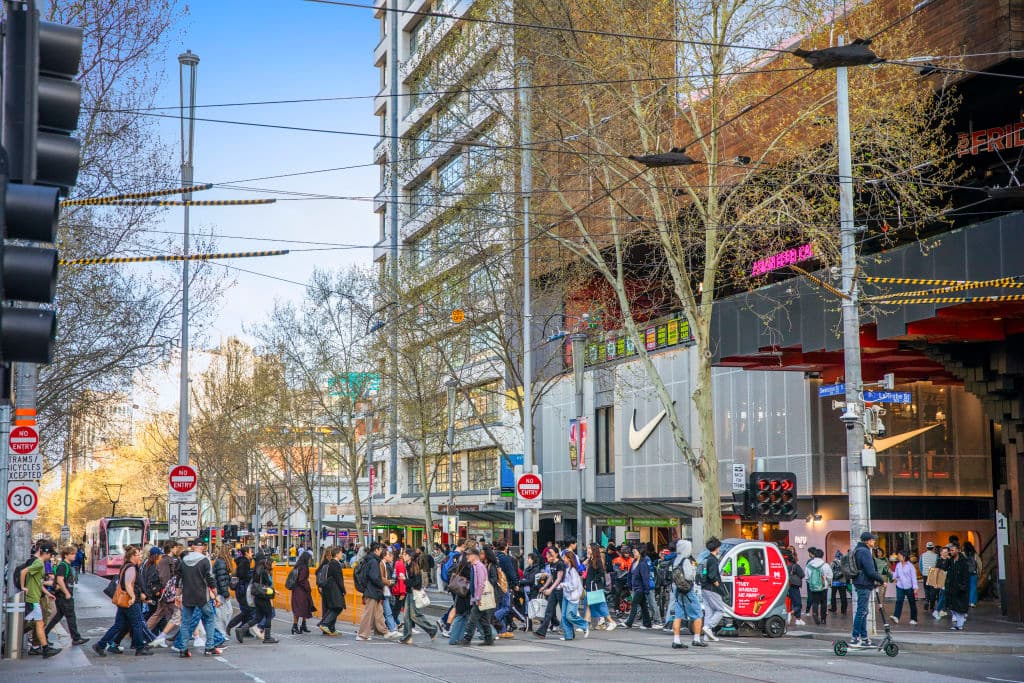
Lockwood says the traditional Monday-to-Friday retail rhythm has been replaced by a new pattern, with weekends and evenings doing more of the heavy lifting.
“What’s happened in the city is most pedestrians are in the city on Saturday, followed by Sunday, followed by Friday night,” he says.
“So, where the retailers had that five day trade Monday to Friday, they’ve lost basically Friday, Monday’s half, where they picked it up is Saturday and Sunday. They’re still getting that five-day trade. It’s just shifted to a different day. It’s amazing.”
Friday has become an anomaly, with quieter daytime trade before the city fills again after work-from-home hours.
“It’s interesting that Friday night is the third busiest time in the Melbourne CBD, because Friday is dead. But what they’re doing, they’re working from home on Friday, then they come in in the afternoon.”
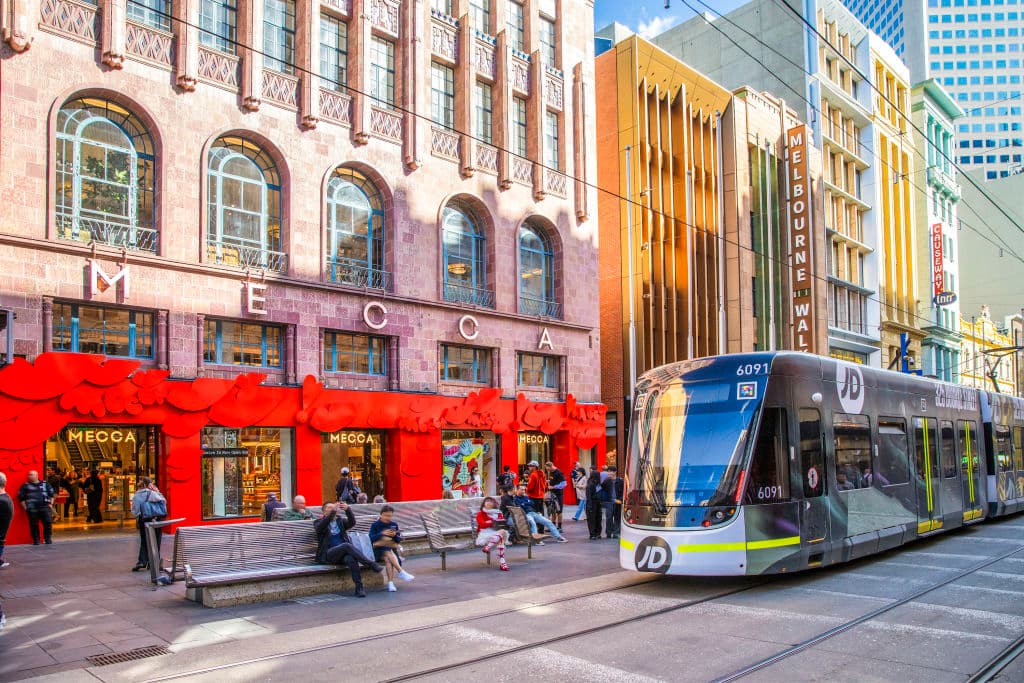
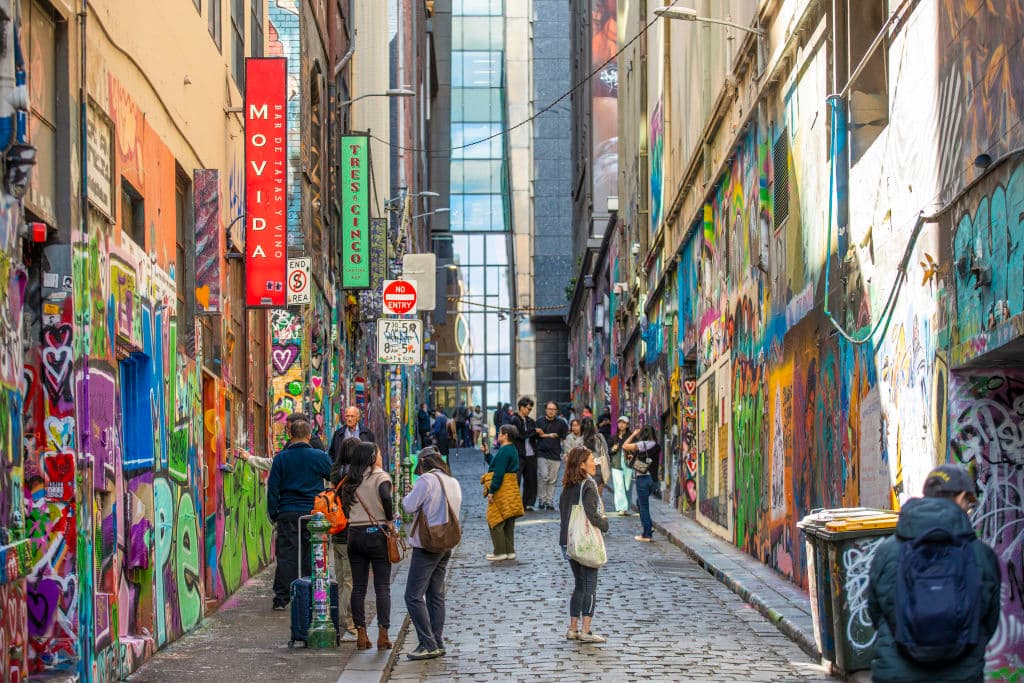
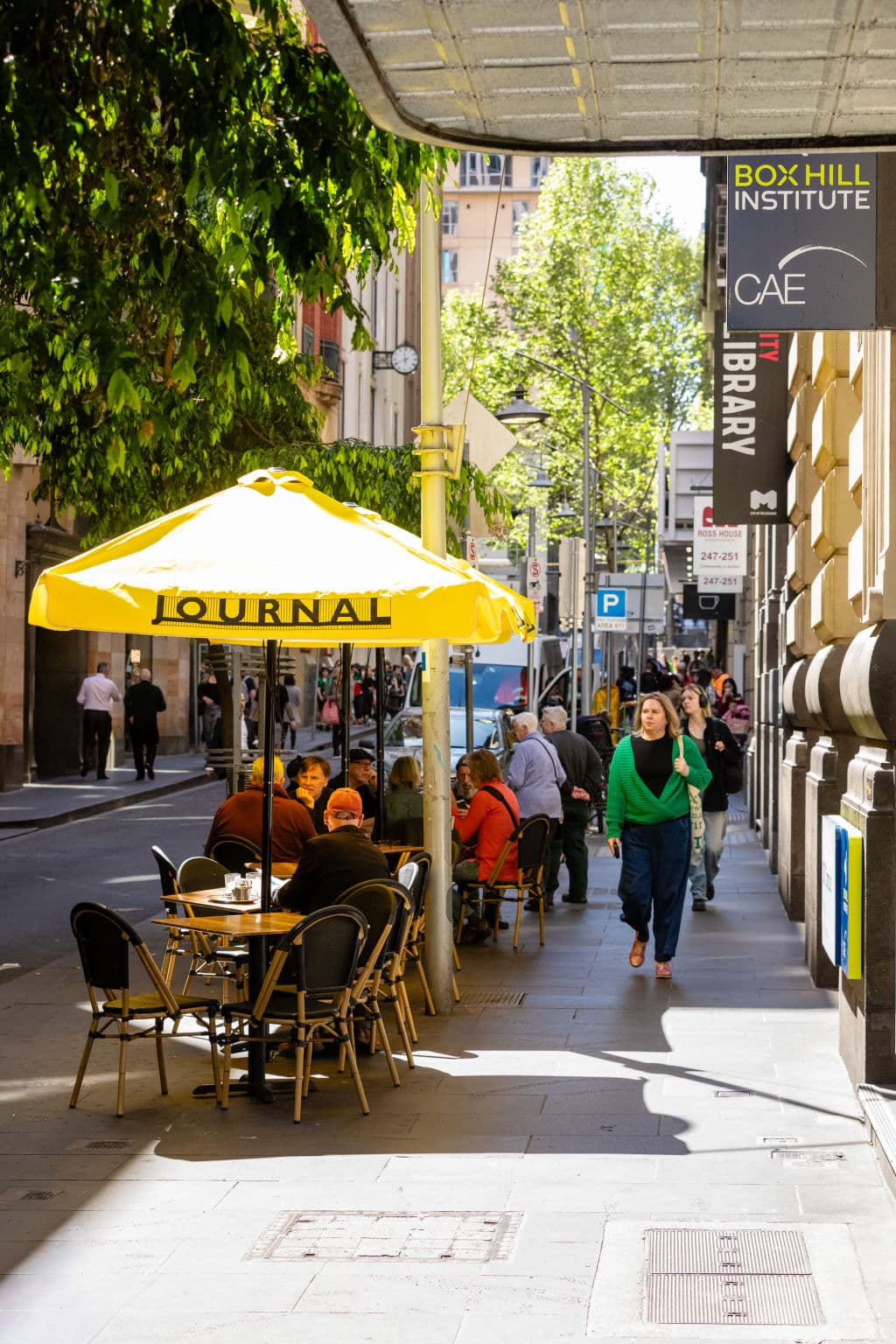
Families and visitors are increasingly replacing office workers as the dominant users of the CBD, with people making full-day trips built around shopping, culture, sport and dining.
“When you talk to people, talk to families. They’re all coming to the city on Saturday. They’re having the whole day here,” Lockwood says.
“They come in, go to a park, go to a cultural exhibition, have lunch at a cafe or restaurant … then go out at night to the theatre … or before the AFL.”
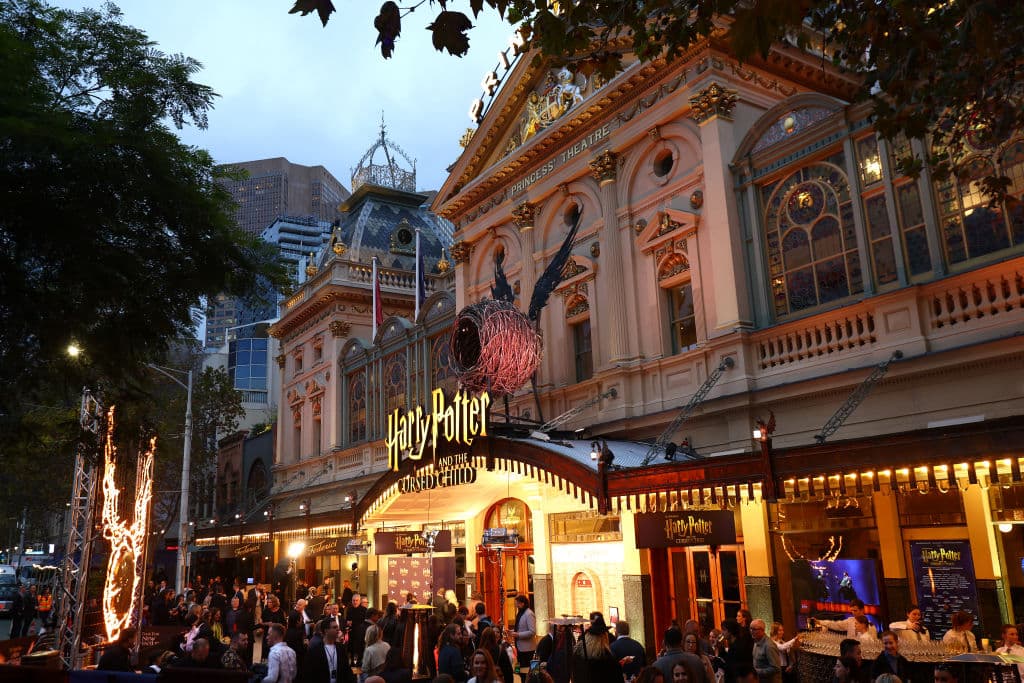
The shift is showing up in spending patterns, with Melbourne City Council reporting a record $1.2 billion in CBD spending in December 2025.
“More people are coming into the city to get a full day’s experience – they’ll go to the Mecca store, visit a restaurant or cafe to eat, then head to the NGV or the theatre district,” Lockwood says.
“With the bigger outings comes bigger spending, and that’s reflected in another fall in retail vacancy rates and the buzz of the city.”
Tiny shops and hole-in-the-walls move quickly
Leasing demand is also getting smaller.
Lockwood says enquiries have surged from suburban and interstate operators seeking compact spaces that allow them to trade around peak periods without the cost of a larger footprint.
“In the enquiry we’re receiving there’s been a surge of businesses asking for small circa-20-square-metre to 50-square-metre and hole-in-the-wall spaces, looking to operate on a capital-light model while catering to those peak periods of the week,” he says.
“These are the types of spaces that are moving really quickly.
“Shops in a good location with high pedestrian activity are also moving very fast.”
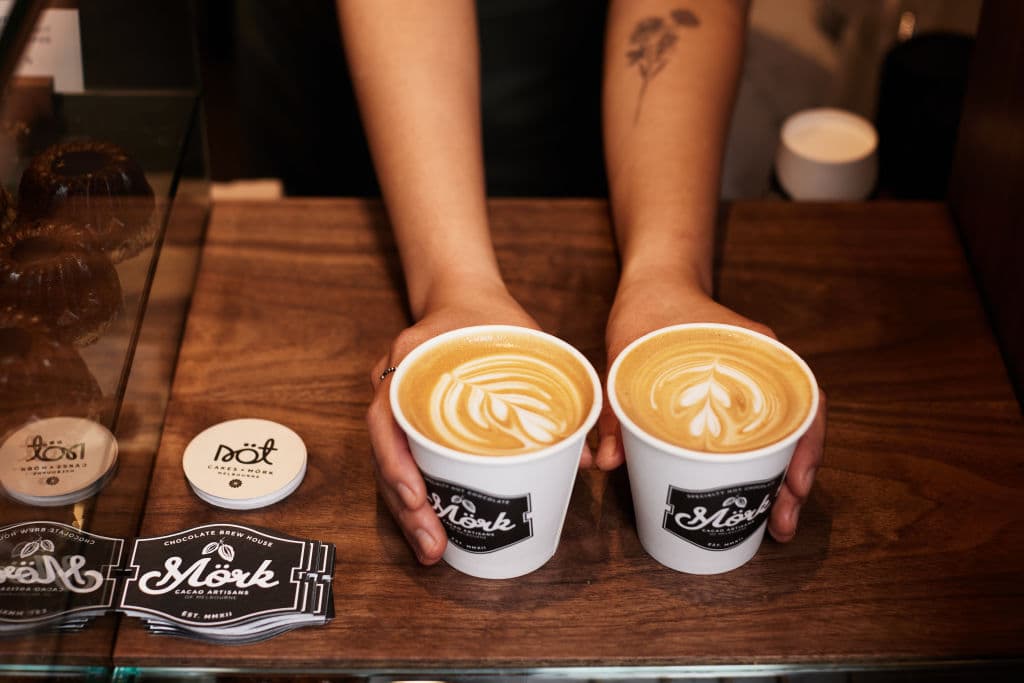
Examples include French sandwich shop Casse-croûte, which opened late last year in a 17-square-metre tenancy at 130 Little Collins Street, a palm reader operating from a tiny “little window” kiosk at 17-19 Elizabeth Street across five square metres near Flinders Street Station, and Eek Charm, a Thai noodle shop trading from a three-square-metre tenancy at Causeway House.
Mörk makes seven square metres work
One of the clearest examples is Mörk Chocolate’s seven-square-metre takeaway shop at 20 Equitable Place, a former lift shaft converted in 2021 into a specialty hot chocolate bar.
Owner Kiril Shagimov says the business gutted the space and rebuilt it from scratch to make it functional.
“In sort of true Mörk style, we’ve gutted the whole thing and started from nothing, so we made it our own,” he says.
“There’s not much space in there, but it is a functional space for us.”
The conversion required creative problem-solving, including opening up part of the frontage to bring in equipment.
“We’ve punched out the wall a little bit more so we could put in our equipment through the front, because obviously it wouldn’t fit through the side doors. It’s too tight and narrow,” Shagimov says.
The shop now has a coffee machine, a display counter and enough room for two staff to work inside.
“We got creative, and two people can work in there and do pretty good volume,” he says.
Shagimov estimates the store serves up to 250 customers a day, depending on the day.
The model is strictly takeaway, with only a small amount of outdoor seating for customers to briefly stop with a takeaway cup and pastry.
“So in that respect, it’s actually a really good business model, especially in the current landscape,” he says.
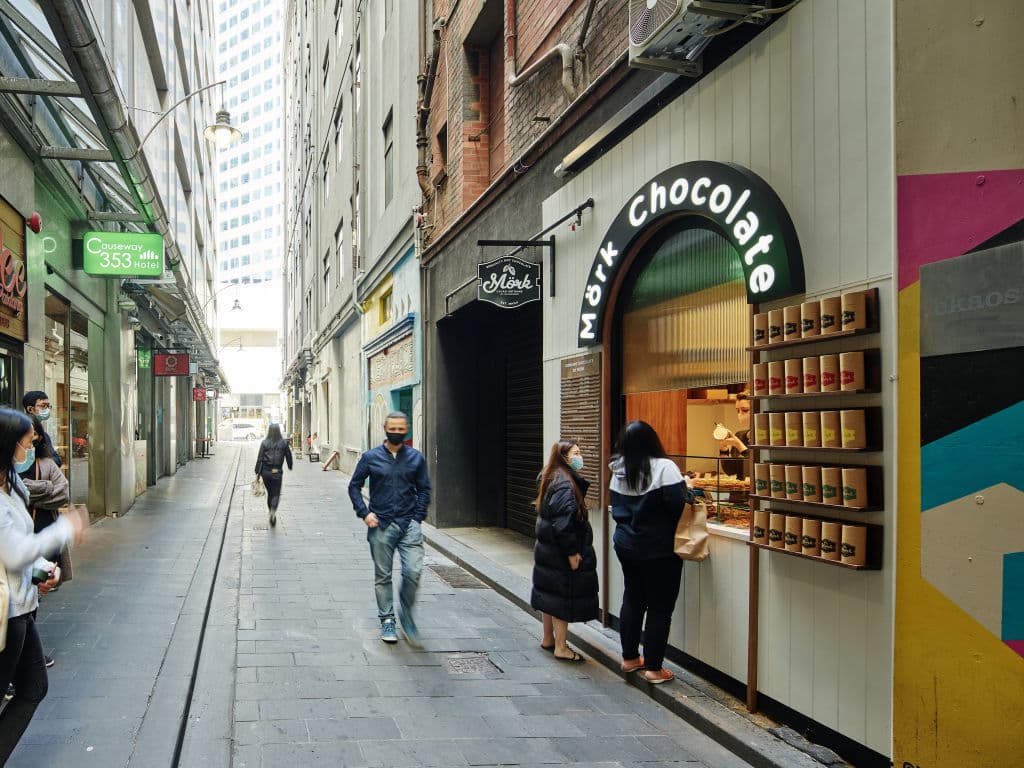
While the rent is high on a per-square-metre basis, the tiny footprint keeps the total occupancy cost manageable.
“I think if you work it out, per square-metre is hideously expensive,” Shagimov says.
“But … there’s not so many square metres in there, so it actually works out to be quite affordable.”
He says having lower overheads is a major advantage in hospitality.
“I think not having big overheads definitely helps, especially in the hospitality landscape at the moment,” he says.
Mörk has since expanded beyond its North Melbourne origins, with outlets including Equitable Place, Centre Place, Queen Victoria Market and Chadstone, and another bakery concept in the pipeline on King Street near Flagstaff Gardens.
Flagship brands are also chasing Melbourne
At the other end of the market, demand for flagship space is also strengthening, particularly in tightly-held heritage retail locations.
“There’s groups that are entering the CBD that haven’t been here before, new flagship entries,” Lockwood says.
“Royal Arcade is going gangbusters. We’re doing deals off market – there are tenants that want to get in there.”
Luxury fragrance house Creed has opened a flagship in Royal Arcade after first establishing itself in Sydney’s Strand Arcade.
“They thought Royal Arcade had some similarities, so they liked that,” Lockwood says.
Global luxury French fragrance brand Parfums de Marly has followed a similar path, expanding from department-store counters to standalone retail.
“It’s the same story with a group called Perfume de Marly. They’ve been in David Jones and Myer in the perfume section … They are also located in the Strand Arcade in Sydney and felt Royal Arcade had that similar feeling as well.”
British footwear label Loake is opening its first Melbourne flagship at 268 Flinders Lane, near Degraves Street.
“Loake wanted to be around Aesop and Quick Brown Fox around there at the edge of Degraves Street,” Lockwood says.
New York menswear brand Knickerbocker has also opened at 20 Russell Place, following a market test with a pop-up last year.
“Again, they just wanted 55 square metres,” Lockwood says. “Knickerbocker is the only one outside of New York in the world.”
What the report shows street by street
The Walk the CBD report shows tight conditions emerging across key strips, with La Trobe Street – between Elizabeth and Russell streets – taking the crown, recording no vacancies at the time of reporting.
Little Bourke Street fared second best with a vacancy rate of 1.1 per cent, down from 4.1 per cent last year, thanks in part to the Hardware Lane eateries, while Swanston Street tightened from 2.6 per cent to 1.9 per cent, and Flinders Lane sat at 3.2 per cent.
Chinatown improved to 3.5 per cent from 6.6 per cent last year, driven by Friday night and weekend restaurant demand, tourism and the return of international students. The lure for space has seen the area expand beyond the eastern half of Little Bourke Street into surrounding parts of Swanston, Russell, Exhibition, Lonsdale and Bourke streets.
Bourke Street Mall held firm at 4 per cent vacancy again, supported by Mecca’s flagship in the former David Jones menswear building, Rodd & Gunn’s retail and hospitality concept, and the $150 million Melbourne Walk redevelopment, which delivered new retail space and two IHG hotels.
Elizabeth Street has staged one of the CBD’s biggest turnarounds, with vacancies falling from more than 22 per cent three years ago to 5.3 per cent, driven by residential projects, universities and student accommodation towers that have created a 24-hour dining and entertainment precinct with a strong Asian focus.
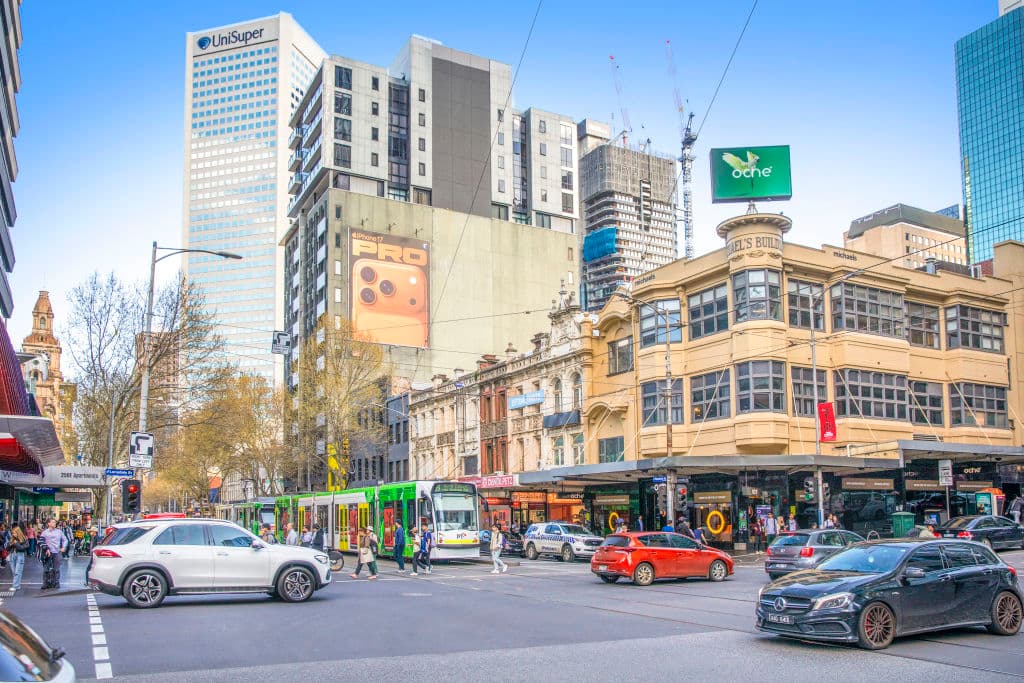
Flinders Lane remains one of the city’s premium hospitality strips, with restaurants and bars including Gimlet at Cavendish House, Supernormal, Cumulus Inc. and Grill Americano supporting a low vacancy rate.
Russell Street also improved, with vacancy falling to 7.6 per cent from 10.9 per cent as activity clustered near Chinatown. Portuguese restaurant Marmelo has opened; Japanese restaurant Miyazaki Gyu has taken over the former Izakaya Den space; and Chanel is redeveloping its store on Russell Street.
The Paris end of Collins Street saw vacancy edge up to 6 per cent, but the report points to future upside from the Grand Hyatt redevelopment and the Town Hall Metro station, which has reactivated the corner of Collins and Swanston streets.
Rents and tenancy movement show where demand is landing
The report also shows how rents and tenancy movement differ across the city’s key strips.
On Elizabeth Street, rents range from $1500 to $3000 per square metre per annum, with new tenants including Helly Hansen, Peter Jackson, Zambrero and Barhio Shoes joining established names such as JB Hi-Fi, Coles and Woolworths.
Swanston Street rents sit between $2500 and $4500 per square metre per annum, with new tenants including Godiva, Hungry Jack’s, Auspacific, Waffle Cake and El Jannah joining established names such as Koko Black, Westpac and Chemist Warehouse.
Chinatown commands rents of $2500 to $3500 per square metre per annum, with new tenants including Nora Thai, Reed House, Chillangos, Ab’s Barber and Crackle Bae joining established operators such as Shanghai Street, Flower Drum and ShanDong Mama.
Bourke Street Mall remains the city’s most expensive retail strip, with rents of $5000 to $7500 per square metre a year. New tenants include Michael Hill, Bevilles, Mecca, Flying Tiger and Muji, alongside established anchors Myer, David Jones and H&M.
Flinders Lane rents range from $1250 to $,500 per square metre a year, with new entrants including Pecks Road, Elios Melbourne, Loake Shoes and Amano joining established names such as Kisume, Coda and Brunetti Classico.
Collins Street East, the city’s Paris end, commands rents of $3000 to $5000 per square metre per annum, with Breitling joining a luxury mix that includes Louis Vuitton, Cartier and Balenciaga.
Collins Street West rents range from $1000 to $2500 per square metre a year, with new tenants including Bovet, Swatch, Il Mercato, Bermont and Grand Seiko joining established occupiers such as IWC, MJ Bale and Freyja.
Exhibition Street rents range from $1000 to $1500 per square metre a year, with new tenants including Askal, Subway, Tori’s, Bossley Bar & Restaurant and Juni.
Hospitality dominates the mix
Hospitality, food and beverage and entertainment operators now account for 49.4 per cent of CBD retail, up from less than a third as Melbourne emerged from lockdowns.
The broader retail mix is also shifting. Service retail has eased to 13.5 per cent, while specialty retail has lifted to 31.2 per cent. The count includes all street-facing shops, including those within arcades and shopping centres.
Development sites have nearly halved to 1.2 per cent as major projects reach completion, tightening supply across the CBD.
Metro Tunnel, hotels and tourism add momentum
Infrastructure is also playing a major role.
The Metro Tunnel began full services in February, bringing an estimated additional 50,000 people into the CBD each day, while Swanston Street has benefited from retailers positioning themselves near the Town Hall and State Library station entrances.
“Retailers were eagerly anticipating the completion of the Metro Tunnel, which has made a hugely positive impact on Swanston Street,” Lockwood says.
“The tunnel entrances have also boosted pedestrian traffic along Collins Street.”
Tourism and staycations are further reshaping demand, with an alarming number of places to stay added in recent years.
“What’s happened since 2019 is Melbourne’s added 5000 hotel rooms in the city, and then there’s another 2000 that are under construction and due for completion by 2027, so that’s 7000 extra rooms,” Lockwood says.
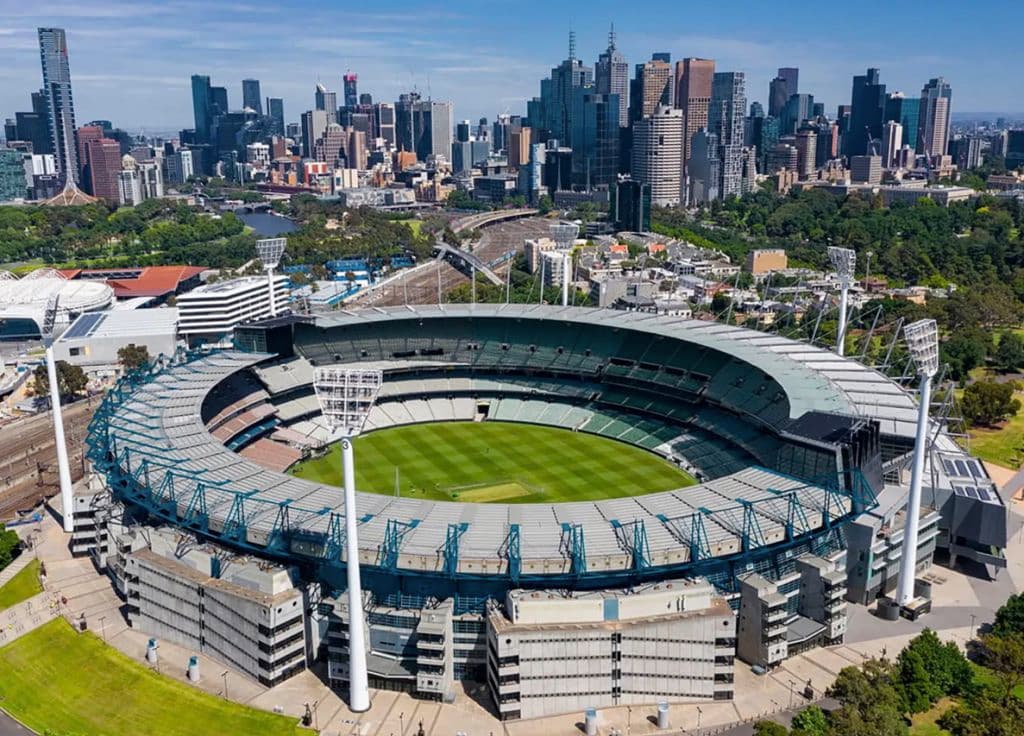
He says major events are filling hotel rooms, from the Boxing Day Test and the Australian Open to the Formula 1 Grand Prix, the Melbourne International Comedy Festival, the AFL season and theatre.
But demand is not limited to major events.
“When I’m talking to these hotel groups, like in the middle of February, when there was nothing – the Victoria Hotel on little Collins Street, they said it was 97.8 per cent occupied,” Lockwood says.
“I said: ‘what’s going on?’ … It’s just tourists and people just coming from interstate and people just staying on the weekend from Melbourne … so it’s definitely happening.”
Lockwood says international tourism is also playing a growing role, particularly from the US, with visitors taking advantage of the weaker Australian dollar.
“In response, major carriers United Airlines, Delta, American Airlines and Qantas have all significantly increased their capacity and flights to and from Melbourne and key USA destinations,” he says.
The result is a CBD retail market no longer dependent on office workers to underpin trade, despite Melbourne’s office market equating to 5.28 million square metres of floor space, the second-largest nationally after Sydney.
Instead, it is being driven by experience, timing and foot traffic, with smaller formats, stronger concepts and better-positioned locations emerging as the key to performance.