David Jones Sydney transformation: inside the $1bn Market Street redevelopment now selling luxury apartments
To those who grew up with the treasured traditions of David Jones, it would be considered nothing less than an outrage.
In days gone by, the building would have had a lift attendant in a sharp dark suit and starched white shirt, chirruping brightly in a sing-song voice, “Ground floor – hats, gloves men’s accessories; first floor – suits, tailoring, barber shop; third floor – boys’ wear …”
Today, instead, there’s a workman in rumpled blue overalls and a high-vis vest announcing dully, “Seventh floor.”
He’s not even standing smartly to navigate the lift controls for his passengers. In stark contrast, he’s sprawled in a blue plastic seat at the entrance of the lift car. “Union rules,” someone mutters darkly. “These days, you have to provide a chair.”
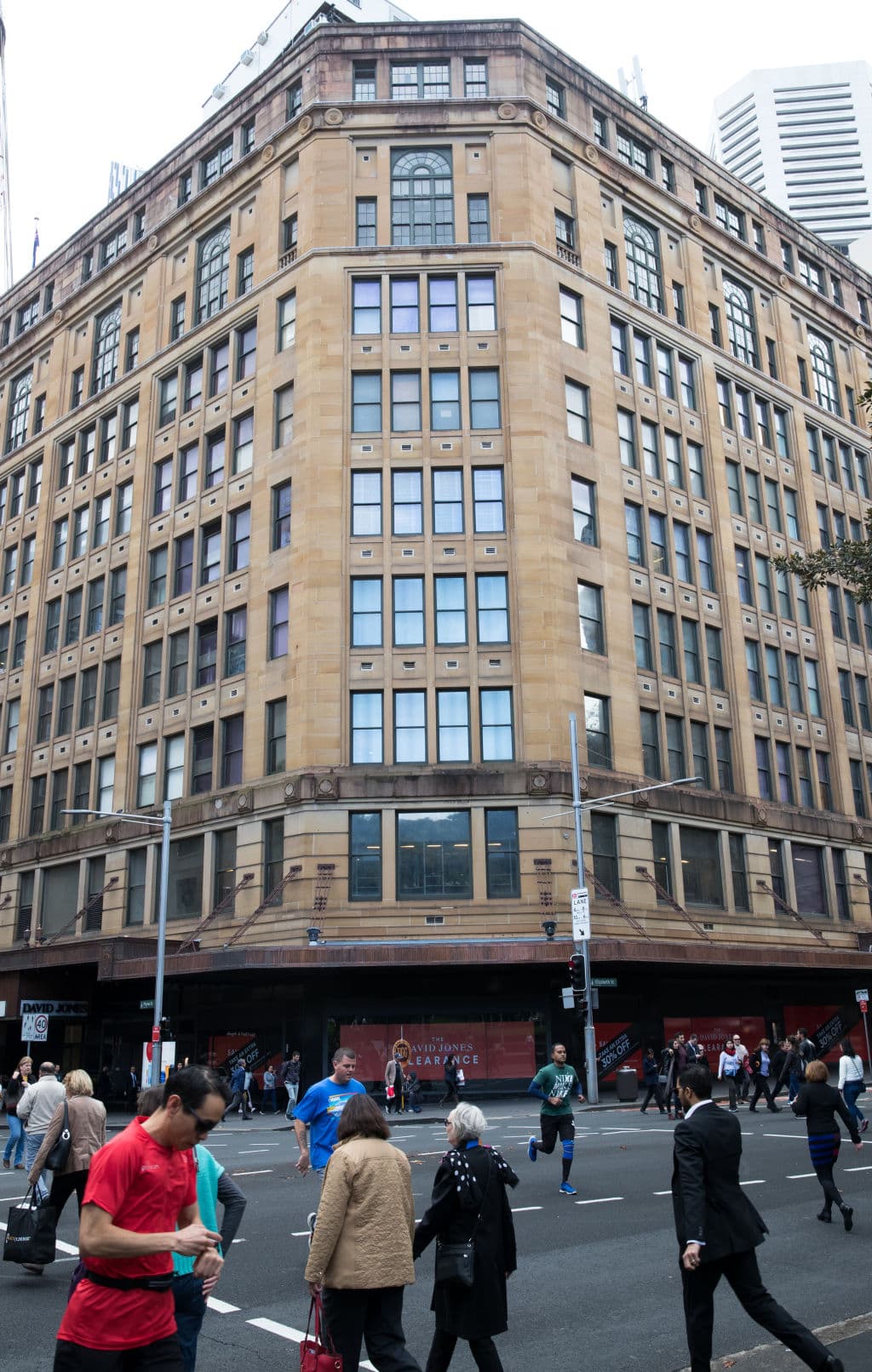
Yes, it’s true: there was no other store like David Jones. And, on the unveiling of the adapted and repurposed building’s prototype apartment display suite, you realise that the David Jones for men on Sydney’s Market Street is certainly little like it used to be.
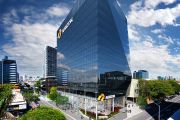
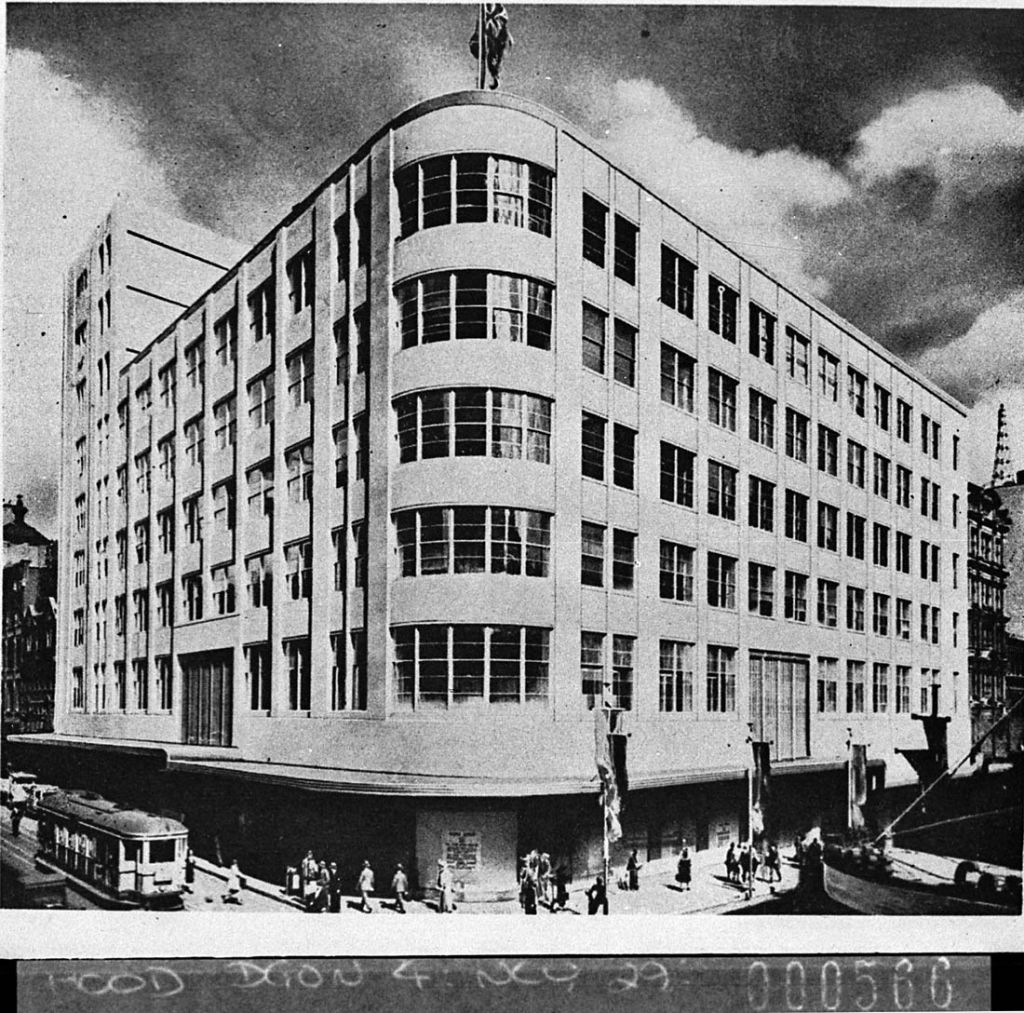
But one of the country’s leading department stores, constructed in 1938, now has a new life as five levels of luxury retail brands and six levels of office space topped by a new 21-storey tower with 98 apartments.
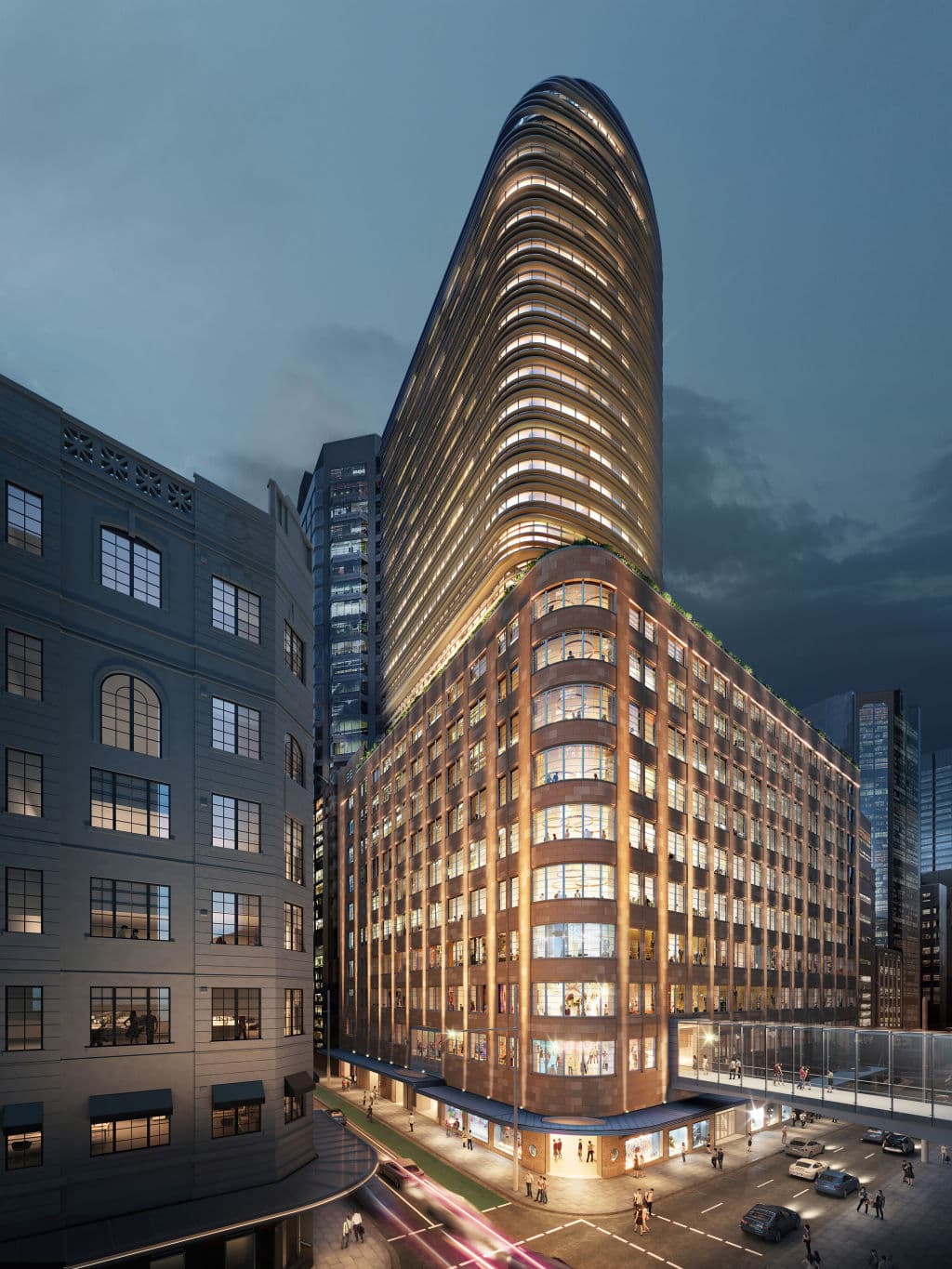
“But having a site so important to everyone, and so rich in history from an archaeological and social perspective, means we have really invested in it,” said Chris Kakoufas, chief executive of Cbus Property, the owner and developer of the old building. “We feel a great responsibility, which drives the quality of our response to it.
“Everything we’re doing here is premium quality, with luxury shops in the retail, good office space and then premium apartments above. And we’ve retained so much of the style of David Jones with our restoration of the sandstone façade, the awnings, in the detailing and in the interiors.”
The company sold its men’s store at 77 Market Street to Cbus Property and Westfield owner Scentre for $360 million in 2016, with some of the proceeds being spent on the $200 million renovation of the store’s main building just over the road on Elizabeth Street.
That’s where the men’s store’s famed food hall on the lower ground floor was relocated to, as well as all those hats, gloves, suits and boys’ wear, these days navigated by automatic lifts and escalators.
In their place, the old building with a new central atrium has a separate entrance for the apartments, rebranded as 111 Castlereagh, another entry for the 10,000 square metres of retail now partially populated by high-end brands like anchor tenant Chanel, Moncler and Canada Goose, while the 11,500 square metres of office space also has its own doorway and lobby with concierge at 121 Castlereagh.
Designed by architect Richard Francis-Jones of fjc studio, following a design competition, with interiors by fjcinteriors, there are echoes of David Jones everywhere in the $1 billion redevelopment.
In the office section, those vast floorplates which aren’t yet taken, once filled with stalls and hangers and shelves up to the lofty ceilings, now look almost ghostly.
But with the apartments, the spectre of the landmark department store is never far away, either, in all the softly curved corners, the bronze and aluminium trims, and architraves.
The corridor that leads to the residential lobby is clad in moody dark timber with travertine floors – from tiles salvaged from the store – and 7500 1.2-metre-long timber rods suspended from the ceiling for lighting, with blown-glass artworks on the wall by Aboriginal artist Alison Page.
The lifts hold another memory, with fluted reveals just as the lifts once had in the original store. The glass lift doors, too, are decorated with the same 1930s interwar patterning.
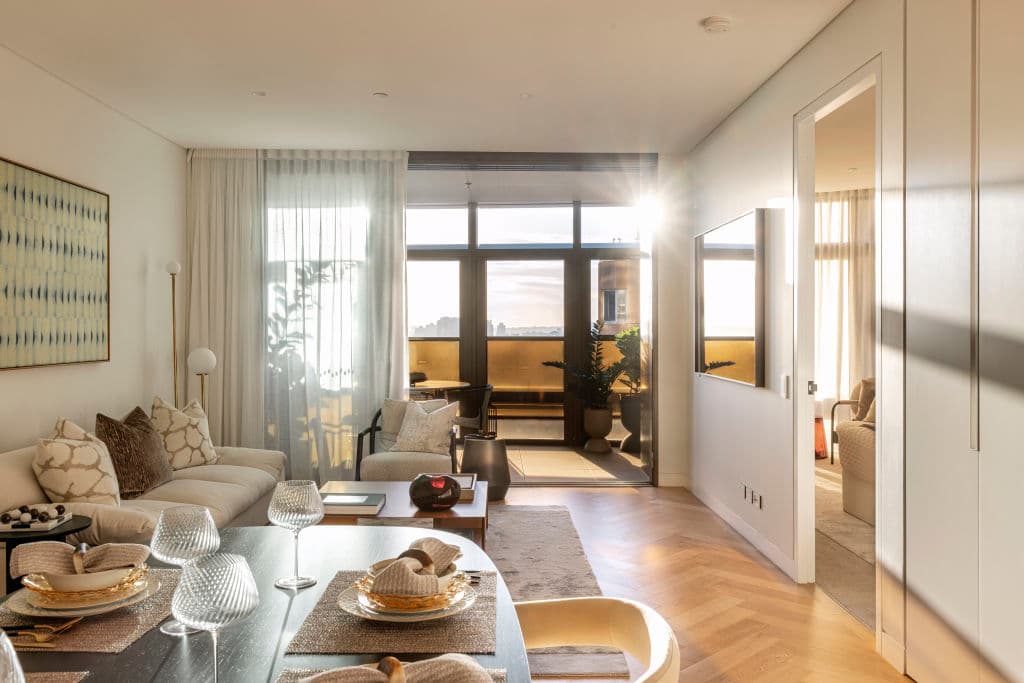
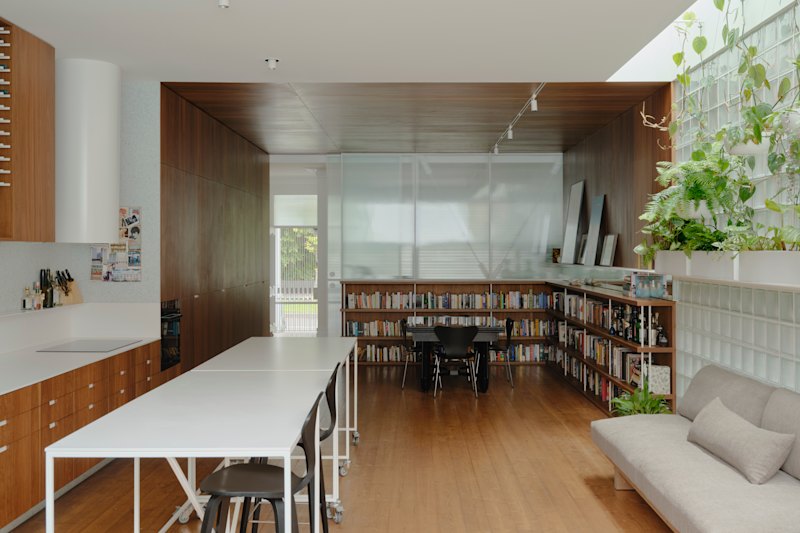
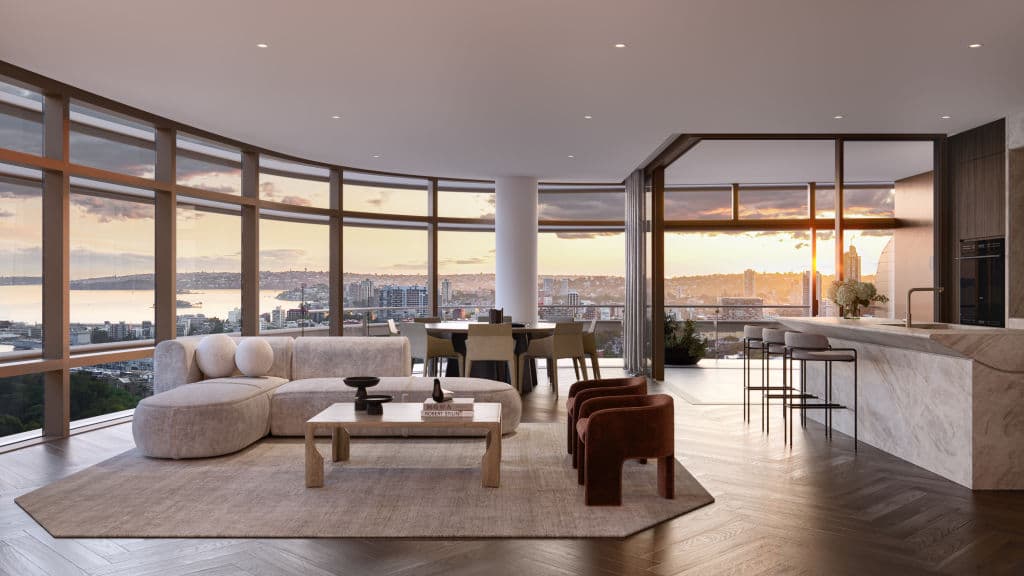
The apartments themselves have one to four bedrooms, ranging from 62 square metres internally, with an eight-square-metre semi-enclosed loggia with openings at the top and operable windows, to 463 square metres of interiors and 176 square metres of outdoor space.
The penthouse and two sub-penthouses sold in 2021, even before the official market release, for a combined total of $66 million to local Sydney buyers. There is now only one one-bedroom apartment left at $2.2 million, a few two-beds from $2.625 million and some three-bedrooms from $6.9 million. Buyers are expected to move in later this year.
“Demand has been very strong,” said Kakoufas. “We’ve heard so many stories from purchasers about how they have such fond memories of coming to David Jones and their experiences there. It used to be such a treat to shop in the store.
“We’ve had a lot of downsizers from Sydney coming to buy because they want an easier apartment life, with lots of amenity, and views and proximity to the city. Sydney is now starting to embrace city living and I think the immediate vicinity feels very European with the cafes, restaurants, shops and Hyde Park.”
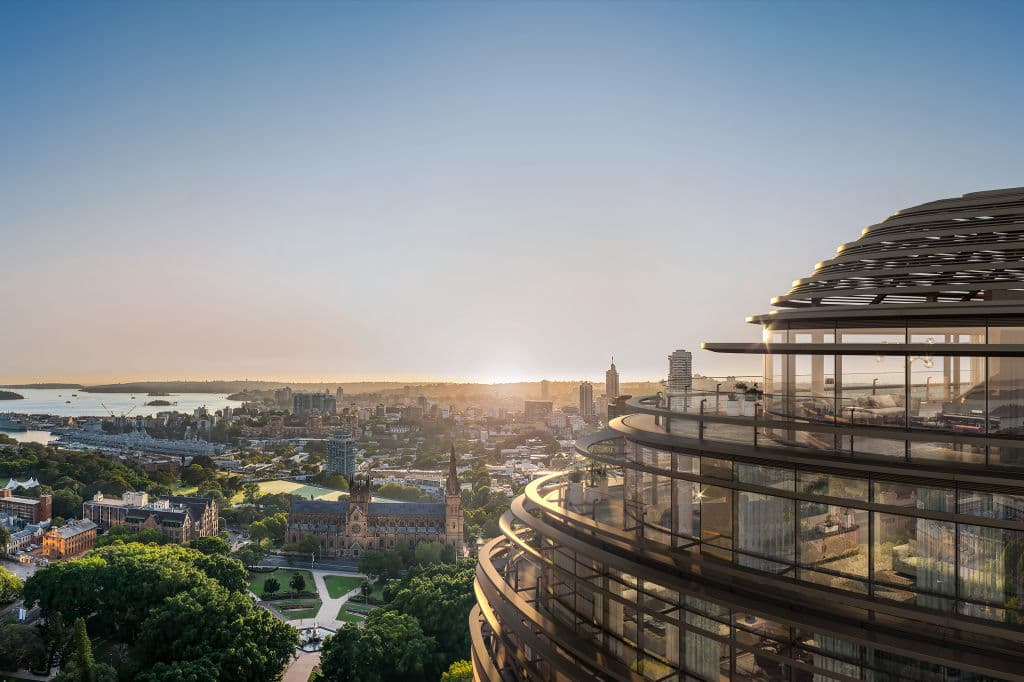
There are spectacular views from many of the apartments of the park, the cathedral, the city, the harbour and South Head. All also have access to the rooftop of the old building, which now features landscaping, a dog park, and a meandering walk through the greenery.
Other amenities include a heated pool, a gym, a yoga deck, a residents-only lounge, climate-controlled wine storage and a private dining room and boardroom.
“We’re very proud of this building,” said Kaoufas. “We feel very lucky to have been involved in such a project.”