How Vivid Sydney became a winter economic engine
Sydney’s winter economy used to have a predictable rhythm. Office workers disappeared after dark, hotel occupancy softened, and hospitality venues braced for quieter trading through the colder months. Then Vivid Sydney came along.
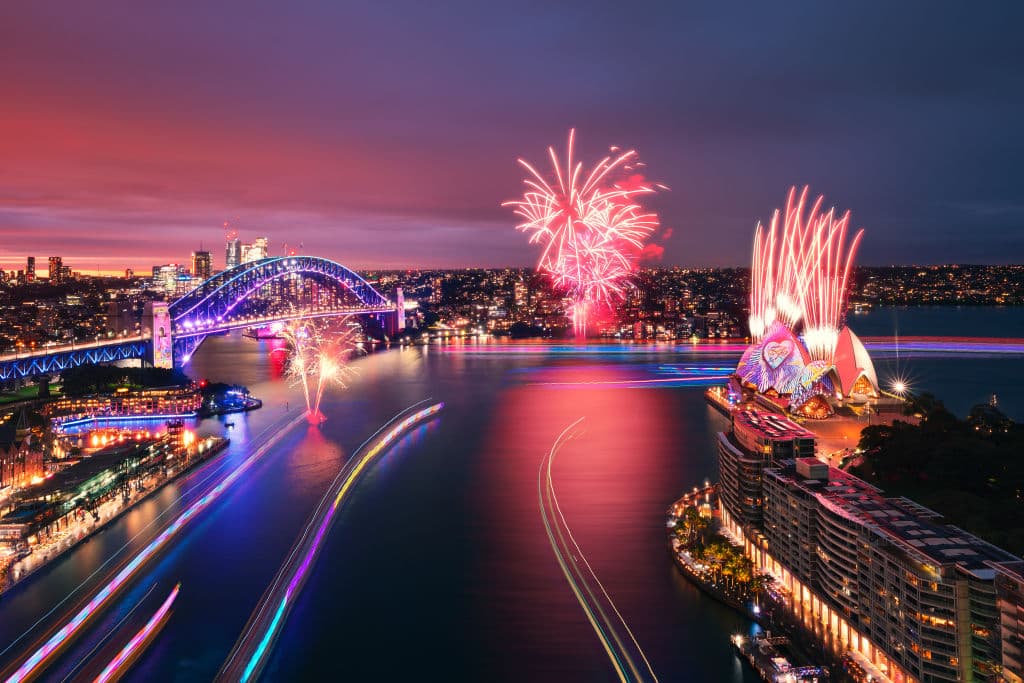
What began in 2009 as a relatively contained light festival around Circular Quay has become one of Australia’s largest cultural events and a major economic driver for the Harbour City, transforming the cooler months into one of the most active periods on Sydney’s tourism and hospitality calendar.
The scale of that growth has been substantial. In 2024, Vivid Sydney attracted more than 2.5 million attendees and generated more than $180 million in visitor expenditure across NSW, according to Destination NSW. The following year, the 2025 festival drew more than 1.2 million visitors within its opening week alone, about 10 per cent higher than the same point the year prior.
The event’s influence now extends well beyond tourism. From hotel occupancy and food-and-beverage spending to retail foot traffic and broader confidence in Sydney’s CBD, Vivid has become a case study in how major cultural events can shape commercial real estate performance, even indirectly.
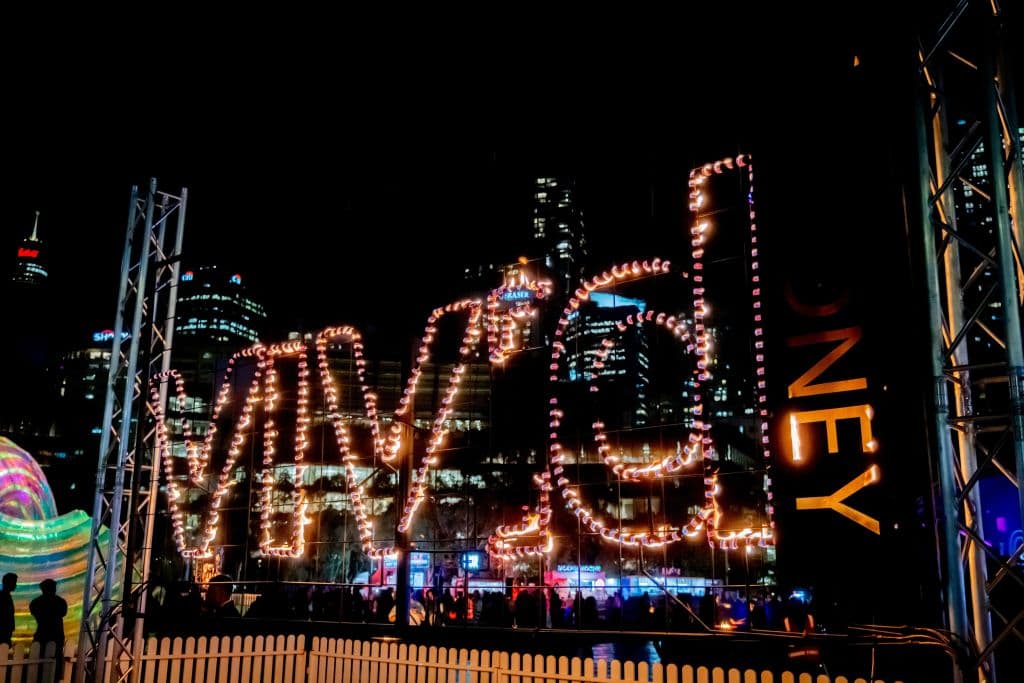
For Vanessa Rader, head of research at Ray White, the significance lies in the way events like Vivid inject activity into periods that would otherwise be economically quieter for the city.
“These large events and activations that happen in cities around Australia are really important to grow local tourism,” Rader said.
“Vivid happens smack bang in the middle of winter and historically that’s one of the lowest periods for hotel occupancy in Sydney. Having events like this gives people a reason to visit the city, or if they were already planning to come, it encourages them to extend their stay.”
During the 2025 festival period, Sydney recorded its strongest May hotel occupancy rate since 2019, peaking at 89.1 per cent across the city, according to Destination NSW.
“Vivid Sydney and major events like it are crucial for hotels,” Accommodation Australia chief executive James Goodwin said.
“Over the past few years, Vivid Sydney has turned what are usually a few quiet winter weekends into a boom period, with occupancy rates in Sydney regularly close to 90 per cent, which is a remarkable achievement.”
For commercial property owners, those visitation spikes create a ripple effect across entire precincts. “We see it as being really beneficial particularly for the hotel sector and tourism, but even more broadly for hospitality,” Rader added. “During those cold winter nights, suddenly the CBD and the harbour areas are activated. There’s more people out eating, drinking and spending time in the city.”
Importantly, Rader said the crowds Vivid attracts are far more diverse than many traditional city events. “It’s not just one type of visitor,” she said. “You’ve got families, tourists, couples, groups of friends, office workers staying in the city after work – everybody is looking for different experiences, which benefits a wide mix of operators.”
The increased visitation also creates wider economic benefits beyond accommodation alone.
“It’s not just hotels,” Rader said. “People then go out to eat, they use public transport, taxis and all those incidental services. There’s a much broader economic impact attached to these big events.”
The impact on the CBD’s night-time economy
The festival has become increasingly important at a time when Sydney’s CBD continues navigating the long-term effects of hybrid work and changing office attendance patterns.
While weekday office occupancy has improved since the pandemic, many hospitality venues still struggle with reduced evening trade compared to pre-2020 conditions.
Vivid effectively draws tens of thousands of people into the city after dark, providing a temporary but powerful lift for restaurants, bars and entertainment venues. “Our CBD overnight economy is still relatively weak,” Rader said. “So, events like this give businesses an excuse to extend trading hours and create activity at night.”
She added that Vivid also benefits from its timing within the working week. “People are more inclined, if they’re already in the office, to stay in the city afterwards, go see the event and then go out for dinner or drinks.” The flow-on effect is particularly valuable for hospitality operators in key waterfront and CBD precincts, where Vivid encourages longer dwell times and increased discretionary spending.
Major events meet real estate
Despite the strong economic upside, Rader said major events like Vivid are rarely significant enough on their own to drive new development decisions directly. “It’s definitely a nice-to-have, but it’s too short a time period and the gains aren’t large enough to justify a bespoke development around it,” she said.
Instead, the impact is more subtle, influencing factors such as operational strategies, leasing timing and business confidence rather than fundamentally reshaping asset values.
“Businesses absolutely pay attention to it when they’re planning openings, activations or marketing strategies,” Rader notes.
The planning effect has become more important as the festival has grown in both scale and geographic reach. Originally concentrated around Circular Quay and the harbour foreshore, Vivid now stretches across multiple precincts, including Barangaroo, Darling Harbour and Martin Place, while previous editions have also expanded into Parramatta and North Sydney.
For surrounding businesses, that broader footprint creates opportunities to leverage passing foot traffic and build complementary experiences.
How businesses and landlords leverage Vivid Sydney
Rader pointed to installations such as the immersive Wynyard Tunnel activations and Taronga Zoo’s former Vivid programming as examples of how operators have developed entirely new experiences around the event.
“That Wynyard tunnel activation was interesting because it activated an area that otherwise wouldn’t necessarily have had that sort of foot traffic,” she said. The festival’s expansion into more suburban and family-oriented precincts has also helped broaden its appeal beyond tourists and inner-city visitors.
“If you live on the north side, going into Circular Quay on a Saturday night can feel daunting,” Rader said. “Creating activations in different parts of the city makes it more accessible and gives more businesses the chance to benefit from it.”
Destination NSW has also increasingly encouraged surrounding operators to capitalise on the event through dedicated business programs, late-night trading opportunities and hospitality activations tied to the festival.
The risks and challenges of large-scale city events
Major events can create as much friction as opportunity, and Rader noted that while strong attendance numbers generate confidence, overcrowding and transport pressure can sometimes deter certain visitors from participating.
“It’s a bit of a double-edged sword,” she said. “Some people see the huge crowds and think, ‘That’s amazing’, while others think, ‘I don’t want to fight those crowds or bring my kids into that environment.’”
Weather can also significantly affect turnout and trading conditions, something Sydney operators experienced after Vivid’s record-breaking 2023 event. Still, the long-term trajectory remains overwhelmingly positive as the festival continues expanding in both scale and sophistication.
What other Australian cities can learn from Vivid Sydney
For Sydney, Vivid has become more than an arts festival. It is now a recurring economic engine that reinforces the value of vibrant, experience-led cities at a time when competition for tourism, talent and investment is intensifying globally. And Sydney is far from alone.
From the Adelaide Fringe and AFL Gather Round to Melbourne’s sporting calendar and Perth’s recent push to attract major concerts, cities across Australia are investing heavily in experience-led tourism to support local economies.
Rader pointed to Perth as an example of how concentrated event programming can create momentum. “They had the UFC, Metallica, the Women’s World Cup and multiple major events all within relatively close periods,” she said. “When cities can attract those sorts of events, hotel occupancy improves, room rates increase because of demand and then all the surrounding businesses benefit as well.”
The broader lesson for Australian cities is increasingly clear. “You just have to look at the cities that are proactive in attracting these big events,” Rader said. “They bring tourism, they support hospitality and retail, and they create confidence in the local economy. That’s a good thing for everybody.”