The night-time economy is booming in these local precincts
Big-city lights are bright at night, but the local streets are calling. Nightlife has moved closer to home, and Parramatta is one of the hot spots.
The NSW city has steadily and strategically built a night-time economy that is now the second-largest by turnover in Greater Sydney and the fourth-largest in Australia.
The council says its ambitions for a diverse, productive and welcoming nighttime economy, first proposed in 2017, have been realised. “Parramatta has become a thriving cultural and dining destination that comes alive at twilight,” Lord Mayor Martin Zaiter says.
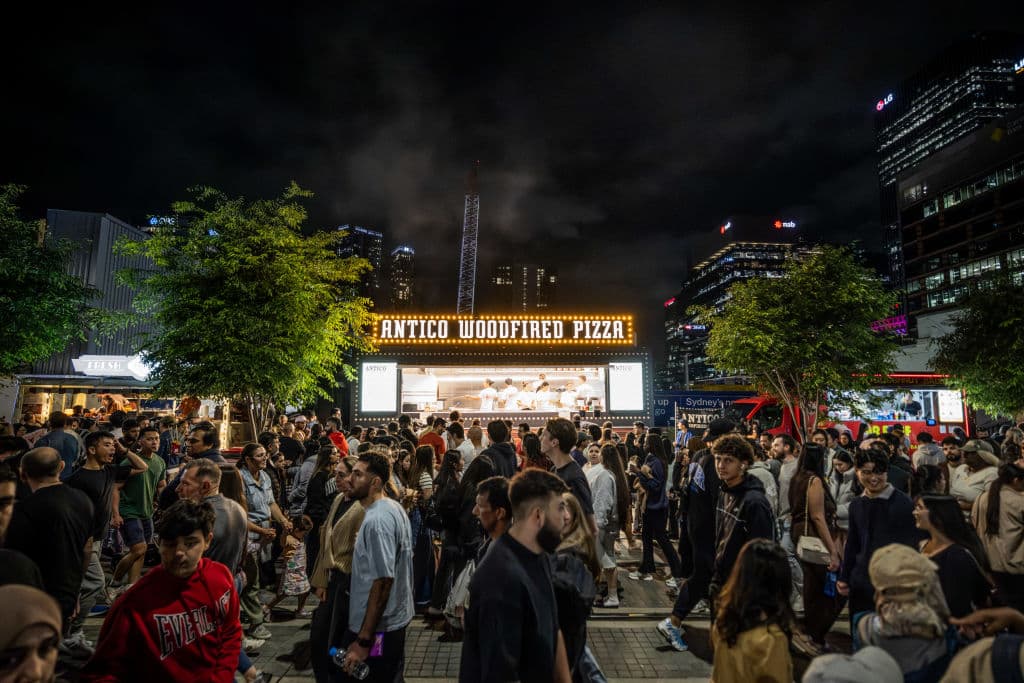
Parramatta is proof that going out after dark is decentralising. Growth in regional and suburban night-time precincts is outpacing CBDs, and provides the most new opportunity for businesses, according to the Visa Vibing the Night report.
Behaviour is driving this pattern nationwide. Almost half (47 per cent) of respondents in the Visa study, produced with McCrindle, say their local nightlife needs more investment, and 74 per cent say they would go out more and try new experiences if it improved.

Melbourne, with its laneway bars and dining, took top spot in the report’s economic index, judged on spend, safety and accessibility, scale of merchants and workers, and government support. Second was Sydney’s city and inner south, followed by its eastern suburbs.
However, several suburban and regional hubs, such as Melbourne’s west, Sydney’s Blacktown, Newcastle, and the NSW Blue Mountains and Hawkesbury areas, outranked metro locations, including North Sydney, the Gold Coast and Brisbane.
Eleven of the top 20 precincts are in NSW, and Parramatta is showing the way. Thousands flock to its iconic Eat Street, Lunar New Year celebrations, concerts and sport at CommBank Stadium, but there is room to grow. “We’ve now got our sights set on becoming Australia’s next global city, and this means being open for business 24/7,” Zaiter says.
Parramatta’s nightlife businesses employ 8800 workers and generated $1.6 billion in turnover in the 2024-25 financial year, representing a 7 per cent annual increase, according to the council. Over the same period, spending rose by $73 million in cafes and restaurants, $8 million in sport and recreation and $7 million in creative and performing arts activities.
With nightlife flying high, the goal is for 150,000 local jobs by 2050.
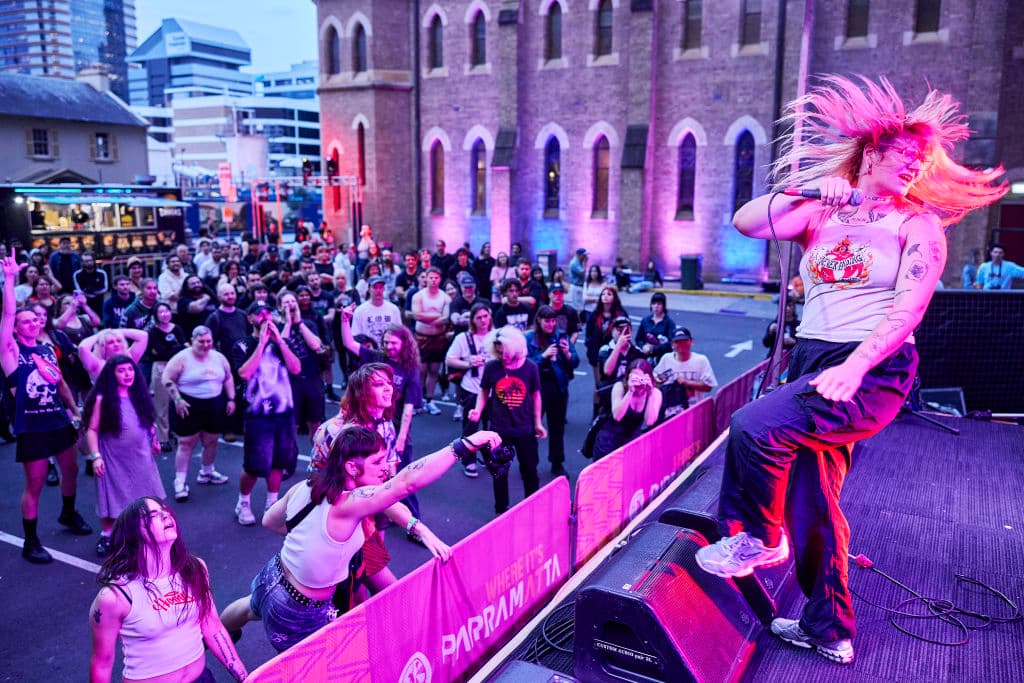
A proposed trial of a Special Entertainment Precinct, through the state government office of the 24-Hour Night Commissioner, is designed to reduce red tape. The precinct covers the area that hosts the annual Parramatta Lanes street festival, which last year drew a record-breaking crowd of 335,000 over four nights.
“This means licensed venues that host live music and entertainment would be able to access additional liquor trading hours and reduced licensing fees,” Zaiter says.
Queensland’s first Night-Life Economy Commissioner, former Powderfinger bassist John Collins, was appointed in late 2024 and has lodged a report with 60 recommendations to the state government. These are still under consideration and have yet to be formally outlined, but Collins has been vocal about reforming liquor laws, ID-scanning rules, and advertising limits.
Paul Butler, director of Ray White Commercial Noosa and Sunshine Coast, says precincts that can trade into the night are attracting stable investment, but his region is operating at a fraction of its bright potential.
“At the moment, I reckon we’re at about five per cent or less capacity of what the Sunshine Coast could be,” he says.
Noosa Junction in Noosa Heads, Ocean Street in Maroochydore and the wharf at Mooloolaba are where Butler has seen the most activity. When areas like these combine security, walkability and like-minded businesses, landlords and tenants share the benefits.
“If properties are able to be rented for a longer period and into a night-time phase, then the rent’s more stable,” Butler says. “It’s more affordable for the tenant, and generally, they become a better, longer-term tenant, so landlords are looking for that kind of consistency.”
Landlords understand the importance tenants place on expedience, Butler says. “The market is strong, but good vendors are putting solid fundamentals into their property, such as a quality outdoor dining canopy and an exhaust grease trap,” he says. “That can take a lot of cost out of a fitout for a tenant, and they can go and hire ovens and deep fryers and be up and running fairly quickly. That speed to market is important.”
Butler adds that increased urban housing density calls for more local precincts that come alive at night.
“People in the future are going to be living in smaller dwellings, and the night-time economy needs residential accommodation around it,” he says. “People need things to do at night, because they won’t want to sit in a one-bedroom apartment.”
For now, Zaiter is overseeing a booming night-time economy, but has a world-class benchmark in sight. “Just like New York, Tokyo, London and Berlin, my vision is for Parramatta to have a globally recognised night-time economy, with a distinct edge and flavour that keeps you coming back for more.”