The businesses thriving in the new 12-hour night
Businesses once braced for the night-time rush that peaked at dinner or late drinks, but now the scene is buzzing in new ways from sundown to sun up.
Nightlife now spans a 12-hour economic window, and Gen Z is reshaping what it looks like to have fun after dark, according to Visa’s Vibing the Night economic report.
Although dining is still the favourite night-time pastime (76 per cent), young consumers want more night markets and festivals, according to the white paper, produced with demographers McCrindle. Almost three-quarters of respondents go out at night more than nine times a month, sometimes by necessity.
“The night-time economy spans the evening, late-night and early-morning hours, covering activities from the end of the working day through to the start of the next,” the report says.
“For many Australians, after-hours are the only time to shop, socialise or run errands. It’s also when people engage in sport, culture and community activities – all contributing to a connected society.”
Michael Rodrigues, the NSW government’s 24-hour economy commissioner, says it is no longer a given that consumers keep 9am to 5pm schedules. In NSW, the night-time economy generates $110 billion annually and involves 168,000 businesses and 1.3 million workers who clock in between 6pm and 6am.

In the jostle for a slice of discretionary spend, malleable businesses are best-placed to capitalise on this shift.
“People’s habits in consumption are changing or have changed, and you can see this most noticeably through the eyes of flexible working, which, post-pandemic, it seems that the assumed connection between work and workplace has changed,” Rodrigues says.
“What underpins that thinking is what I’ve described as flexible asset utilisation. Why restrict use of an asset unless there’s a good reason to?”
Nighttime activity is no longer centred on alcohol consumption in pubs and bars, and now includes retail and cultural events that stretch across a 12-hour continuum, Visa says.
Families are going out at night more often, and this has determined how councils such as Stonnington, in Melbourne’s inner-east, are approaching the growth of twilight trade, the report finds.
Meanwhile, already huge consumer participation in a range of pastimes is growing. The NSW State of the Night report, released last year, found that, since 2023, spending on cinemas is up 37.2 per cent, museums and heritage activities increased 18.2 per cent, and sports and recreation jumped 5.9 per cent.
Landlords who back tenants who participate in the nighttime economy stand to benefit from more reliable rental income and capital appreciation, Rodrigues says.
The night-time economy is growing in a deliberate and structured way. At a grassroots level, Rodrigues’ office has designed special entertainment precincts that guide trading hours and noise levels. There are several across Sydney’s Inner West, including Balmain, Dulwich Hill, Leichhardt, Rozelle and two in Marrickville, following the first in Enmore, and more under trial.

The NSW government’s Neon Marketplace connects businesses to opportunities in 35 “going-out” districts, and councils can access practical frameworks and grants to trial precincts. Improved regulatory settings, such as clear rules around noise complaints, are providing greater certainty.
“We suffered terribly under the lockout laws, but the vibrancy reform agenda has really led to not only a reversal, but an improvement in the overall conditions that businesses now can work in,” Rodrigues says.
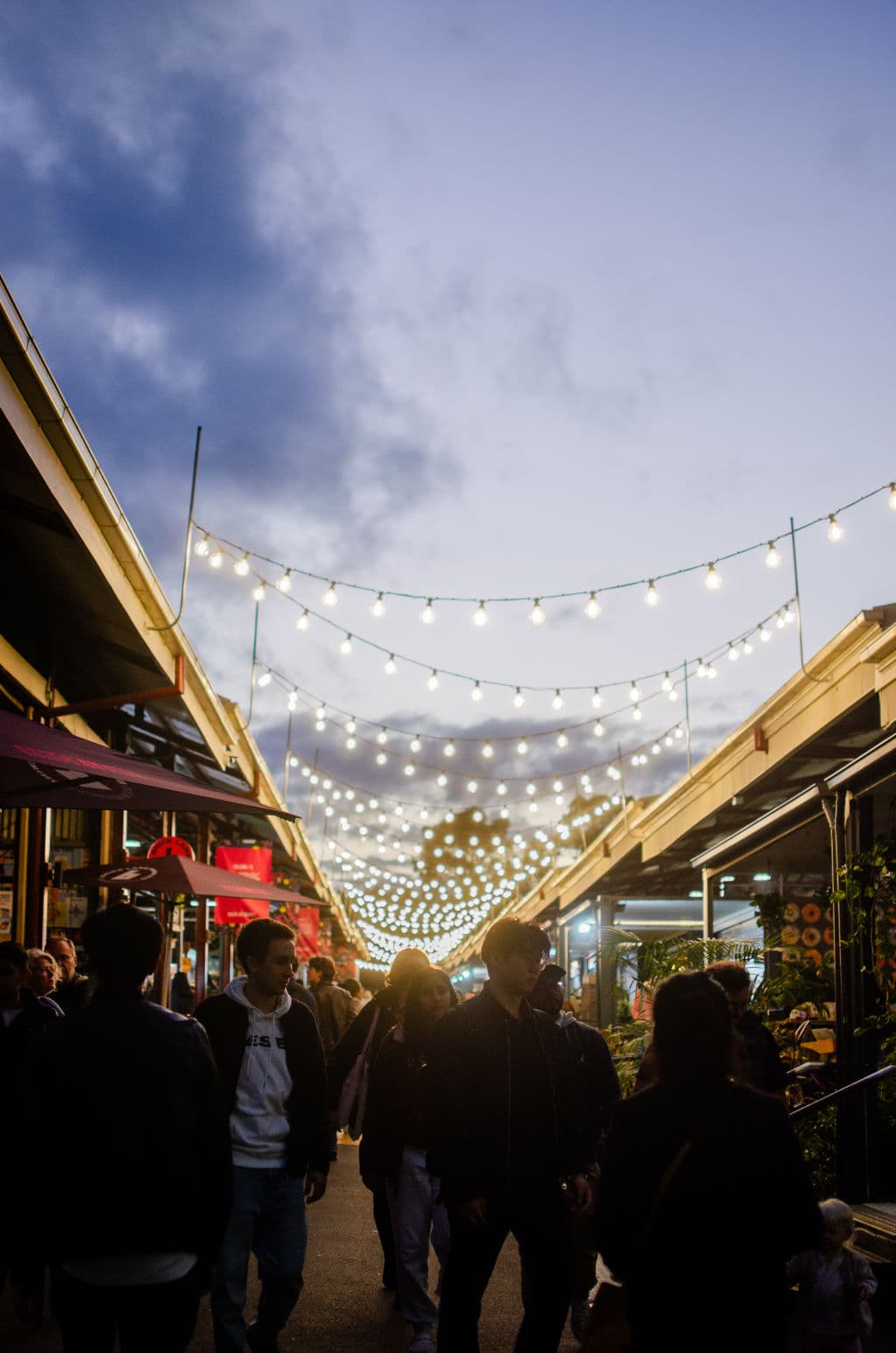
Even long-established ventures have seen that the shutters need not come down on the stroke of 5pm. Melbourne’s iconic Queen Victoria Market has been open for 140 years, but in the last decade, its historic sheds have transformed into night-time summer and winter markets.
Jim Ayass, founder of the market’s Coconut Hub juice bar, says keeping it simple is the key to success across both trading periods. He and his wife Rowayda opened the business more than 13 years ago and serve their signature sugarcane and coconut juices around the clock, adding a churro dessert at night during the cooler months.

“It comes off the farm two days later, it’s getting crushed, and that’s a lot easier if you’ve only got one product,” Ayass says. “It is 100 per cent fresh, so people don’t mind paying a little bit extra. You make it the best of its type.”
Businesses are rapt to be taking part in the QV’s Hawker 88 Night Market, which runs every Wednesday from April 8 to May 6. Ayress says a longer trading period exposes his product to a wider range of customers.
“The night market has a totally different vibe; there is music, and it’s a bit more touristy,” he says. “The crowd is a lot younger, Gen Z and university students, and they’re happy to go out and spend the money. We’re looking at new ideas, so we can attract that diversity.”