How competitive socialising is filling retail vacancies across Australia
There’s a surge in “competitive socialising” venues sweeping Australia, from arcade bars and bowling concepts to mini golf, darts and challenge rooms, and it’s starting to influence how retail space is used. Operators are expanding rapidly, landlords are taking notice, and spaces that once struggled to attract tenants are being brought back into play.
At the same time, the shift speaks to a broader shift in the retail industry. As e-commerce continues to test traditional retail categories, physical space is being centred around experience rather than simple transactions.
The spaces no one wanted
A defining feature of the category is where it thrives. According to Retail Property Australia executive director William Power, competitive socialising operators are “actively seeking out former retail premises or non-standard spaces including multilevel or basement configurations”.
Funlab head of property Zak Gelfand agrees that non-traditional spaces can work, but only when the fundamentals are right. “Most of our activities are pre-planned entertainment, booked online, so non-traditional spaces can absolutely work,” he says. “The key is ensuring the guest experience is intuitive [with] clear wayfinding, logical travel paths and strong arrival moments.”
The combination is helping to absorb large-format vacancies and lower-visibility tenancies that have become harder to lease in a retail market reshaped by online shopping.
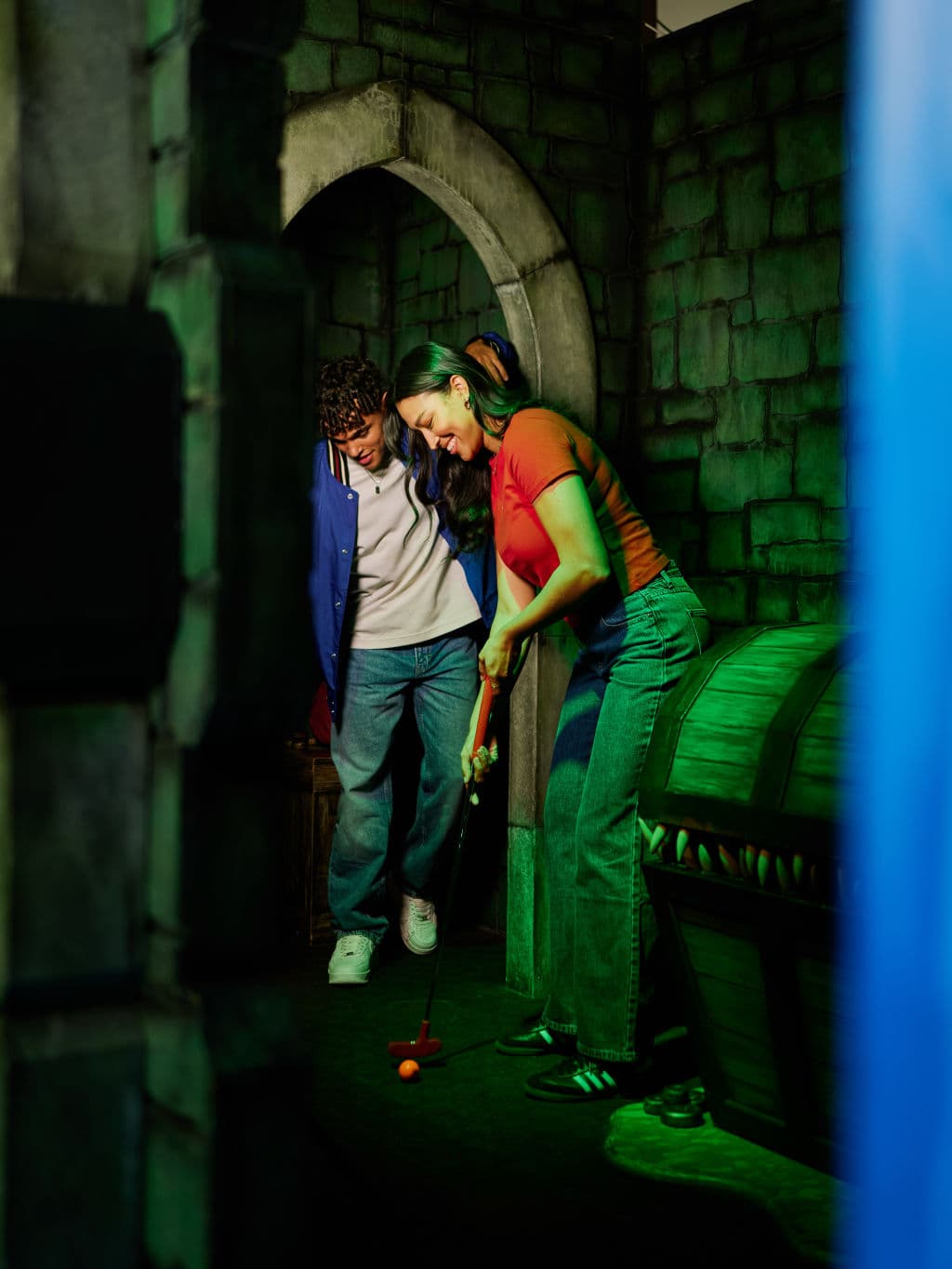
For operators like Funlab, which operates brands including Archie Brothers, Holey Moley and Strike, the shift has been both strategic and structural.
“The scale and size of our projects is probably the biggest shift,” Gelfand says. “We’ve moved away from the standalone model and towards larger, flagship venues … effectively creating an entertainment precinct rather than a single venue.”
The group is increasingly combining multiple concepts under one roof, with co-located venues typically spanning 1600 to 2000 square metres and flagship sites reaching up to 6000 square metres.
That scale reflects growing demand from both customers and landlords, and a recognition that these venues are no longer fringe uses.
Blurring the boundaries
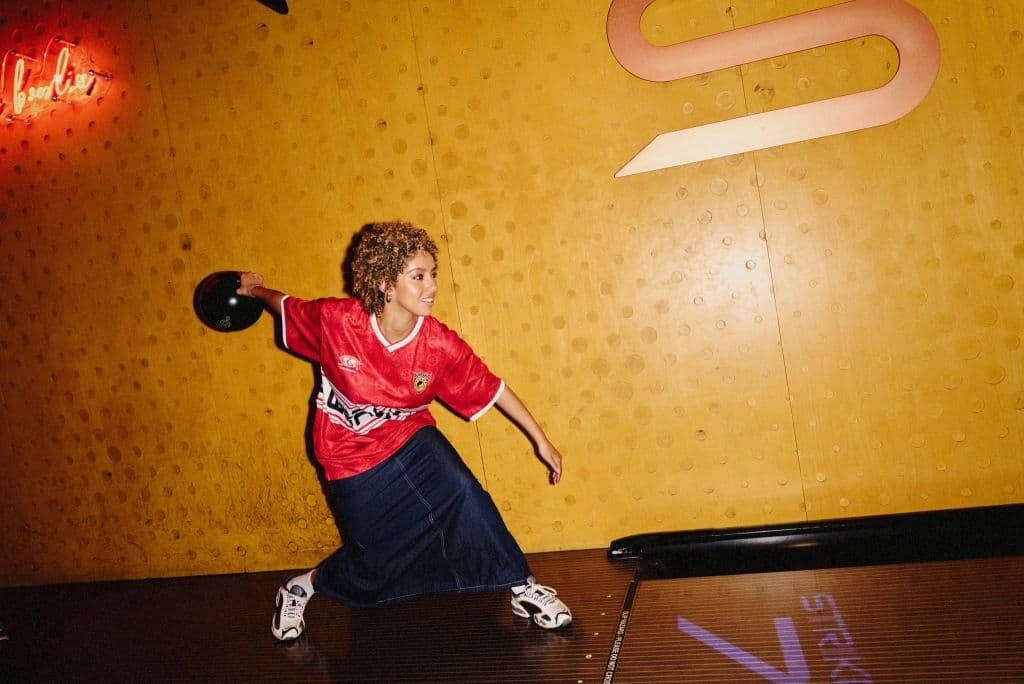
Funlab’s venues combine gaming with food, beverage and events, creating multiple revenue streams within a single tenancy, which is an approach that allows operators to trade across different times of the day and night and appeal to different audiences, from corporate bookings to late-night social groups.
That flexibility is increasingly valuable for landlords looking to diversify income and extend trading hours. “These concepts encourage customers to visit, but then also to stay for longer periods, strengthening the shopping experience into a memorable one,” Power says.
Stay and spend
The key to commercial appeal is purpose. “Retail precincts and centres offer so much more than just a single visit and transaction,” Power says. “They are increasingly a meeting place for the local community, providing a range of experiences and services that meet multiple customer needs.”
In contrast to traditional retail, where visits can be brief, entertainment venues drive extended stays. “With our business, most of the entertainment elements are around 30 minutes, and we often bundle activities,” Gelfand says. “Generally, our customers will spend over 90 minutes in-venue by the time they’ve had some fun, grabbed a drink and maybe a bite as well.”
Longer dwell time is a critical metric for landlords, translating into higher spend and stronger performance across a wider precinct. According to CBRE, experience-led and food-and-beverage precincts play a key role in increasing dwell time, which in turn drives higher spend across retail assets.

Best of both worlds
At a time when retail continues to grapple with the impact of e-commerce, these types of venues offer something that can’t be replicated online, and as a result, experience-led concepts are taking on a distinct role.
Power points to a more nuanced relationship between physical and digital retail, noting that “bricks-and-mortar and ecommerce often have an integrated, complementary relationship to better serve the customer”.
Power says “retailtainment” can deliver part of the experience side, reinforcing the importance of social, in-person interaction in driving foot traffic.
Further insight from the Property Council of Australia notes that physical retail and e-commerce are increasingly complementary, with in-person experiences playing a critical role in driving visitation.
A shift in landlord strategy
The rise of competitive socialising is also changing how deals are done. While Gelfand says the deal structures themselves have not shifted dramatically, the value these venues bring is clear. “Funlab brings activation, dwell time and nighttime trade, particularly valuable in precincts and major centres,” he says.
More significantly, conversations are becoming more strategic and long-term. “Many of our conversations … have become far more forward-looking, rather than simply about filling an empty box,” Gelfand adds, pointing to projects already being planned for 2030 and beyond.
It’s a conversation that suggests reactive leasing is less important than a deliberate curation of experience-led precincts.
Risks and reality
Despite strong momentum, the category is not without risk. High fitout costs, complex base build requirements and planning constraints can all limit where these venues can operate. There is also the question of longevity.
For Funlab, Gefland says the answer is constant evolution. “Fatigue only sets in when concepts stop evolving,” he says. “Innovation is in our DNA … no two venues are the same.”
Taken together, the rise of competitive socialising points to a broader reset in retail. Experience-led tenants are not just filling vacancies; they are helping redefine what those spaces are for. They drive longer visits, activate quieter parts of centres and extend trading into the evening. In doing so, they are shifting the focus of retail from what people buy to how they spend their time.