Hotels are reinvented as co-living spaces as adaptive reuse gains momentum
The Sydney Potts Point Central Apartment Hotel was once a popular base for travellers seeking short stays in the heart of the city, but as demand softened, the original art deco building eventually came to market.
It was bought in May 2025 for $31.5 million by global multi-manager BGO Strategic Capital Partners and the Sydney-based Hotel Capital Partners, and now operates as a chic UKO co-living space after undergoing a modern yet sympathetic renovation.
One of the largest hotel-to-co-living conversions in Australia is Together Co-Living in Melbourne. The project involved repositioning two hotel buildings, a smaller lodge, and a range of shared public spaces across the site, creating a vibrant co-living community.
These adaptive reuse projects are prime examples of how former hotels are being repositioned as co-living spaces to reflect both changing living preferences and the growing appeal of renovating rather than building from the ground up.
Growing tenant appetite for co-living
The rise of co-living is not only being driven by investors looking to repurpose assets more efficiently, but also by increasing demand from tenants as housing costs rise and living preferences evolve.
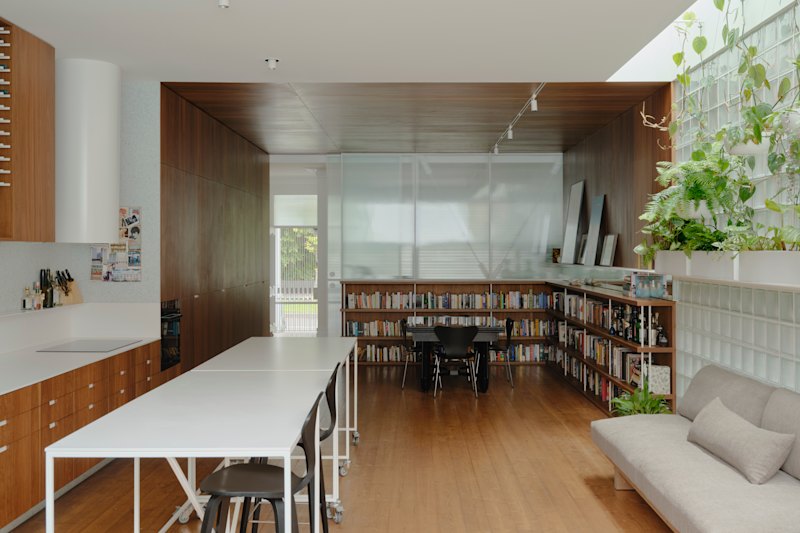
The model typically combines compact private studios with shared amenities such as kitchens, lounges, gyms and co-working spaces, allowing residents to live in well-located neighbourhoods at a lower overall cost.
In inner Sydney, which is currently leading the co-living movement in Australia, research from Knight Frank’s Co-Living Report 2025 shows co-living rents start at around $675 per week, compared with roughly $730 for a comparable apartment before utilities and furnishings are factored in, making the model particularly attractive for younger renters seeking flexibility and affordability.
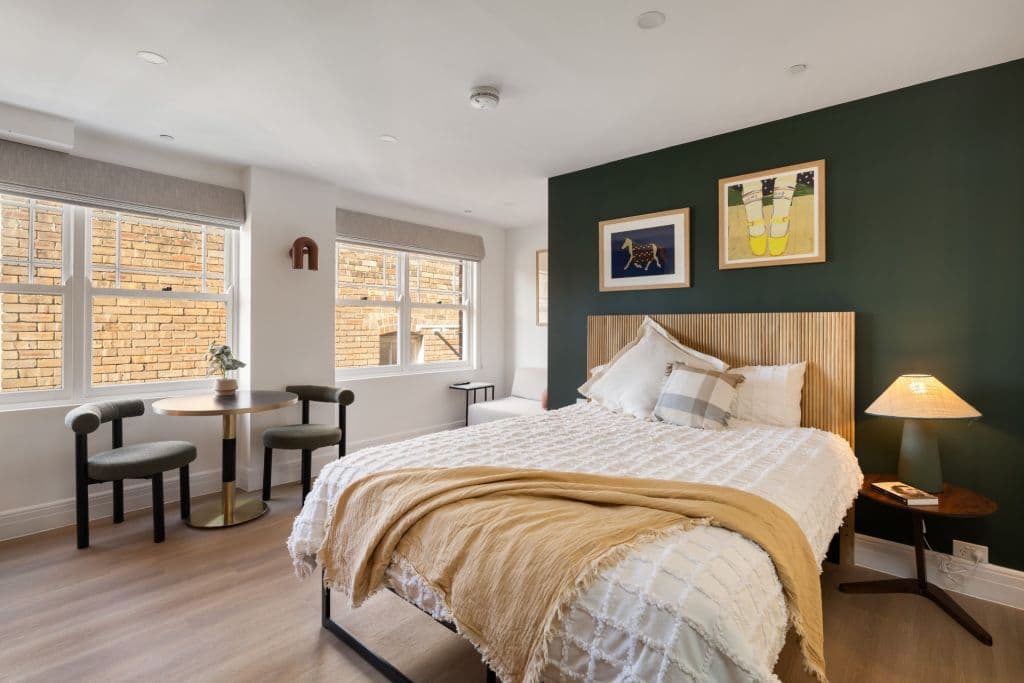
Rhys Williams, co-founder at UKO, said these benefits associated with co-living are enticing tenants to leave the traditional renting market.
“The majority of residents in UKO co-living developments are single young professionals. Co-living has provided the ultimate solution for single renters, which is an extremely deep market. These single renters simply prefer a furnished 25-square-metre studio which meets all of their functional needs with utilities included, lease flexibility and access to amenity areas and a vibrant community in their property,” he said.
“The alternative is an unfurnished 45-square-metre one-bedroom apartment with none of the ‘add-ons’ mentioned above. So, the trade off is a loss of 20 square metres of circulation space (which is not a significant loss for most single people) in exchange for the ultimate single’s living experience!”
Local investors warming to the co-living model
Co-living has been well-established overseas for some time, with investors swooping on developments in major cities such as London, New York and Hong Kong as the traditional rental market becomes increasingly competitive. However, in Australia, it’s still a growing model.
The Knight Frank report shows Australia’s co-living sector has surpassed 10,000 units nationally (including completed projects, developments under construction and schemes in planning), although only around 2000 units are currently operational, highlighting the significant pipeline still to come.
However, Karen Wales, head of hotels at Colliers, said Australian investors remain tethered to the ongoing growth within the sector as developers, operators and institutional capital recalibrate to elevated cost structures and persistent demand for flexible, affordable living solutions.
“The combination of longer stays, lower operating leverage and strong demand fundamentals makes co-living a highly resilient investment,” she said.
As investment strategies increasingly converge across living-sector models of build-to-rent, student accommodation, co-living, and hospitality, the ability to pivot and adapt assets to evolving demand is becoming a strong driver of attractiveness and long-term value.

Why hotels are well-suited for conversion
As many older hotels face growing expenditure requirements and increasing pressure to meet environmental and sustainability standards, more owners are reassessing whether it makes sense to continue operating them as traditional hospitality assets.
For investors, this is creating a window of opportunity. Well-located hotels can often be acquired at a cost below that of developing a new building and repositioned as co-living accommodation, unlocking value from assets that may otherwise require significant refurbishment.
“In an environment where speed, certainty and capital efficiency are paramount, hotel-to-co-living conversions offer one of the most attractive pathways to scalable returns,” said Wales.
“Elevated construction costs and long delivery timeframes have fundamentally altered the feasibility equation for new development. Converting well-located, under-invested hotels allows capital to be deployed quickly and with far less execution risk, making these assets incredibly attractive in a high-cost, low-certainty environment,”
Beyond the financial equation, many hospitality buildings already contain the structural elements suited to residential conversion.
Guest rooms can be reconfigured into micro-apartments or studios, while former lounges, bars and meeting spaces translate naturally into shared kitchens, co-working areas and communal living zones designed to encourage interaction among residents.