One of Australia’s oldest mangosteen orchards hits the market
Long before organic produce became a supermarket staple, Kim Haskell and Anni Rigg were growing exotic tropical fruit in Far North Queensland, fertilising with chicken manure and waiting years for their experiments to bear fruit.
More than five decades later, their certified-organic mangosteen and exotic fruit and nut orchard, Wyalla Gardens, is thriving.
Over the years, they have cleared about 40 hectares in the 756-hectare Bloomfield River Valley pocket, where farm roads offer chances to explore standing rainforest and the Great Barrier Reef.
Now both 76, the couple are selling the 10 freehold titles as a going concern with about 600 mature commercial mangosteen trees and eco-tourism potential for rainforest walks, birdwatching and more, having created the entire production from scratch.
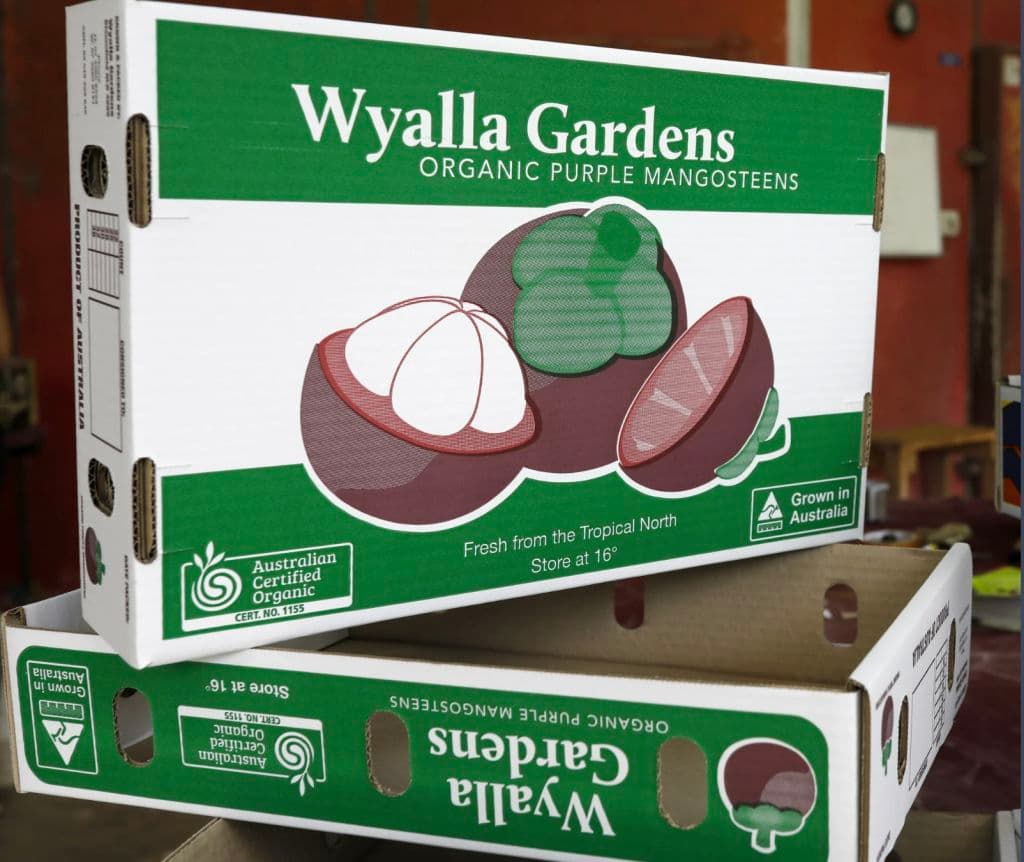
Wyalla Gardens is being offered for sale via expressions of interest through Billy Gartner and Leveaux Gartner of Professionals Edge Hill.
Gartner says Wyalla Gardens is “probably the oldest and one of the largest mangosteen orchards in Australia” and includes more than 315 megalitres of water entitlements and extensive agricultural and residential infrastructure.
“The property offers far more than traditional farming,” Rigg adds, “with significant potential for complementary industries such as eco-tourism, wellness retreats and other nature-based businesses.”
Exotic fruit commercial evolution
The exotic varieties Haskell and Rigg sought when starting the farm were scarce in Australia. Their early mangosteen seeds came from three trees they knew of at Edge Hill in Cairns, Dunk Island and Mossman. Seeds followed from Bali, Java, Sri Lanka and South America.
Their enthusiasm for mangosteens never wavered.
“We knew mangosteens were going to be good right from the beginning,” Haskell says. “The more we collected them and ate them overseas, the more we knew we were on the right track.”
Rigg adds that “the durian’s called the king of all fruit, and the mangosteen’s called the queen of all fruit”.
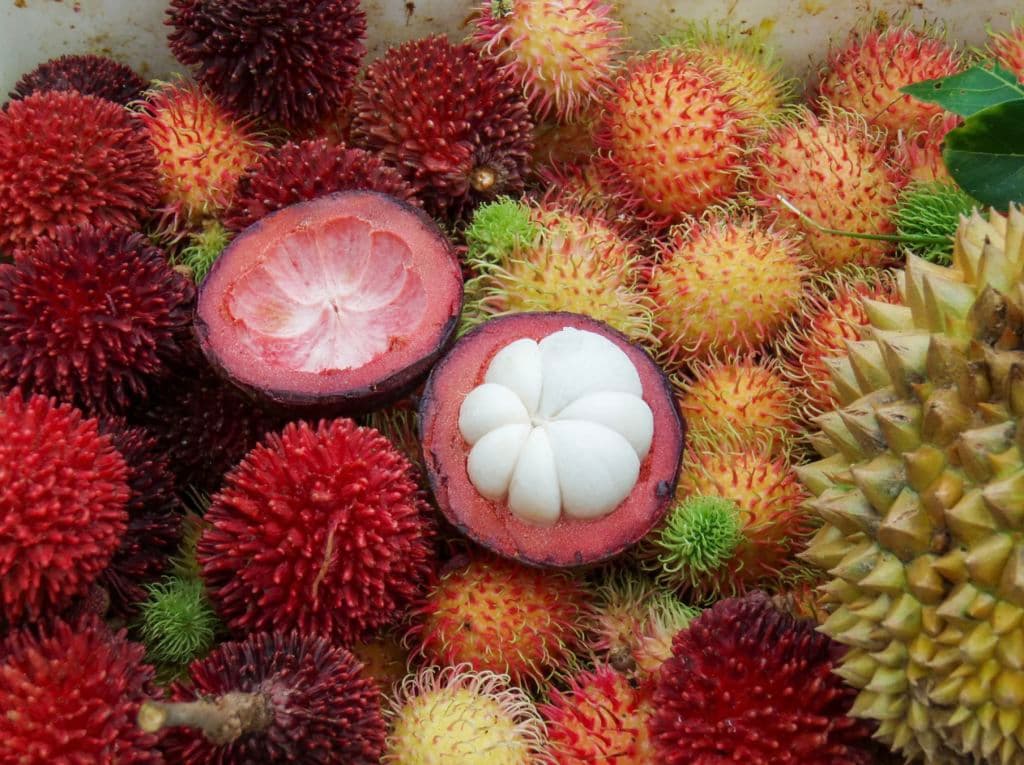
Now the farm’s collection includes rambutans, pulasans, langsats, duku and salak, or snake fruit. Haskell describes salak as looking as though it is covered in snakeskin, with flesh that is “crunchy like an apple, but very sweet”.
Nut trees include Brazil, okari, pili, souari and cashew. Haskell likens the Amazonian souari nut’s flavour to a cross between a pecan and a walnut.
Mangosteens became the main commercial crop for a practical reason: their thick rind protected them from bruising on the district’s dirt roads.
Rambutans and pulasans also travelled well enough to become commercial crops.
Revenue, infrastructure, and titles
Vendor figures put a good mangosteen season at up to 20,000 kilograms and about $300,000 in gross revenue.
There are eight allotments of roughly 26 hectares each on the 756 hectares, plus two extra land parcels.
A 126-hectare rainforest allotment offers exotic timber species with approval to subdivide into three, plus a 420-hectare block with established orchards and irrigation infrastructure.
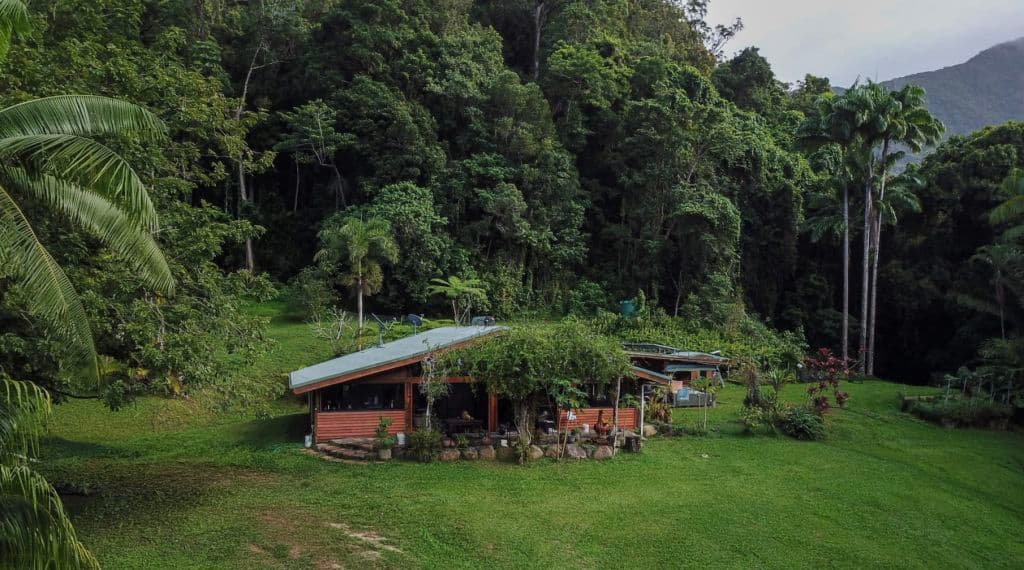
The sale also includes the infrastructure built around the crop: nursery and packing sheds, a cool room, machinery and boat sheds, a sawmill, three-phase power and solar infrastructure. A refrigerated truck, harvest equipment and Kubota machinery are included.
Eco-tourism and expansion potential
The property is marketed as adjoining World Heritage-listed rainforest and national parkland in the Wet Tropics of Queensland region. Its 10 freehold titles offer scope to explore tourism, accommodation or wellness uses alongside the orchard, subject to approvals.
Wyalla Gardens is about three and a half hours north of Cairns and 40 minutes south of Cooktown.
Bloomfield Airstrip is directly opposite, beaches are about 10 minutes away, the Bloomfield River boat ramp is within a 10 to 15-minute drive, and the outer Great Barrier Reef is about 40 kilometres offshore.
The couple plans to move closer to their three daughters and seven grandchildren, but will keep the farm operating while a buyer settles in.
“We’d like to see someone buy the place who would continue what we’re doing, and not just bulldoze all the trees and have cattle or something,” Haskell says.