How US dining brands are reshaping Australian retail real estate
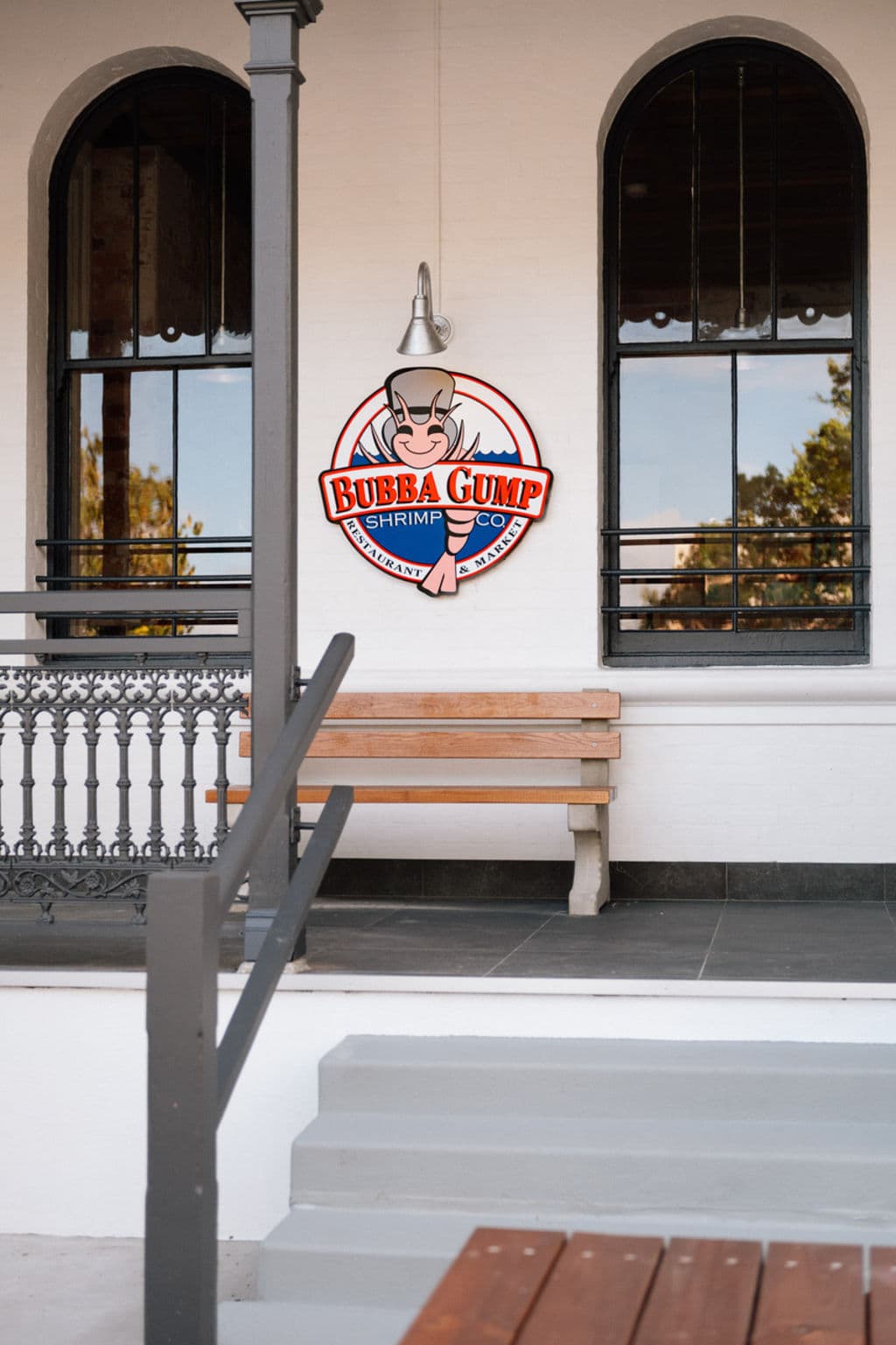
Bubba Gump Shrimp Co. – a Texan seafood restaurant chain famously inspired by the movie Forrest Gump – has just opened in Brisbane, marking the brand’s debut down under.
Brisbane-based investment firm SKJ Capital franchised the business from its US parent company, Landry’s, having selected Bubba Gump for its entertainment-led concept.
“Bubba Gump itself is such a different dining experience – it’s not just another restaurant chain, it’s a fully immersive experience,” says SKJ Capital’s Nerida Murphy. “We’ve got fully themed decor, fully themed rooms and a lively dining experience. There’s rolling trivia … it’s nostalgic as well.”
Bubba Gump’s arrival is part of a recent wave of American dining brands crossing the Pacific. From Wendy’s and Wingstop to Carl’s Jr, Chuck E. Cheese and Cinnabon, scores of American eateries have opened across the country, changing how landlords curate their tenant mix as they increasingly look to differentiate their assets.
Australian market drivers
This country is a logical outpost for American brands, says Sam Embling, director – retail tenant representation at CBRE.
“Australia offers a rare combination of affluent consumers, a stable economy and a very transparent retail market,” he says.
Kirk Edwards, managing director of hospitality advisory and consulting firm C.H.E. Group, points to Australia’s heavily urbanised population, largely concentrated in Sydney, Melbourne and Brisbane, which gives brands an attractive test bed.
“For international brands, this creates an attractive entry opportunity, allowing them to establish a presence in a handful of major metropolitan markets before expanding through a disciplined and controlled rollout,” he says.
Edwards adds that Australians are also ideal customers as they have existing knowledge of international brands.
“Australians have often already encountered these concepts through travel, streaming, social media and online food culture,” he says. “That reduces the cost of explaining the brand and can produce immediate curiosity, opening queues and significant digital attention.”
Strategic site selection
When it comes to site selection, Embling highlights several key characteristics American brands look for.
“They’re definitely looking for high foot traffic, visibility and then aligning the demographics to themselves based on their price point,” he says. “But then also strong surrounding amenities. Many of the brands are favouring established dining precincts, tourist locations and high-growth urban areas.”
Embling notes that shopping centres are often particularly attractive destinations.
“Australia in itself, from a real estate perspective, is largely driven as a shopping centre market,” he says “It’s got significantly less gross lettable area per person than other markets such as the US or Canada, so you’re able to find very high-visitation areas and strong retail markets across these centres they can utilise.”
According to Edwards, shopping centres and other commercial assets can also provide the repeat visits required to support sustainable expansion.
“International brands often arrive with ambitious store targets, but Australia rewards disciplined growth,” he says. “A high-profile CBD flagship may build awareness, while suburban drive-throughs, shopping centres and mixed-use precincts may ultimately generate the repeat traffic required to support a national network.”
Those formats typically work well for quick-service operators, but SKJ Capital took a different approach. The team settled on the outer northern Brisbane suburb of Sandgate, inside a former post office that lent itself to the nostalgic and experiential nature of the restaurant.
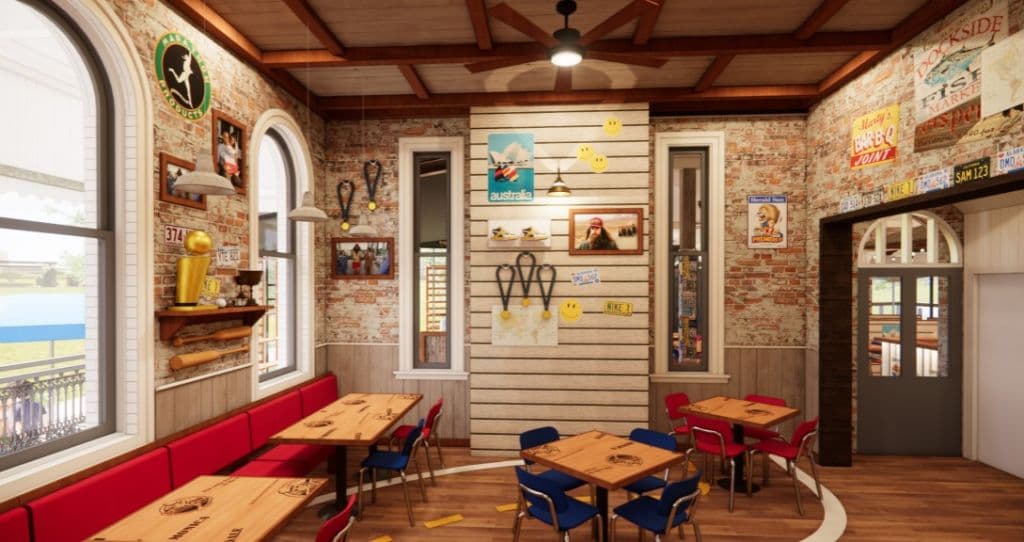
“Bubba Gump romanticises emotion,” Murphy says. “They saw the former post office building and said, ‘This is definitely the vibe.’ It’s not some modern square-looking thing with a couple of windows. There is a lot of character around it, so it suited the intention. You’ve got to find the right bricks and mortar first … that can help tell the story.”
Murphy says Sandgate already has an established dining scene, but local trade isn’t the entire customer base. Instead, diners are travelling to the restaurant despite its suburban location.
“We’re also seeing people drive from the Gold Coast to visit it, and people coming up from Coffs Harbour,” she says.
With this in mind, several international dining brands are to set up shop in Mirvac’s new Harbourside precinct in Sydney’s Darling Harbour.
Landlord anchor benefits
For landlords, the benefits of having an international operator extend far beyond rent. Because they’re often viewed as destination tenants, they have the potential to increase foot traffic and dwell time, activate underutilised precincts and assets, and boost spending at surrounding retailers.
“They’re very encouraging in terms of how they drive visitation and dwell times for customers,” Embling says. “High dwell times will benefit the surrounding retailers.
“Strong food and beverage operators also create atmosphere and activation and a sense of place. As such, landlords are now treating food and beverage as a strategic anchor, not just an amenity.”
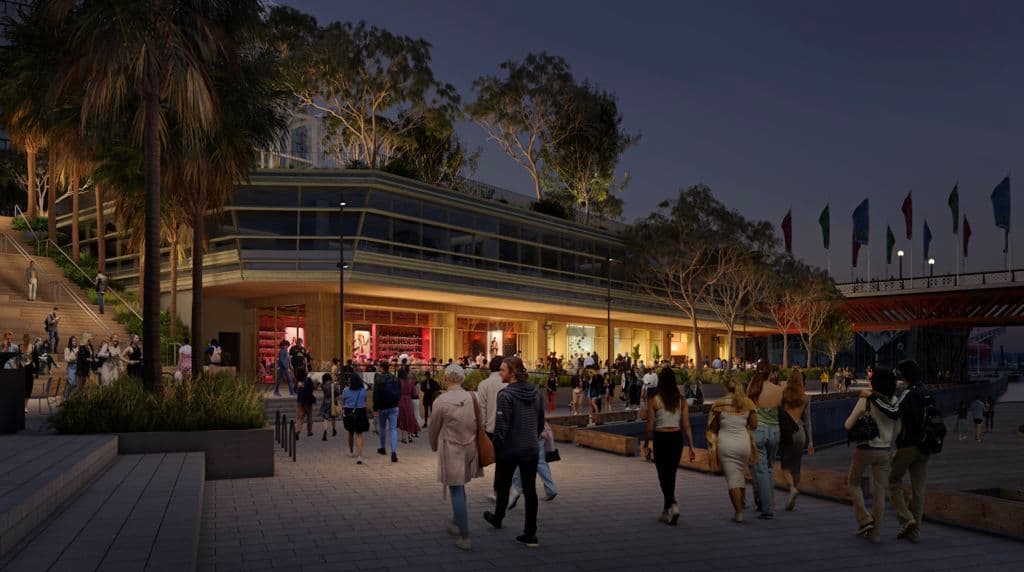
Food and beverage has definitely become an anchor “in the sense that it’s a reason for visiting”, says Alison Flemming, Mirvac’s general manager of retail. “People are using it as an activity, not just a way to fulfil a functional need.”
She notes that consumers have increasingly high expectations around dining, and that landlords need to curate their tenant mix accordingly.
“It all comes back to having a really clear understanding of who your customer is and then curating a tenant mix that meets that need,” Flemming says. “If we’ve curated a mix that gives people a reason to visit all day, it’s something that can be heavily beneficial for both our customers and the retailer’s profitability.”
The growing appetite for international brands doesn’t appear to be slowing, but Embling cautions that the lack of suitable real estate may be a limiting factor for new arrivals.
“We’ve got the major shopping centre landlords with effectively less than one per cent vacancy across their entire portfolio,” he says. “So with the demand of these brands coming in, it’s whether they can actually find the space which makes sense for them and can work.”