Sydney data centre land boom set to grow footprint by 50 per cent amid power and land constraints
The land dedicated to Sydney data centres is set to grow by 50 per cent with land sales for sites of about 100 hectares soon to be finalised.
It marks a huge spike in future data centre development, which had accounted for only 200 hectares of land since 2020. If all upcoming sales are successful, the total figure will rise to 300 hectares.
Sydney’s data centre land surge hits new scale
One of the transactions includes a 52-hectare site in Kemps Creek, which was bought by hyperscale data centre specialist Airtrunk and is conditional on state planning approval of the planned one-gigawatt centre.
A further wave of transactions is expected to be finalised in the coming months, says Luke Crawford, the director of industrial and logistics research at Cushman and Wakefield, who tracks land acquisition by data centre operators.
“We’re working with a couple of operators at the moment, and those deals are close to being done,” he says. “If you add all of them together, it’s probably a further 100 hectares, so it’s quite extensive.”
Sydney has proved to be the hub of data centre development in Australia to date, with clusters throughout the CBD and the northern and western suburbs, including Eastern Creek, Erskine Park, Kemps Creek and Marsden Park.
Why land, power and water are limiting growth
The huge amounts of water and electricity required to run hyperscale data centres, which can house thousands of servers powering cloud computing, big data and AI, mean only certain sites can accommodate them.
Suitable land is in short supply in Sydney, and it’s prompting more data centre operators to look to Melbourne and regional cities.
“It’s very much a Sydney issue at the moment in terms of that rapid activity, but Melbourne has a lot more land supply long-term than Sydney has,” Crawford says.
“So if you look at it nationally, it’s very much Sydney and Melbourne being the two major markets for data centre activity, but there are early conversations with groups pushing up towards Newcastle as well.”
Matt Lee, co-head of the data centre team at JLL, says an impending shortage of viable land, combined with community opposition, is already pushing data centre development outside major cities.
“There’s massive community backlash everywhere at the moment on all data centres in locations that are relatively populated,” he says. “As things get more difficult in terms of power and water and so on, well, we’re already seeing it now – people are pursuing opportunities outside the traditionally recognised locations.
“That will ultimately become the only choice eventually because we will run out of power in metropolitan locations.”
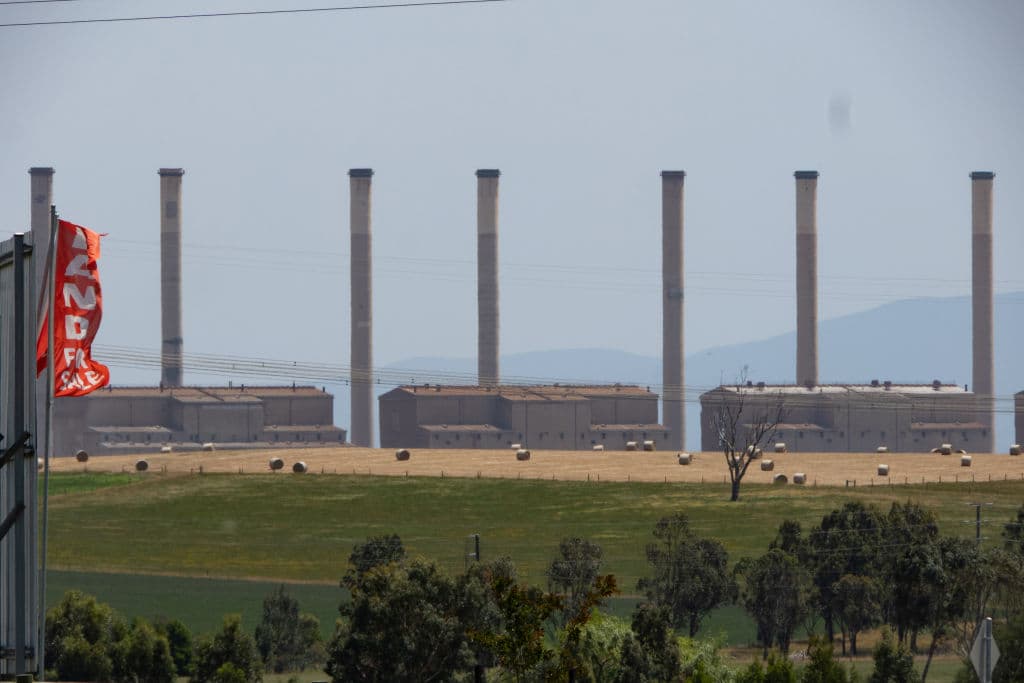
Earlier this year, Singaporean asset manager and operator Keppel announced plans to build a 720-megawatt data centre valued at $10 billion on a 123-hectare site near Morwell. The Victorian country town is located near the site of the former Hazelwood power station, which was decommissioned in 2017.
It’s locations like these, with established major power connections, that present new opportunities to data centre development.
“Anywhere where there’s historic use for manufacturing or high power or whatever – so Newcastle, Wollongong – it could be anywhere in Australia where there’s big power,” Lee says.