Retail real estate sales surge to $3.9 billion in Q2
Sales in Australia’s retail sector have defied expectations and hit new highs this year, with $3.9 billion worth of shopping-centre real estate selling across April, May and June.
This marks a 14 per cent increase on the same period last year, and comes despite retail facing multiple challenges from a severe lack of floor space and inflationary pressures.
Findings in the Colliers Q2 Retail Snapshot report also point to strong performances by neighbourhood and regional shopping hubs, which accounted for $2.6 billion worth of sales in the June quarter.
Major shopping centre transactions
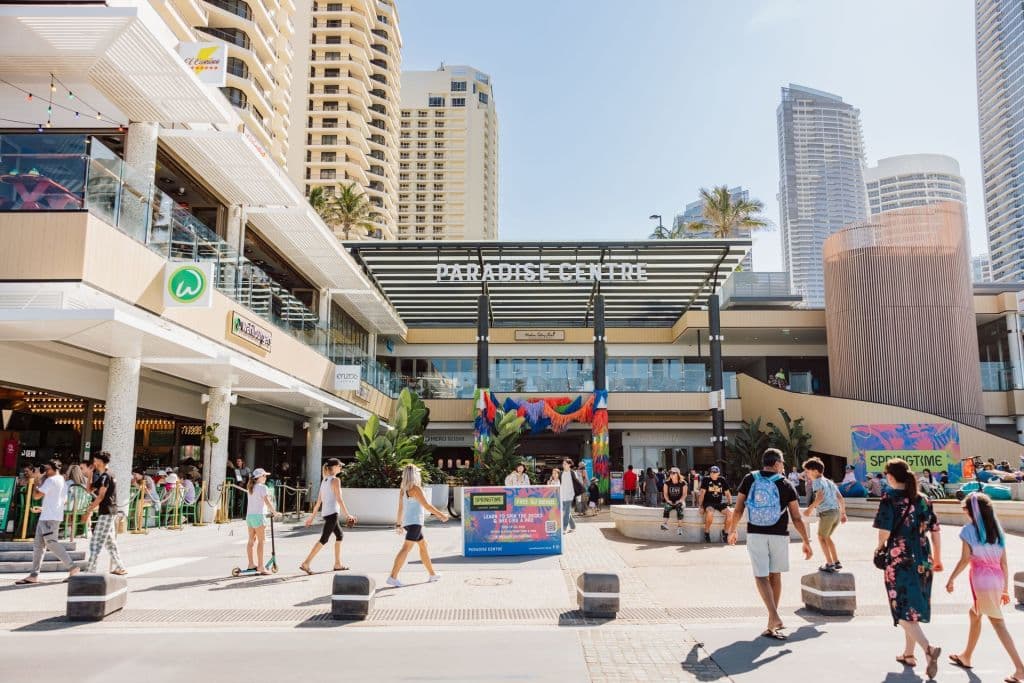
The sales include Paradise Centre and Novotel Hotel on the Gold Coast, which sold for $346.5 million in April. In June, Sunshine Plaza in Maroochydore sold for $622 million, and Westfield Marion in South Australia’s Oaklands Park sold for $670 million.
The strong investment comes despite consumers tightening their purse strings due to rising interest rates and the fuel crisis sparked by the US-Iran conflict. However, spending has proved resilient, rising 5.5 per cent in the 12 months to May 2026.
Colliers researchers found growth across all categories, with discretionary spending in hotels, cafes and restaurants up by 1.9 per cent month-on-month, clothing and footwear up 2.7 per cent and grocery spending up 1.1 per cent.
But perhaps the biggest change emerging in the June quarter was the major increase in the number of new eateries, says Sam Ryan, senior research analyst at Colliers.
“We’ve noticed there’s been a pretty big expansion across all CBD, regional and just retail in general, of food and beverage experiences,” he says.
“So despite ongoing cost of living pressures and inflationary pressures tightening budgets, consumers are still continuing to prioritise dining out and experiential spending.”
This data is supported by the Australian Bureau of Statistics’ Monthly Spending Indicator, which found spending on hotels, cafes and restaurants had risen by 1.9 per cent in May.
“There’s a lot of sales activity, and consumers are still relatively healthy because there’s been some strong wage growth over the past couple of years since the pandemic,” Ryan says.
The latest ABS data shows wage growth lifted by 0.8 per cent in the March quarter and 3.3 per cent annually.
Floor space supply deficit
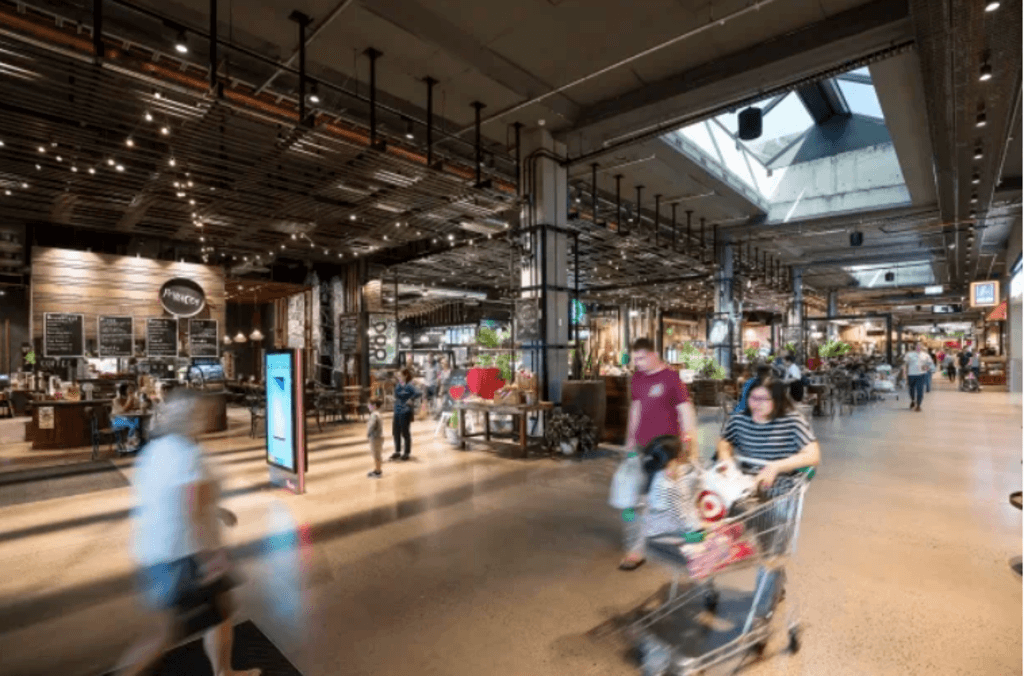
However, the biggest single influence in today’s retail market is the severe lack of floor space. Colliers’ research team has forecast a supply shortfall of about two million square metres by 2035.
It’s already making an impact on vacancy rates and retail rent growth.
“It basically means retail spending is being concentrated into existing centres, which is supporting stronger sales productivity and occupancy levels within those centres,” Ryan says.
“For a comparison, Australia has approximately 0.89 square metres of retail floor space per person compared to the US at 3.32 square metres per person.”
Elevated construction costs are holding developers back from building new shopping centres, and this lack of new space is keeping vacancy rates low and rental growth high.
Rental growth and yields
Annual average rental growth in regional, sub-regional and neighbourhood centres sits between 2.5 per cent and 3.1 per cent, while large format retail leads the pack at 6.4 per cent.
At neighbourhood centres, average gross face rents – the amount paid per square metre, per year before any rent-free incentives – are highest in Sydney at $1175, followed by Brisbane at $950 and Melbourne at $915. Average yields top out at 7.25 per cent in Brisbane, Perth and Adelaide, and at 6.75 per cent in Sydney and Melbourne.
Sub-regional shopping hubs have recorded gross face rents between $1320 in Sydney and $800 in Adelaide, while yields range between 5.25 per cent in Sydney and Melbourne and 6 per cent in Brisbane.
At regional shopping centres, Sydney fetches the highest average gross face rents at $1880, just ahead of Melbourne at $1860. However, Adelaide has the highest average yield at 7.25 per cent.