Secondary office dilemma: refurbish, reposition or rebuild?
Owners of outdated office buildings are finding themselves on the horns of a tricky dilemma: replace, refurb or reposition?
The post-pandemic flight to quality shows no signs of slowing and has created a two-tier market in which secondary stock is increasingly being left behind in the wake of premium and A-grade offices.
Real Estate Investment Trusts (REITs) of all sizes are increasingly competing for occupiers in a market stymied by stubbornly high vacancy rates and elevated construction costs.
Owners of secondary office stock need to make a tough call or face a future of slumping rents and empty offices.
Feasibility dictates upgrades
While every building has its unique set of circumstances, there are determining factors that commonly force office building owners into decision mode, says Hamish Stuart, Knight Frank partner, managing director NSW and national head of office leasing.
“The first is feasibility,” Stuart explains. “Construction costs remain elevated, and in many markets achievable rents don’t yet justify the cost of a new build. Refurbishment typically requires less capital and can be delivered faster, which reduces holding costs and development risk.
“The second is the quality of the existing building itself. Floorplate size and efficiency, ceiling heights, structural grid, core location and the capacity of building services all determine whether an asset can be brought up to the standard today’s occupiers expect.
“The third is tenant demand. The flight to quality remains a defining trend, with occupiers seeking strong sustainability credentials, wellness features, end-of-trip facilities and high-quality amenities. A well-executed refurbishment can position an older building to compete for those tenants.”
To a large extent, construction costs are dictating how the future plays out for the secondary office market.
In a survey of 249 construction respondents by research firm Hubexo, 61 per cent of developers reported high construction costs as the biggest constraint on delivering current projects, and 43 per cent of builders described escalating material costs as a major issue.
Adaptive reuse options
Upgrading an existing building is a common solution, and although costly, it can prolong the life of an office tower and reverse flagging vacancy rates and rental returns.
Ross Grove, the Property Council’s western Sydney regional director, says many owners of secondary stock offices have been prompted into action by new buildings with plush fitouts.
“Owners of existing buildings aren’t standing still,” he says. “We’re seeing a constant cycle of investment in fitouts and amenities as owners compete for tenants.
“Showers and bicycle facilities are appearing in former parking areas, lifts are becoming smarter and faster, and foyers and common areas are being comprehensively upgraded. The modern office building has to offer much more than four walls and a desk.”
Repositioning an asset to become student housing, apartments or an educational facility through adaptive reuse is another viable route for older stock, Grove says.
“Build-to-rent and other residential uses are increasingly part of that conversation, particularly in centres with high office vacancies and significant stocks of older commercial buildings,” he says.
“The answer will be different building by building. Some can be refurbished successfully, some can be repositioned, and some ultimately need to be redeveloped.”
Suitability for repurposing depends on the building’s structure, location and market demand, but the golden rule of real estate still applies, says Connor McCauley, JLL’s head of sustainability.
“It always comes down to location,” McCauley says. “In poorer-performing buildings, but in good locations, you’re always going to have tenants.”
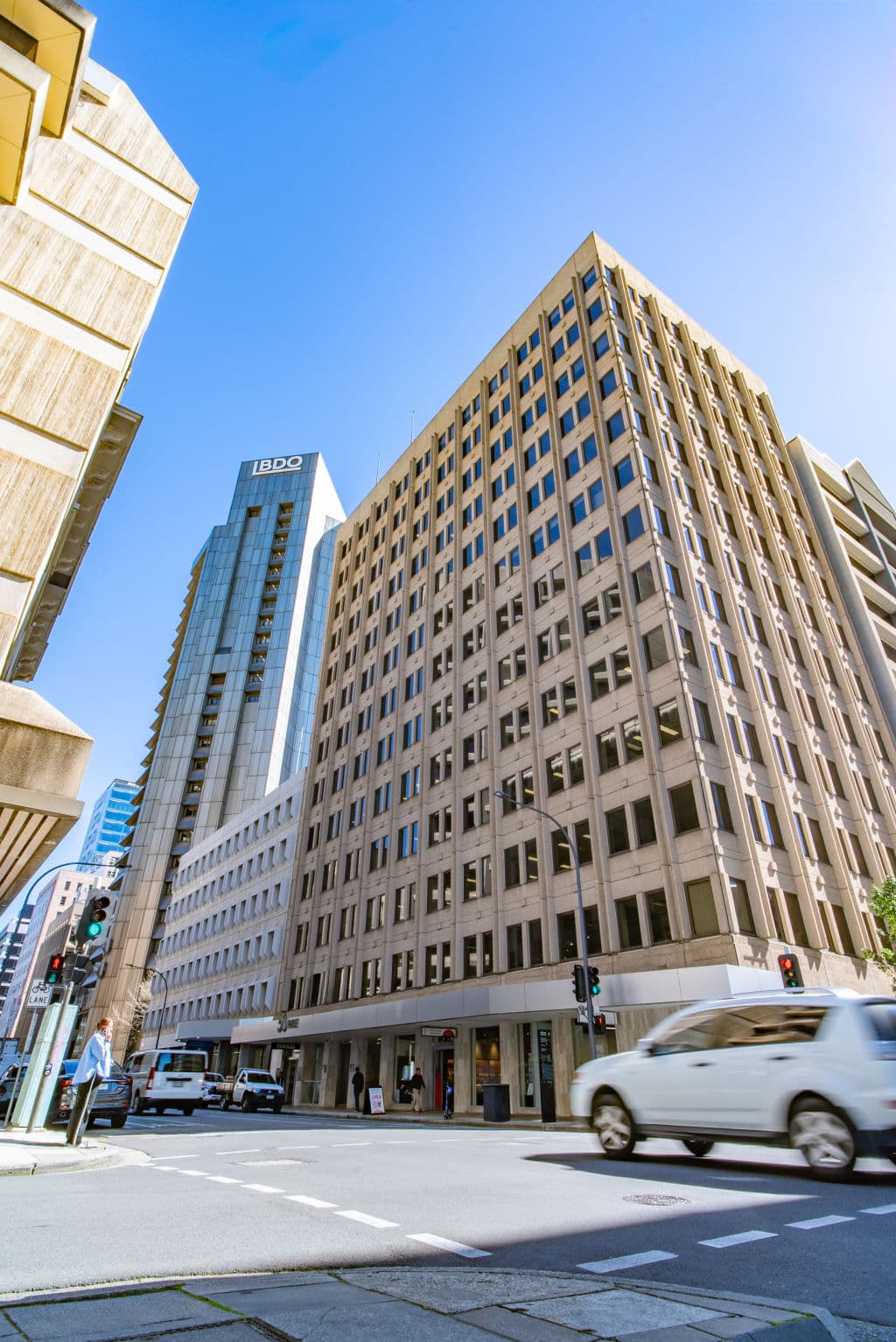
On Adelaide’s Pirie Street, two side-by-side office towers estimated to have been built in the late 1960s were put on the market last week. The six-level building at 44 Pirie Street is only 27 per cent occupied and in need of a large-scale revamp, while the 12-level tower at 50 Pirie Street has 75 per cent occupancy and requires less extensive refurbishment.
Both buildings may need to be demolished in about 20 years, but the best way forward for now is through upgrading, says Alistair Mackie, Colliers national director, capital markets and investment service.
“They’re solid construction, they’re brutalist architecture, and they’re just in the best location in the city,” he says.
“In 20 years, you might knock the two over, but I think that there’s enough life in the buildings right now.
“So what you’re buying is existing buildings with upgrade and refurbishment potential, generated income, and then you’re sitting on probably one of the largest sites right in the heart of the city.
“At the right time, in a few decades perhaps, there’ll be an opportunity to demolish them and build something special.”
Stricter green benchmarks
Sustainability looms large over the future of Australian office towers. Meeting energy efficiency standards is more important than ever, particularly when it comes to satisfying the ESG goals of institutional owners, financiers and corporate tenants.
Newly built offices are commonly fitted with all-electric energy systems to meet NABERS and Green Star performance standards, while older buildings need to be retrofitted to achieve the same.
JLL projections point to all-electric buildings accounting for 7 per cent of all office stock in Melbourne and 15 per cent in Sydney by 2027.
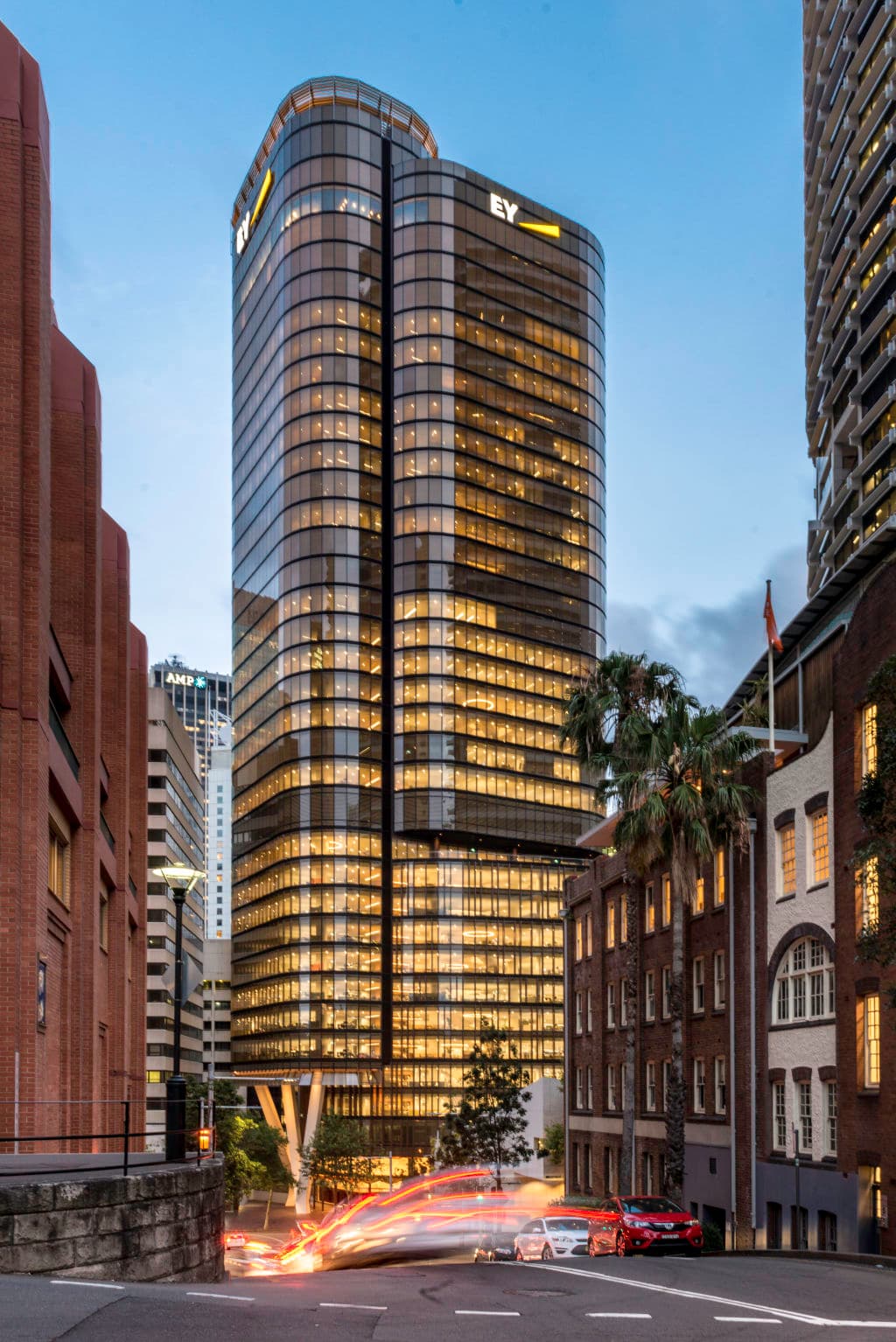
Even relatively new buildings can face problems with green credentials. Last month The Canberra Times reported that the Department of Industry, Science and Resources (DISR), the major tenant at Industry House in Canberra’s Civic, might be leaving the building.
It was only constructed in 2006 and holds a 5-star NABERS rating, but government agencies signing a new lease of more than four years must now reside in buildings with 5.5 stars or higher.
A DISR spokesperson refuses to speculate, but says, “The department will work through its future leasing arrangements in due course, through the usual whole-of-government processes.”
Office mandates a positive signal
High vacancy rates are affecting some sections of the office market worse than others, but across the country the national rate is 16.1 per cent, according to the Property Council of Australia’s July figures. This is a slight increase from 14.6 per cent at the same time in 2024.
Property experts predict vacancies in higher-quality buildings will fall to 10.6 per cent by 2030, while older offices will more or less stagnate at 14.4 per cent by 2030.
In a sign of good things to come for owners, office attendance mandates are becoming increasingly common. CBRE’s 2026 Australian Office Occupier Survey of 651 respondents found 68 per cent now have a mandated office attendance policy. Just 5 per cent reported not having an attendance policy compared to 15 per cent last year.