How migrant communities are reshaping Australia’s suburban commercial real estate
From Harris Park’s Little India to Cabramatta’s Vietnamese retail strips, migrant communities have reshaped Australia’s commercial real estate landscape, transforming suburban shopping streets into thriving cultural and economic hubs.
Beyond food, these precincts have become platforms for cultural identity, entrepreneurship and urban renewal, attracting investors, developers and visitors far beyond the communities that built them.
What often began as affordable entry points for newly arrived families has evolved into some of the country’s most commercially successful mixed-use destinations, driving foot traffic, tourism, residential demand and rising property values – with the commercial strip frequently leading the transformation.
Multicultural precincts and the transformation of suburban retail
According to the latest Australian Bureau of Statistics census data, nearly 37 per cent of Australians have both parents born overseas, while Greater Sydney remains one of the most multicultural cities in the world. Suburbs such as Harris Park, Cabramatta, Burwood, Campsie and Chatswood operate as cultural and economic hubs in their own right, supported by hospitality, retail and service businesses that have created strong place identity and long-term commercial value.
For many migrant communities, affordability was the first driver. As Sydney’s CBD became more expensive, outer-suburban commercial strips offered lower rents, smaller shopfronts and an accessible entry point for new arrivals seeking to establish businesses and build community networks.
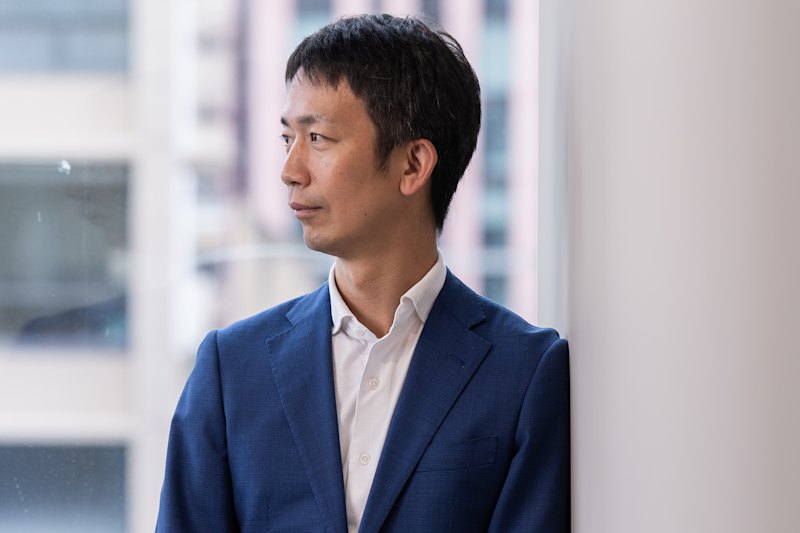
Little India Harris Park Business Association president and business owner Sanjay Deshwal says Harris Park’s growth was closely tied to affordability and westward migration patterns. “When cities become expensive, it’s always the outer suburbs which grow,” Deshwal says.
“Luckily this place had very affordable property, so new migrants and new students could save money, and found it like a soft launching pad for them.”
Deshwal, who moved his own migration consultancy business from the Sydney CBD to Harris Park in 2010, says he recognised early that Western Sydney was becoming a major arrival point for Indian migrants and international students.
“I could see all the people who were giving me addresses were from Parramatta, Harris Park, Westmead and Wentworthville,” he says.
“So, instead of the client coming to me, I moved to the clients.” At the time, he says many questioned the decision to leave Sydney CBD, but today Harris Park is one of Australia’s most recognised Indian cultural precincts, with census data showing that more than 74 per cent of Harris Park residents were born overseas.
How business clustering creates cultural precincts
Once communities begin forming around shared language, culture and affordability, commercial ecosystems quickly follow. Peter Vines, managing director at Ray White Commercial Western Sydney, says the process tends to build momentum rapidly.
“The community starts to move there and then they have people who need to start working, so they open shops,” Vines says. “And then it becomes self-propagating. Once they’re there and you’ve got the culture, people say, ‘You should stay here because this is where the grocery stores are.’”
Deshwal says Harris Park evolved in exactly that way. “One business led to another business, that business led to another business,” he says.
What began primarily with restaurants and grocery stores quickly expanded into migration agencies, travel businesses, accounting firms and education services tailored specifically to migrant communities.
“It’s about people who speak your language, people who understand both countries, people feel comfortable talking to us,” Deshwal says.
That cultural familiarity, he says, is critical for newly arrived migrants adjusting to life in Australia. “When migrants come from busy cities and to Sydney, they feel lost,” Deshwal says. “But when they come to a place like Harris Park, they feel a little bit more in touch with India.”
From local service strips to destination retail precincts
Vines points to Burwood as one of the strongest examples of multicultural retail reshaping an entire urban identity.
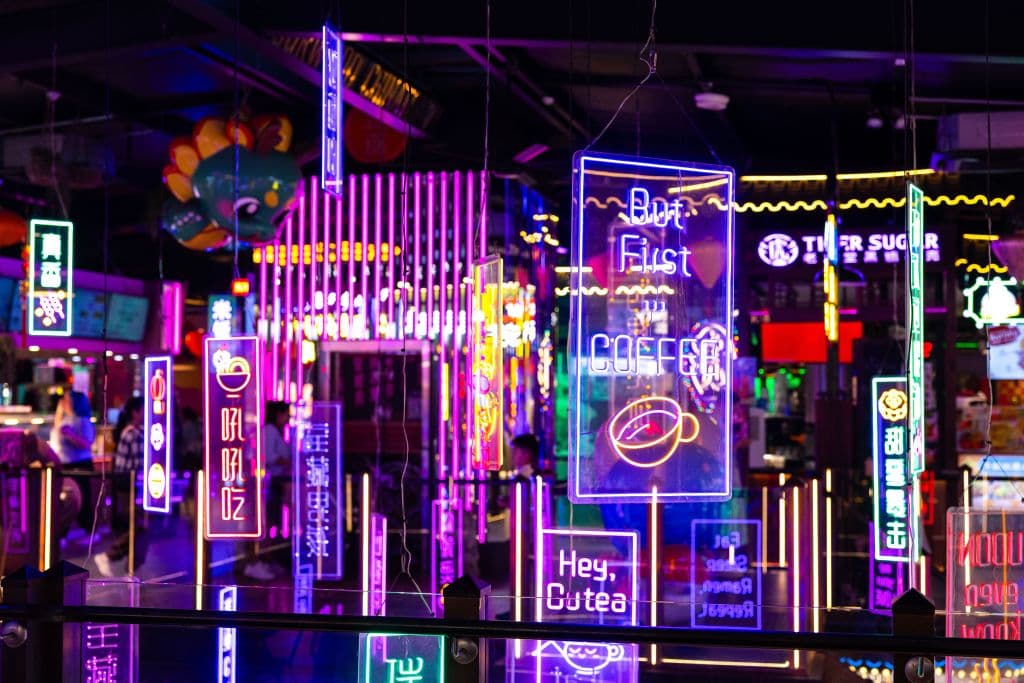
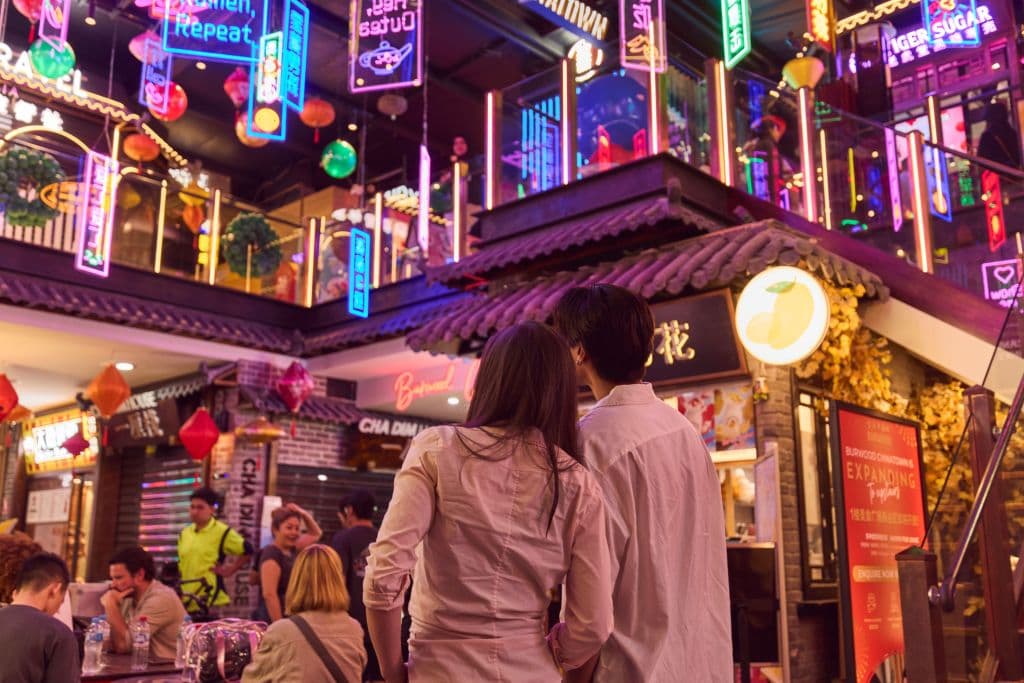
“Burwood has become this incredible food destination,” he says. It’s emerged as one of Sydney’s fastest-evolving urban centres, combining dense residential development with authentic Asian dining precincts, entertainment and retail activation.
Across Sydney, culturally driven precincts are also helping revive physical retail at a time when many traditional shopping strips continue to battle e-commerce disruption.
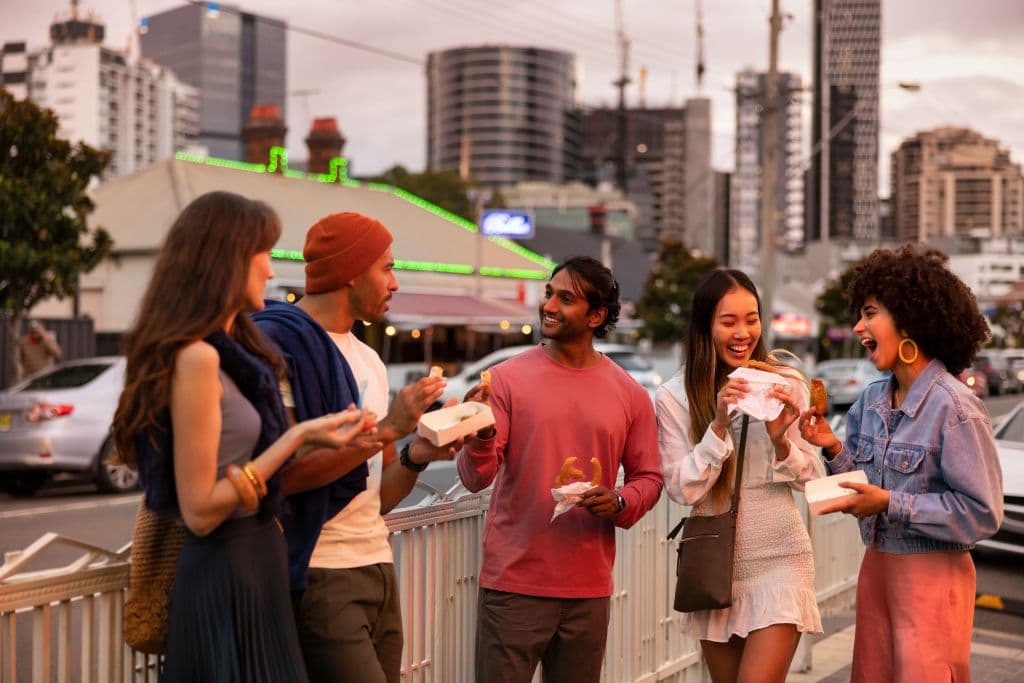
The same pattern has emerged in Harris Park, where Indian restaurants, sweet shops and grocers now attract visitors from across Sydney.
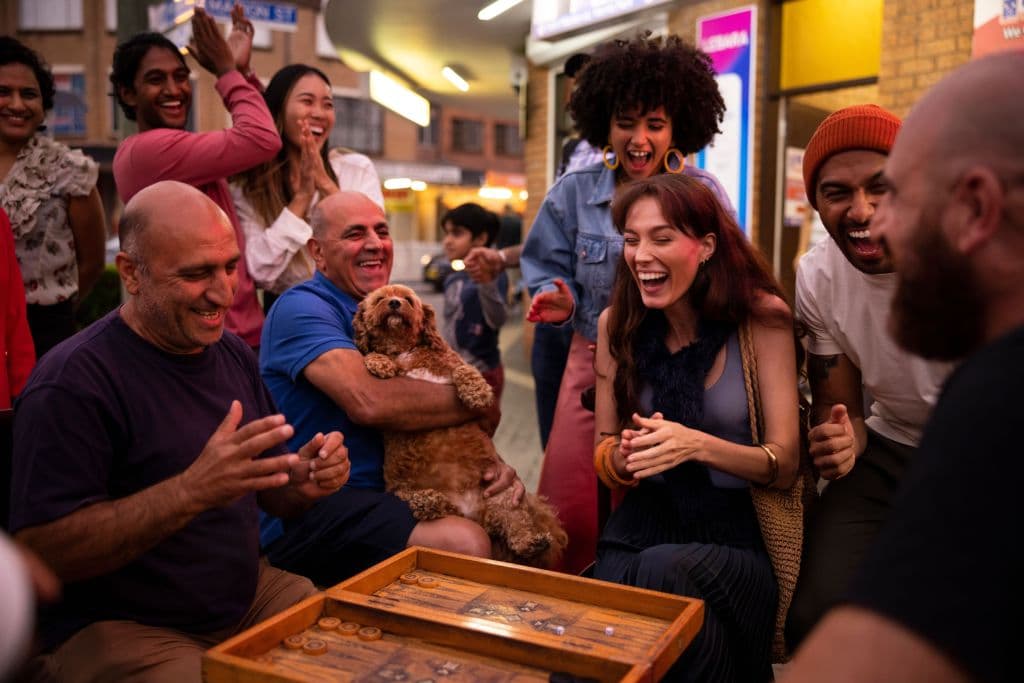
According to Deshwal, the success of multicultural precincts lies in their diversity and convenience. “You can buy clothes, you can do your taxation, you can think about migrating your cousin, and you can enjoy good food all in one day.”
The concentration of businesses creates powerful foot traffic and long-term commercial resilience, and Vines notes that many migrant communities continue to strongly favour physical retail experiences over online shopping. “People want to go and buy their own produce. They want to see the meat they’re buying, smell the spices, walk through the grocery stores,” he says. “That creates foot traffic and destination-style retail.”
Why investors and developers are paying attention
As these multicultural precincts mature, they become attractive investment targets. What was once considered secondary suburban retail is now being repositioned as highly desirable mixed-use real estate. As Vines notes, successful cultural precincts generate a powerful combination of vibrancy, identity and commercial resilience.
“If you can create a destination, people want to be around that,” Vines says. “Then the rents go up. You get strong trading tenants making very good money. Investors want to own property there because it becomes a status symbol.”
The growing demand often sparks redevelopment cycles, with older retail strips giving way to apartment projects featuring activated ground-floor retail, slowly reshaping the suburban skyline.
Deshwal says Harris Park has transformed dramatically since he arrived in 2010. “We never had one building near Harris Park,” he says.
“Now we have 40-storey buildings and 20-storey buildings next to us. Big developers have come.” While rent has gone up, Deshwal says it remains relatively accessible. “It has become expensive, but compared to Sydney and the eastern suburbs, prices are reasonable.”
The rise of multicultural mixed-use development
The influence of these localities now extends well beyond restaurants and grocery stores. Schools, childcare, residential density, public transport and hospitality offerings are intertwined with the success of multicultural commercial hubs.
Vines points to suburbs such as Carlingford, where school catchments and Chinese community growth are now deeply interconnected with housing demand and retail amenity.
“It becomes a whole flow-on effect,” he says. “People want to live in those areas because of the schools, the retail, the community and the amenity.” The evolution mirrors broader changes in how Australians interact with cities.
The trend has also reshaped how developers think about placemaking. Rather than delivering standalone residential towers, many projects now prioritise dining, cultural offerings and hospitality-led streetscapes designed to help build the area’s identity and community connection.
Growth, gentrification and the challenge of success
The commercial success of multicultural precincts also raises questions around authenticity and gentrification. As investor demand and property values rise, some areas risk losing the affordability and grassroots character that originally made them culturally significant.
Cabramatta, however, remains a rare example of a precinct that has largely maintained its authenticity despite significant popularity and investor interest, according to Vines.
“If areas don’t thrive, they die,” he says. “I would rather see them become more popular than watch the buildings deteriorate and the whole area decline.” It’s a fine balancing act between commercial growth and cultural preservation, and it’s becoming more important than ever as Australia’s cities continue to densify.
More than retail – multicultural precincts and urban identity
For Deshwal, the success of precincts like Harris Park ultimately comes back to people. “It’s a win of the community,” he says. “The people who are here, they want to come and make the area nice. They want to make trade. They want to invite people.”
He also believes multicultural precincts play a bigger role in shaping Australia’s identity as a whole.“Little India is there, Little Vietnam is there, Chinatown is there in every city,” Deshwal says. “These cultural places keep the interest alive, they bring tourists and they make Australia a true multicultural success.”
And while many of these precincts began as affordable suburban entry points for migrant families, they’ve also become powerful examples of how commercial real estate can create belonging, identity and long-term urban growth.