Listed landlord braves headwinds in office market

Centuria Office REIT, an ASX-listed landlord with $1.9 billion portfolio, is confident it has passed the low point in the battered office sector, reporting growth in its interim earnings and the value of its buildings, despite facing a market with rising vacancy rates and, as of this week, higher interest rates.
As one of the first real estate investment trusts (REITs) to report for this earnings season, the Centuria-run fund’s financials will be closely attended, particularly as the office market has been the hardest hit across commercial real estate as high rates and soft demand took a toll.
Those headwinds were back in evidence this week, with the Reserve Bank of Australia governor Michele Bullock taking a hawkish tone amid the board’s decision to lift rates this week. Separately, figures released this week by the Property Council show vacancy rates are rising in the biggest capital city markets.
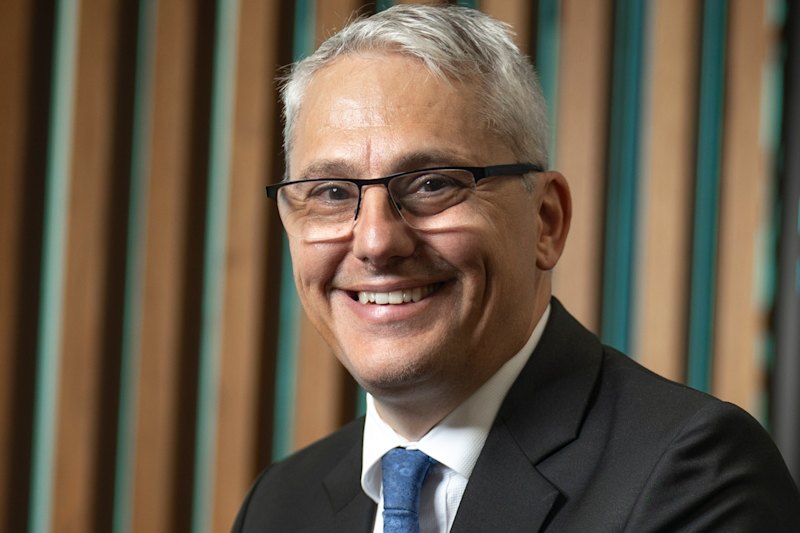
Fund manager Belinda Cheung acknowledged the broader market challenges, but was confident that the Centuria fund’s portfolio would prove resilient, especially after her team chalked up their second-biggest tally of leasing deals, locking in tenants across more than 10 per cent of the fund’s 19-asset portfolio.
Other highlights in the listed fund’s 2026 interim earnings include the sale of one of its Sydney buildings at a 12.5 per cent premium to its book value. It also recorded its second consecutive portfolio valuation gain, of $42.8 million, an uplift backed by rental growth.
“These three points – strong leasing, divestments and also the strong valuation growth – they signal a recovery of the office markets, that we’ve passed an inflection point and that we’re on the pathway to recovery,” Cheung told The Australian Financial Review.

While property trusts are particularly sensitive to rates, Cheung and her team are taking this week’s 25-basis-point hike in their stride, having already offset the prospect of higher rates by hedging 78.5 per cent of their borrowings. The fund’s portfolio remains relatively highly geared at 44.9 per cent, however.
“We shouldn’t have too much exposure to these fluctuations,” Cheung said. The listed fund has reaffirmed its earnings guidance for the full year 2026 of 11.1¢ to 11.5¢ per unit.
Cheung was also confident the COF portfolio, which is 91 per cent occupied, would withstand the higher vacancy rates besetting the broader market, noting that the overall take-up of space – known as net absorption – was increasing and that prime-grade office blocks were holding their own.
Property Council figures for the six months to January showed vacancy rose in both CBD and non-CBD markets. Non-CBD vacancy rose more sharply – from 17.3 per cent to 18.5 per cent – than CBD vacancy – up from 14.3 per cent to 14.8 per cent.
Melbourne, still grappling with the extended aftermath of the city’s lengthy pandemic lockdowns, remains the country’s most vacant CBD, with the rate rising from 17.8 per cent to 19 per cent. Even Sydney, where the rebound in office values and demand is apparent, edged up slightly to 13.8 per cent.
Taking an optimistic view of the figures, Property Council chief executive Mike Zorbas attributed the rising vacancy to the amount of new supply baked in before demand softened.
“What we’re seeing nationally is a supply-led increase in vacancy from projects that started three years ago and are largely pre-committed,” Mr Zorbas said.
“The end phase of this cycle’s new completions has lifted vacancy across our major markets, while the appetite for high-quality office space continues to improve.”
Adding to that sanguine outlook is a separate data point released this week by CBRE, which shows the amount of office sublease space in Australia had fallen to its lowest levels in five years by the end of last year.