Big-box retailers rethink growth as land shortages squeeze expansion plans
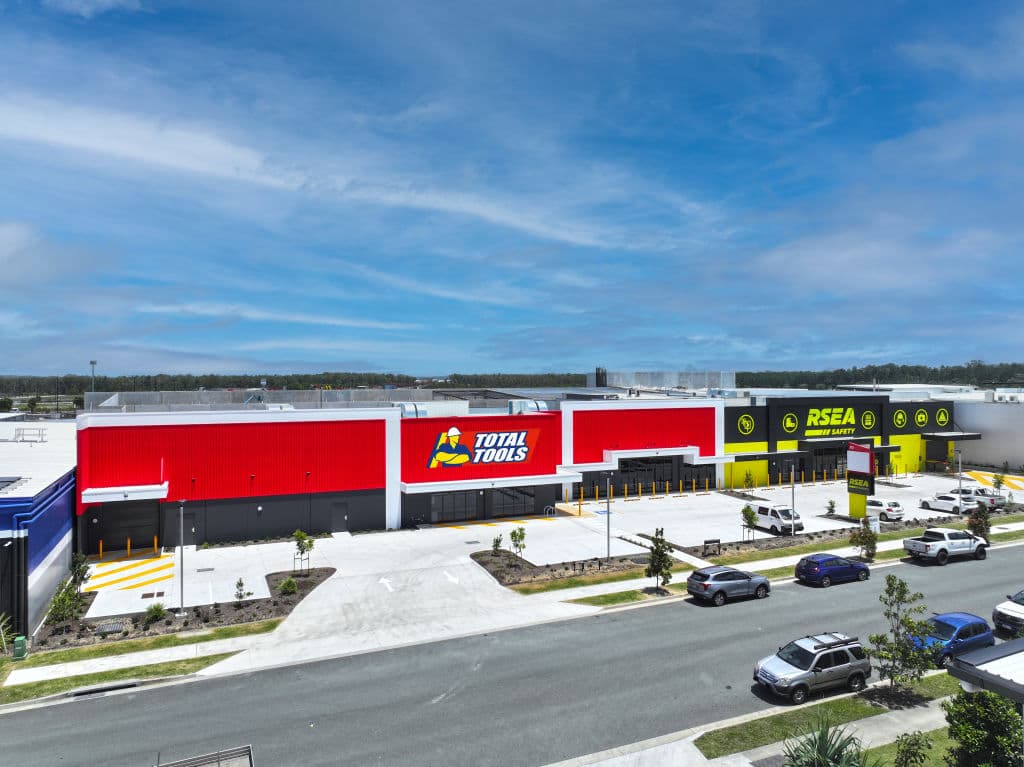
A shortage of newly constructed space has forced large-format retailers to think outside the big box, and many are adapting by opting for smaller sites, ditching on-site warehouses or acquiring and revamping older sites.
Dominated by the likes of Bunnings, Harvey Norman and Repco, Australia’s large-format retail sector is one of the strongest performers in the commercial property market.
However, the sector is being stymied by land scarcity, rising construction costs and lengthy approval processes, which have driven tenants to find workarounds.
How big-box retailers are adapting to smaller footprints
Speaking on a Ray White podcast, Harvey Norman head of leasing and development Alex Capra says tight supply conditions are forcing retailers to find alternative leasing arrangements.
“Historically, there may have been developers creating large-format centres, but it’s just not feasible to do that now given increasing land and construction prices, competing uses over time and approval constraints,” Capra says.
“Attempts to find existing, suitable buildings in growth corridors are near impossible.”
“Out of necessity, we often acquire land directly, putting ourselves and five or six complementary, best-in-class retailers together to curate a strong tenancy mix.”

In many cases, big-box retailers like IKEA and the new entrant K Home have resorted to opening chains of small-format stores.
By downsizing into more compact spaces, large-format brands can continue to generate returns from customers in more urban areas, rather than from traditional occupancies in fringe metro suburbs.
“Retailers must be flexible with store footprints,” Capra says. “If a market needs a 6000-square-metre footprint but only 3000 square metres is available, we adapt by moving warehousing off-site, adjusting department sizes, and tailoring the offer specifically for that catchment.”
Why investors remain bullish on large format retail
Over the past 10 years, investment returns from large-format retail have reached 12.8 per cent a year, attracting investors by the dozen. Further CBRE data points to returns hitting 11 per cent by 2030.
The sector has evolved significantly in the last few years, with pet and gym brands taking up more large-format occupancies. Yet the big names of big-box retailers continue to dominate their share of consumer spending in the category, with furnishings accounting for 27 per cent, electronics 37 per cent and hardware 36 per cent, the company’s figures show.
What the space shortage means for future developments
While construction costs are a thorn in the side of every commercial sector, the biggest constraint on the large-format sector is land availability.
This is not only preventing existing outlets from expanding, but is hampering the ability of new brands to open, says Vanessa Rader, head of research at Ray White Group.
“It’s competing with industrial, and we already know that there’s been a lack of industrially zoned land around the country,” she says. “It’s been squished by so many different things, and then we just don’t have the availability of land.
“So in Sydney, for example, you can’t go beyond the mountains, and in Queensland, the same thing. There’s only so far you can go, and they’ve already moved down south and exhausted a lot of that land that’s on the way to the Gold Coast.
“Whereas in Melbourne, there’s far more flat land … it doesn’t matter which way, north, south or west.”
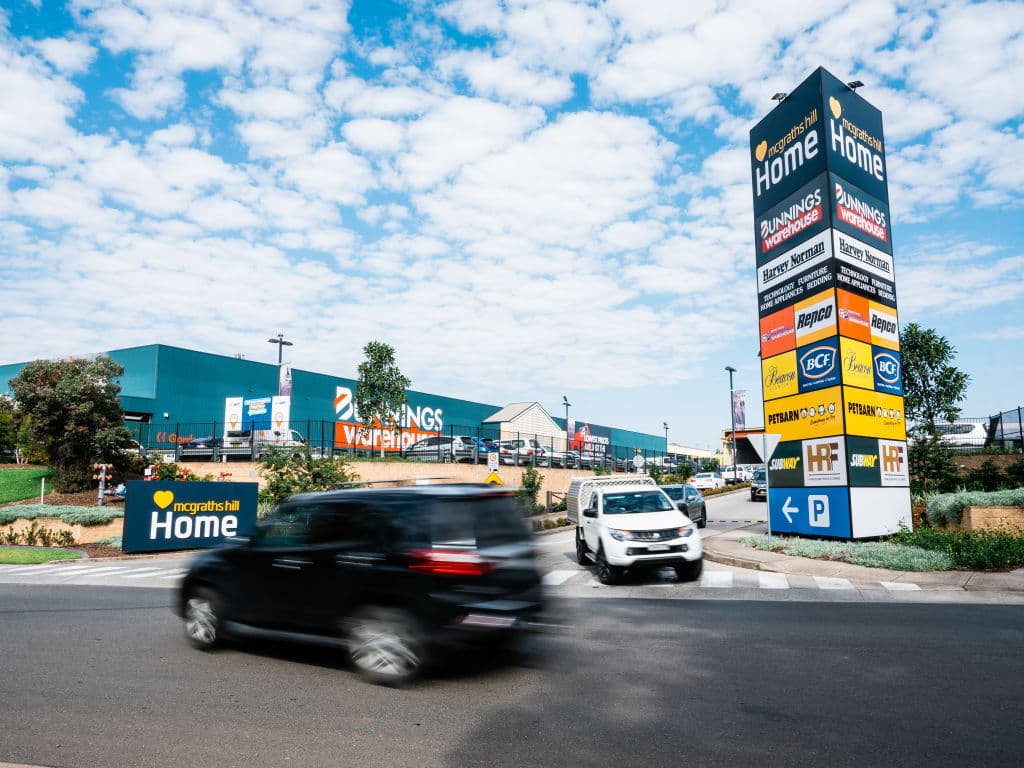
Large-format retail transactions are rare, particularly in metropolitan areas, but last month, a Sydney asset in Vineyard was acquired for $66.8 million.
Investment company Centennial bought McGraths Hill Home, which has a Bunnings. Harvey Norman, BCF, Petbarn and Beacon Lighting, on a yield of 5.6 per cent from Stirling Property Funds Management.
It was only the fourth large-format retail transaction in metro Sydney in the past five years.