New York Pfizer building crisis alerts adaptive reuse developers
Commercial real estate leaders are closely watching an ongoing construction crisis in New York, where a former office building has become unstable during development works.
The former home of pharmaceutical company Pfizer was being converted to 1602 apartments until last week, when columns on the 21st floor began to buckle and levels started sagging.
With Australia’s adaptive reuse market still in its infancy, industry leaders here are closely watching the salvage works.
In the latest steps to secure and stabilise the site, safety nets have been installed around the base of the building. Surrounding buildings continue to be evacuated, and streets remain closed while investigators work out what has gone wrong.
The crisis is being monitored by developers, engineering firms and construction companies in Australia.
Australian standards buffer conversion risks
“The industry will be watching the investigation closely,” says Chris Tyler, Colliers Engineering and Design director, performance, Western Australia and Northern Territory.
“There’s always value in learning from international projects, but it’s important to remember Australia already has rigorous standards and approval processes for adaptive reuse, particularly where there’s a change of building use.”
While there could be lessons from the New York incident, it shouldn’t serve as a reason to turn people away from adaptive reuse development, Tyler adds.
“It’s too early to draw conclusions before the investigation is complete,” he says. “However, based on what’s been reported so far, this appears to relate to the design and construction process rather than adaptive reuse itself.
“If that’s confirmed, it shouldn’t deter developers from pursuing adaptive reuse projects, which remain a proven and valuable development strategy.”
Adaptive reuse, or asset repositioning, has begun to take off in Australia as more companies prioritise environmental standards and meet NABERS standards. It has seen old office buildings converted to hotels, schools and student accommodation.
Architectural mismatch stalls residential conversions
Office-to-residential conversion is not as common, despite Australia being in the middle of a housing crisis and most CBDs having a surplus of B and C-grade office buildings.
High conversion costs and design incompatibility are the two major obstacles, said Professor Philip Oldfield, head of school at UNSW Built Environment.
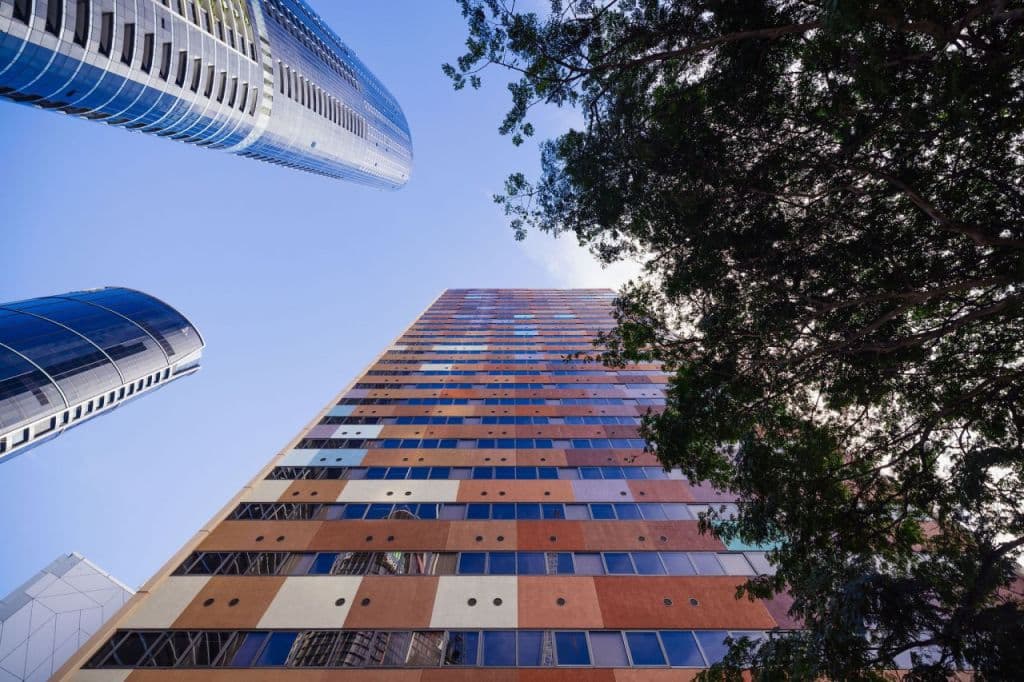
“There are two issues that predominantly stop this from happening: one is architectural, and that is, an office floor plate is not ideal for residential layouts because it tends to be quite deep, and it can be quite difficult to plan apartments ensuring all bedrooms have windows, for example,” he says.
“So you get lots of examples in the US, in particular, where you’ll get bedrooms in the middle of floor plates without windows. That’s not going to wash here. And so the deep floor plate is one challenge.
“The second is feasibility – it doesn’t stack up financially. This is a challenge we’re often seeing. It can be more expensive to convert an office to residential than just demolishing the building and creating a residential building. And so the examples I’ve seen in Australia are typically for high-end.”
Construction crises such as these are rare. One famous example from the 1970s was the Citicorp Centre in New York, where engineers discovered engineering flaws and welders worked secretly to reinforce the building’s bolted joints before a major storm arrived. Another was the Harmon Hotel in Las Vegas, where the wrong reinforcing bars were used, and construction was pared back from 49 storeys to 28 before the building was eventually demolished in 2012.
Oldfield says “the optics are not good” in this most recent incident, but adaptive reuse is still an important step forward in reducing carbon emissions.
“It might put people off, and I think developers and people in the building industry, when you’re dealing with 50-year-old buildings, have awareness of the challenges you might find,” he says.
“But certainly, office to residential is great environmentally. I would argue it can easily save probably 40 or 50 per cent of the building’s embodied carbon, which is a huge amount.
“In many cases, it may be unviable or extremely challenging. But it’s a case of trying to work out what could be feasible and sustainable at the same time. Unfortunately, there’s no one-size-fits-all. It’s going to depend on a case-by-case and site-by-site basis.”