US trends reshape Australian large-format retail sector
Indoor-outdoor malls with more gyms and day spas are on the agenda for Australia’s large-format retailers as the sector follows US trends.
The Australian market will also welcome a major US brand in RH, or Restoration Hardware, when it opens its first outlet in Sydney’s affluent Double Bay late next year.
The continued evolution of the large-format retail sector is proof of its maturity and ongoing success, says Philippa Kelly, chief executive of the Large Format Retail Association.
“RH’s decision to open its first Asia Pacific gallery in Double Bay is a clear signal of confidence in our market,” she says.
“It reflects how far the sector has evolved, from its bulky goods origins to genuine lifestyle and destination retail, and shows that international luxury and lifestyle brands see Australia as investable and ready for scale.
“Given RH’s track record of transforming its galleries into destinations in their own right, combining retail, design and hospitality, a development of this scale suggests RH is backing Australia for the long term.”
The luxury home-furnishing brand has 65 stores in the US and others across the UK, Canada, Belgium, France, Spain, Italy and Germany. It is renowned for its immersive showrooms, rooftop parks and swanky restaurants.
The company, which declined to comment for this article, has partnered with Australian architects MMHNDU and developer Fortis to build an outlet with four levels that includes an interior design studio and a rooftop restaurant.
It will compete with established premium furniture brands in Australia, but bring something entirely new to the market, says Phil Schoutropp, director and principal, precincts sector lead, at design firm Buchan.
“Where RH differs is in the scale and theatrical nature of the experience,” he says. “It brings together furniture, interior design, architecture, hospitality and lifestyle under one brand. From the stores we have visited, that can be very powerful.
“It can also become overly controlled or formal if it loses connection with the customer and the local context. That is where the Australian market will be interesting.”
International interest in Australia’s successful large-format retail sector, which has delivered investment returns of 12.8 per cent per year over the past 10 years, point to changes in the traditional home-maker centre model.
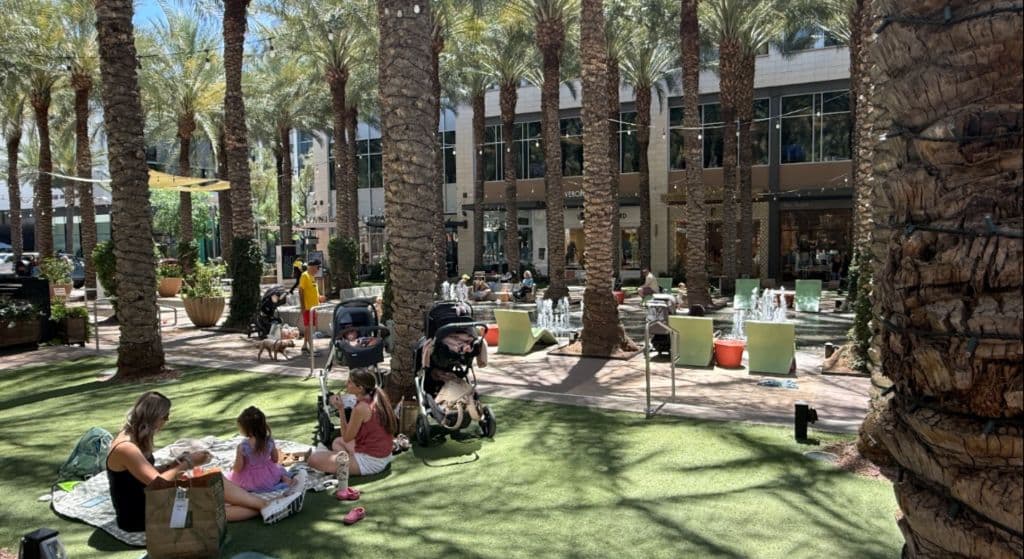
This is likely to include an indoor-outdoor approach, which has proved popular in the US. These malls are pedestrian-friendly and often take a mixed-use approach that combines shopping, restaurants, residential and offices.
“The inside to outside trend is still evolving but is here and has been for a long time in village-style retail precincts such as Harbour Town Premium Outlets on the Gold Coast, which was Australia’s first purpose-built outlet mall,” says Julie Ryan, chief executive of Ray White CSR.
“What we expect to see is further adaptation of retail space to add tenants who are on the ‘outside’ of developments and add to the visual appeal and walkability.”
Large-format retail in Australia is already being reshaped through the increasing integration of wellness services such as gyms and day spas – a trend that has tracked well in the US.
“What is changing most is that the scale of wellness tenants is rapidly growing,” Ryan says. “Brands that are in hype-growth in the Australian market include Fitness Cartel, which has enormous footprints and frequently partners with its wellness sister brand Merse.
“Very high-end gyms, spas and recovery centres are rapidly replacing other retailers. We will see more of these high-visitation lifestyle gyms as we evolve further.”