Federal budget: what's in store for commercial property
Labor’s ‘housing budget’ delivered some of the biggest tax changes in one hundred years with a primary focus on alleviating pressure on the residential housing market. Alongside the major tax reforms, the 2026-27 federal budget delivered for the commercial property sector through an increase in funding for infrastructure, healthcare and tax incentives for small business.
While largely directed at the residential housing sector, changes to negative gearing and capital gains tax will also affect investors in the commercial property sector.
Treasurer Jim Chalmers delivered this year’s budget against a backdrop of rising inflation, interest rate rises and a prolonged conflict in the Middle East that has pushed the cost of living even higher, with impacts already being felt across the commercial property sector. Higher fuel prices, disrupted shipping routes and rising construction costs are reshaping conditions across the industrial and logistics sector.
Inflation is forecast to peak at 5 per cent by the end of June, assuming oil prices do not continue to rise. If the price of oil doubles to $200 a barrel then inflation could hit 7 per cent.
“Australians have been paying a hefty price for this war, at the bowser and beyond,” the Treasurer said.
“As Australians, we confront these serious challenges together from a position of strength. We are much better placed and better prepared than most countries to deal with this global crisis.”
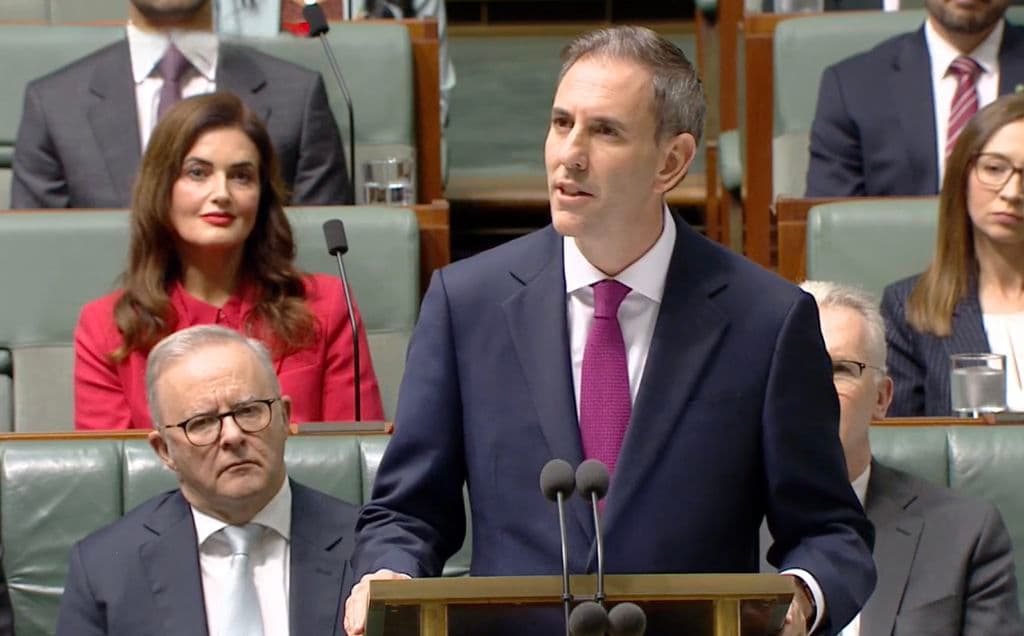
Chalmers said growth remained stronger in Australia than other comparable nations, while we also experienced solid growth in income and historically low unemployment.
“Before the war, GDP growth was strengthening and broadening. The outlook for business investment remains robust, with a solid pipeline of data centre and renewable energy projects.
“We know there’s more work to do because the immediate costs and consequences of this war are already serious and could be severe. At the same time, our economy is being reshaped by structural shifts across energy, industry, technology, demography and geopolitics.”
Here are the key take outs from the federal budget:
Capital gains tax and negative gearing
The government will repeal the 50 per cent discount for capital gains on assets that are held for at least one year. Capital gains will be calculated using a previous model that indexed gains for inflation, with tax paid on the “real” increase of the asset’s value.
The changes will be grandfathered for assets purchased prior to this date. Investors who choose to invest in new builds will be able to choose between the 50 per cent discount or the inflation-based calculation when they sell.
The government will also apply a minimum 30 per cent tax rate to capital gains from July next year, and on discretionary trusts the following year.
Negative gearing benefits will be limited to new build residential properties from next year, with no specific mention of commercial property.
Colliers CEO Malcolm Tyson said the changes to capital gains tax and negative gearing would likely lead investors to reassess their portfolios and investment strategies.
“The Budget delivers a material shift in investment taxation settings, most notably through changes to capital gains tax treatment and negative gearing arrangements,” he said.
“These measures are likely to prompt a period of reassessment across commercial property markets as investors re-evaluate after-tax returns, pricing expectations and broader capital allocation decisions in response to the new settings.”
Infrastructure
The government has established a $2b Local Infrastructure Fund for states and territories, local governments and utility providers to deliver housing infrastructure in the form of local roads, water connections, power and sewage.
A 10-year pipeline of infrastructure projects will receive more than $120b over the decade, with $8.6b for nationally significant projects.
The budget includes $812.5m to upgrade Queensland’s Bruce Highway between the Gateway Motorway and Dohles Rocks Road, and $45m for improvements to the M1 in NSW.
The budget allows for $50m to upgrade the Sydney to Canberra rail corridor and an extra $3.8b for Victoria’s Suburban Rail Loop Project. The $34.5b project to link 13 stations between Cheltenham in Melbourne’s south east and the airport will be built in stages. The first section – a 26km underground tunnel linking Cheltenham to Box Hill via Monash and Deakin Universities – is scheduled to open in 2035. The federal government has committed $6b in total funding for the project to date.
Ray White head of research Vanessa Rader said funding packages were better placed to address constraints simultaneously than in previous years.
“The enabling infrastructure commitment targets a problem that has been underinvested for years, the workforce measures begin to address the trades pipeline, and the broader infrastructure program continues to create the transport and logistics corridors that unlock residential and commercial development over the medium term,” she said.
“Whether the cumulative effect comes together quickly enough to meaningfully shift housing supply and affordability remains the central question for both residential and commercial property markets in the years ahead.”
Small business
The $20,000 instant asset write-off for small businesses used for the purchase of new equipment or other assets will become permanent for small businesses with an annual turnover of less than $10m.
Small business will also benefit from the reintroduction of loss carry back, allowing eligible businesses with turnover of up to $1b who make a loss in the current income year to receive a refund against tax paid in the previous two years.
Tax incentives for venture capital will also come into play in July 2027 in a bid to encourage more investment in the sector.
Defence spending
The government will tip an extra $53b into the defence budget over the next 10 years.
This will include initial funding of $12b for the Henderson Defence Precinct in Western Australia, to improve naval shipbuilding capabilities.
Government spending on defence, particularly on AUKUS, is translating into strong demand for commercial property.
Beyond the immediate uplift in defence activity, the investment wave is having a significant impact on Adelaide’s property sector – taking it from a steady secondary market to a far more competitive investment destination.
The rise in demand is largely driven by the AUKUS submarine program, a multi-decade pipeline that will see tens of billions of dollars flow into South Australia. Two of the most significant developments are the Osborne Naval Shipyard and the Edinburgh Defence Precinct, located in Adelaide’s north.
Fuel and energy security
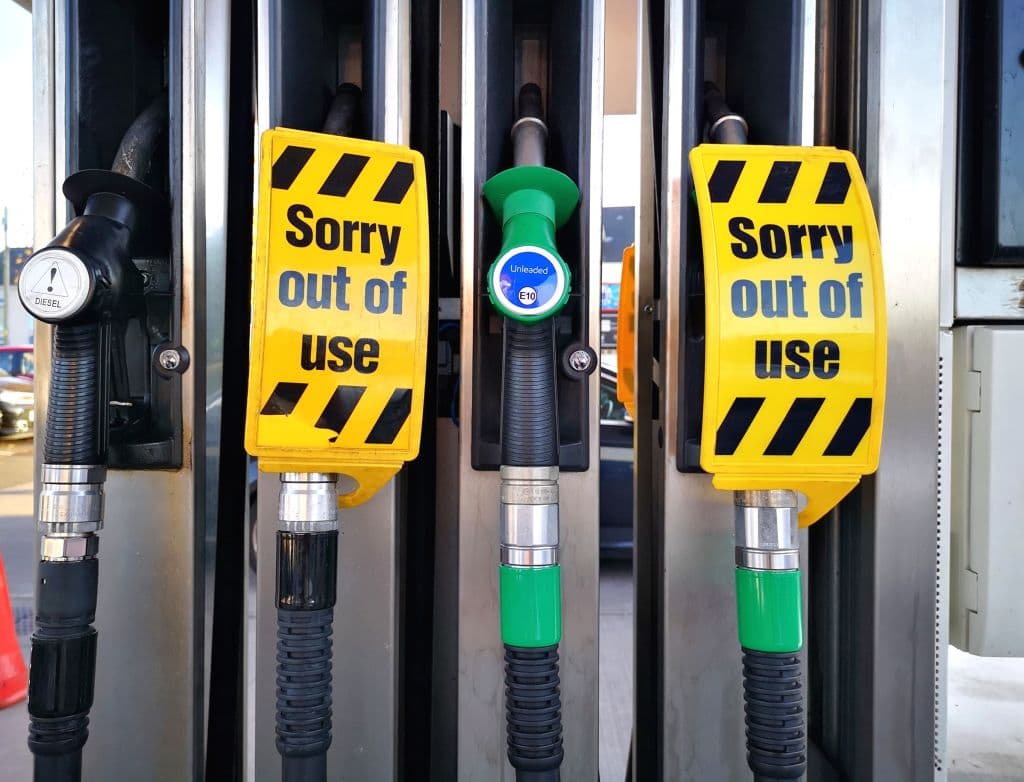
The government has committed $14.8b to strengthen the country’s fuel security, including shipments of fertiliser for use in primary production and the budget includes the establishment of a $3.2b fuel reserve with approximately 1 billion litres of diesel and jet fuel.
Manufacturing and logistics companies will be eligible for interest‑free loans from the National Reconstruction Fund’s $1 billion Economic Resilience Program to help with cashflow pressures stemming for increased fuel costs.
Elsewhere the government will provide $55m in funding to incentivise increased ship and rail freight, and announced a 20 per cent gas reservation scheme to ensure LNG exporters supply the domestic market.
Healthcare
The government will deliver an additional $25b in funding for public hospitals over five years as part of a deal struck between the federal and state and territory governments in January this year. Total funding for the period will hit $220.3b.
The budget also provided $1.8b in funding over four years for 137 urgent care clinics across Australia, aimed at easing the strain on public hospital emergency departments.
The aged care sector will benefit from $3.7b in funding to increase residential aged care accommodation, accelerate Support at Home packages and enhance aged care services.
Investor demand for healthcare has surged in recent years off the back of an aging population and ongoing public spending.
Rader said healthcare properties have become one of the most sought-after asset classes in recent years.
“Transaction volumes in this sector have been volatile, reflecting a relatively thin market with a small number of high-value assets, but investor appetite has been consistent. Activity has been concentrated in Sydney and Melbourne, with growth in South East Queensland aligned with population growth and regional New South Wales also featuring in recent years,” she said.
“The investment case is well supported by fundamentals. Medical tenants are among the stickiest in commercial property. Fit-out costs are substantial, patient bases are place-specific, and referral networks take years to establish. Practitioners do not relocate readily, lease terms are long, and vacancy risk in quality facilities is low.
“With demand fundamentals strengthening and yields at current levels offering genuine value relative to the risk profile, healthcare property is increasingly well placed to attract a broader investor pool, including those who previously found yields too compressed to justify entry.”