Surfing, skiing and arcades: how experience-led attractions are reshaping the inner city
City-based snow enthusiasts once had to travel several hours to get their alpine fix, but later this year, they’ll only have to venture to Melbourne’s inner west.
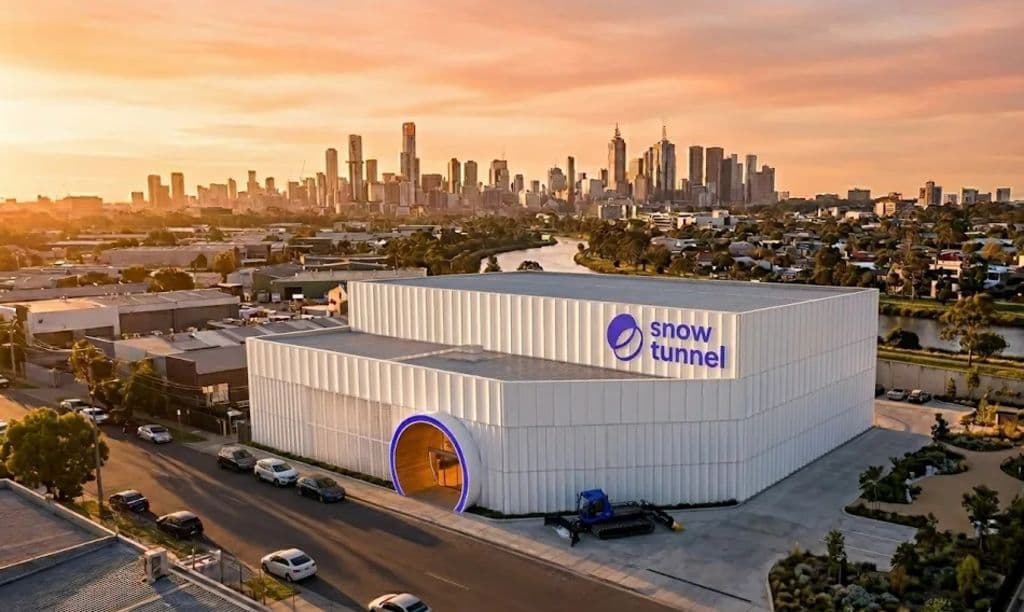
Snowtunnel – an indoor snow park featuring the world’s first rotating snow tunnel – is set to open in Braybrook, allowing guests to ski, snowboard and play in the snow without making an arduous journey.
“Traditional snow sports have a massive accessibility barrier; a trip to the mountains is out of reach for most families,” says Zak Gelfand, head of property and development at Snowtunnel.
“We took an experience that traditionally required a three-and-a-half-hour drive, expensive gear and perfect weather conditions, and dropped it into a metropolitan backyard where it can be accessed 365 days a year.”
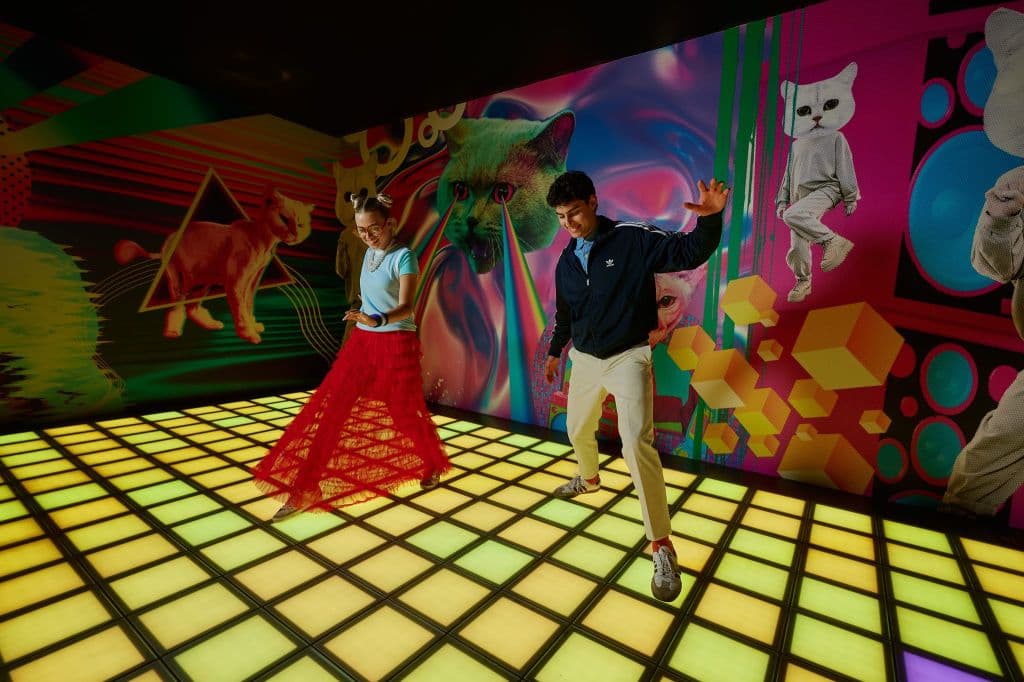
The attraction is part of a growing wave of experiences once confined to tourist hotspots and now setting up shop in metropolitan locations. Snowtunnel follows in the footsteps of destination-style operators like Urbnsurf, Topgolf, Archie Brothers and Hijinx Hotel, which have brought everything from surfing and golf to funfair games to corners of the inner city.
The experience economy is reshaping how we spend
According to Sheree Griff, head of retail at CBRE, the demand for these attractions is largely being driven by the post-pandemic desire for experiences.
“Everyone is seeking experiences; everyone is living in the moment and wanting to have an experience to really enrich their life, whether they’re travelling overseas or leaning into local experiences,” she says.
“That’s where we’re seeing wallet spend going: entertainment and travel.”
Gelfand says these operators break down the time and financial barriers that often prevent people from travelling.
“Urban consumers don’t necessarily have the time to dedicate an entire weekend or thousands of dollars to escape the city, but they still crave high-quality, memorable experiences,” he says.
“This booming experience economy allows a group of friends or a family to completely escape reality, learn a skill and feel that rush of alpine adrenaline, all before heading back home or to a local restaurant for dinner.”
When Snowtunnel was looking for its inaugural location, the Australian startup settled on a warehouse site in Braybrook, a well-established industrial and logistics hub.
Gelfand says Braybrook was chosen for its access to a “sports-loving demographic”, while the site itself was large enough to accommodate the concept and its infrastructure requirements.
“We are essentially retrofitting a massive, climate-controlled alpine ecosystem inside an urban industrial footprint,” he says. “The physical specifications alone are monumental. Our core Snowtunnel structure stands 12.5 metres tall and stretches 16 metres long.”
Retail and industrial spaces reinvented as destinations
Industrial sites are proving to be fertile ground for these kinds of operators. They typically offer the larger footprint and planning flexibility required for a highly unique fit-out, along with relatively cheaper rents and lower capital costs.
“Industrial sites are more fluid – they’re like a blank canvas to be able to create a business,” Griff says. “They can have [lower] costs associated with them to build the infrastructure.”
The trend isn’t just confined to industrial precincts, with more and more shopping centres transforming into entertainment and leisure hubs.
Vicinity Centres is one owner increasingly prioritising experiential retail. The group has several experience-led destinations in its portfolio, including Chadstone Shopping Centre, which houses Archie Brothers (a funfair-style gaming hub) and Hijinx Hotel (a New York-style hotel with interactive game rooms).
“We’re seeing a fundamental shift in retail, where it’s no longer just about products – experience has become the anchor,” says Joel Godde, Vicinity Centres’ general manager of leasing.
“Customers are seeking immersive, connected environments, and that’s driving how we design and curate our assets to function as true destinations rather than purely transactional spaces.”
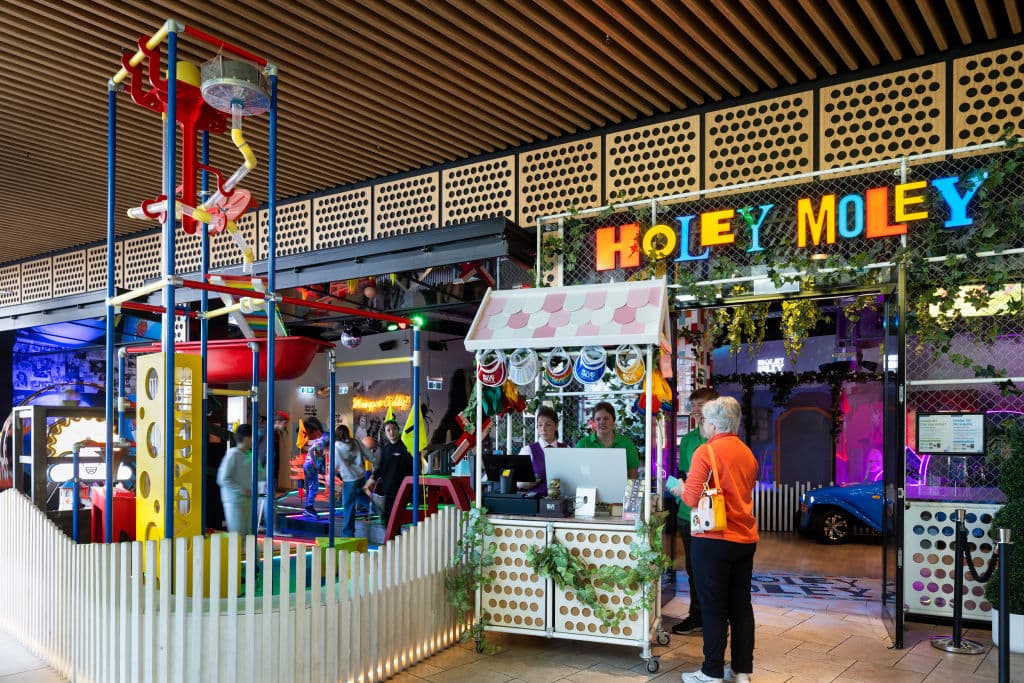
For landlords, the additional advantage of an experience-based tenant is that they can often activate hard-to-lease shopfronts or sites.
“Entertainment and leisure uses often have different spatial requirements to traditional retail, which makes them well-suited to repurposing areas that may not work as standard shopfronts,” Godde says.
“Experiential operators can be particularly effective in activating non-traditional or large-format spaces, especially in centres undergoing renewal or repositioning.”
Destination attractions also often deliver meaningful flow-on benefits for the surrounding area. These operators have the potential to increase foot traffic, dwell time and consumer spending by encouraging visitors to stay longer and engage with other businesses within the precinct – particularly retail and hospitality.
“If you can make your retail destination a place with experiences, you’re going to attract a wider trade area than just your primary trade area; you’re going to become a destination in itself,” Griff says.
Despite its industrial setting, Gelfand anticipates Snowtunnel’s launch will offer similar benefits.
“We expect a massive halo effect on surrounding hospitality and retail,” he says. “Whether it’s local breweries, restaurants or retail stores capitalising on the foot traffic we generate, the economic spillover is significant.”
As consumer expectations evolve and mixed-use developments expand, Godde believes experience-based operators will increasingly become the norm for retail hubs.
“Experiential operators will play an increasingly important role in shaping integrated, mixed-use destinations,” he says. “As centres evolve to include residential, office, hospitality and community uses, experiential and entertainment offerings help activate precincts throughout the day and into the evening.”
It’s a sentiment Griff shares, saying consumers’ appetite for in-person experiences will only continue to drive demand for destination tenants.
“Humans are wanting more experiences,” she says. “Whether it’s travel or local, landlords are really conscious that they have to have experience-style retail in their centres.”