Building boom triggers 40 per cent surge in industrial property demand
Building booms across Australia’s major capital cities are driving down vacancy rates in the industrial market.
Take-up by construction occupiers surged by 40 per cent in the 12 months to June in Melbourne, Sydney, Brisbane and Perth, Colliers data shows.
This includes companies in sectors such as building material suppliers and distributors, equipment rental firms, prefabricators and manufacturers, and trade contractors.
Capital city infrastructure drivers
Melbourne’s growth dwarfed all others, with construction businesses claiming 33,125 square metres of floor space – a whopping 210 per cent year-on-year rise from 10,692 square metres.
The state is also experiencing a flurry of data centre development, including CDC’s 150 megawatt data campus under construction in Laverton and the 250 megawatt STACK Infrastructure MEL02 data centre in Truganina.
At 68,557 square metres, it’s no surprise Brisbane claimed the most industrial space dedicated to construction in Australia. The 2032 Games encompass the Olympics and Paralympics and involve the construction and upgrade of 17 venues, with $3.8 billion worth of work at Brisbane Stadium at Victoria Park set to start next year.
Data centre construction is accounting for much of the activity in Sydney, with floor space for occupiers leaping by 28 per cent to 36,047 square metres. Currently, 15 data centres are being built in Sydney, according to industry monitor Baxtel. This includes AirTrunk’s expansion of its 400-megawatt SYD3 data centre in western Sydney, which began this year and is due for completion by mid-2028.
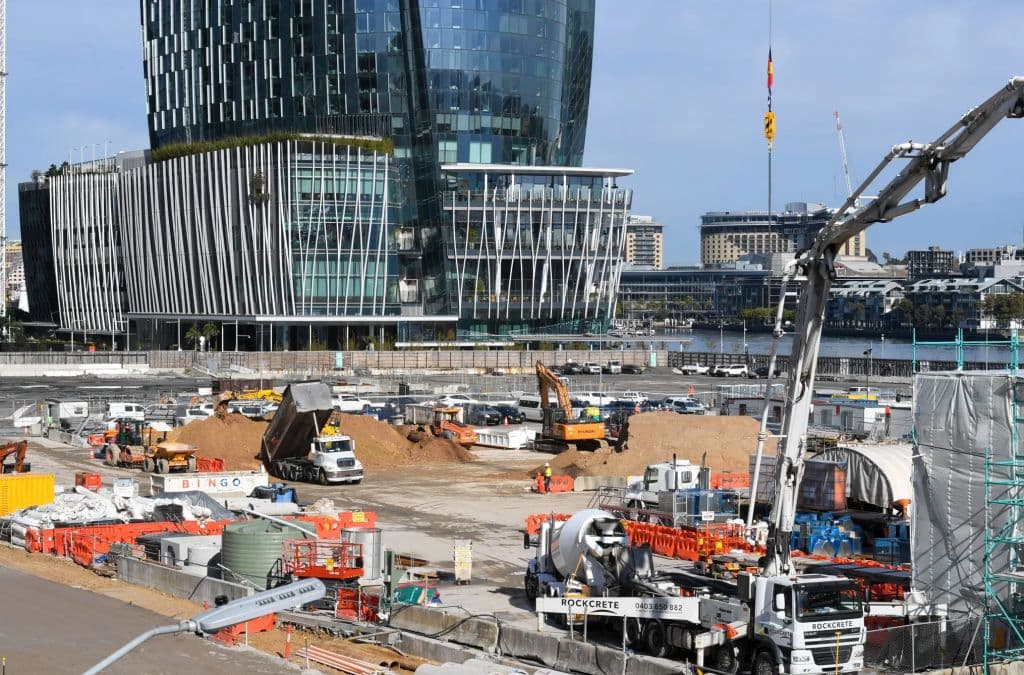
Perth is also in a busy construction phase – largely due to major defence projects – in which building companies have increased their take-up of industrial floor space by 4 per cent to 17,082 square metres.
Western Australia’s healthy economy and population growth have also been also contributing factors, says Nicola Brischetto, Property Council WA executive director.
“This has naturally led to elevated construction activity and civil works in Perth, flowing through to very high demand for industrial land and commercial property,” she says.
“Western Australia’s mining sector and AUKUS-related projects also contribute to this high demand for industrial land and commercial property.
“It is a boon for businesses involved in logistics, warehousing, transport and building supplies.”
Industrial land supply shortages
However, like many other states, Western Australia faces an undersupply of industrial land, and Brischetto says this could impede future investments.
“To maintain Western Australia’s economic success story, there needs to be a constant supply of ready-to-use industrial land coming to market,” she says.
“[If it fails] to deliver this new supply of ready-to-use industrial land, Western Australia will miss out on investment opportunities it would have otherwise received.”
The Property Council of Australia’s NSW division has also raised the alarm about industrial land shortages, particularly serviceable land that is ready to use.
“The issue is not simply how much industrial land is zoned, it’s whether that land has the roads, freight access, water, sewer, electricity and planning settings needed to support businesses and jobs,” says Katie Stevenson, Property Council NSW executive director.
Tightening vacancy and leasing
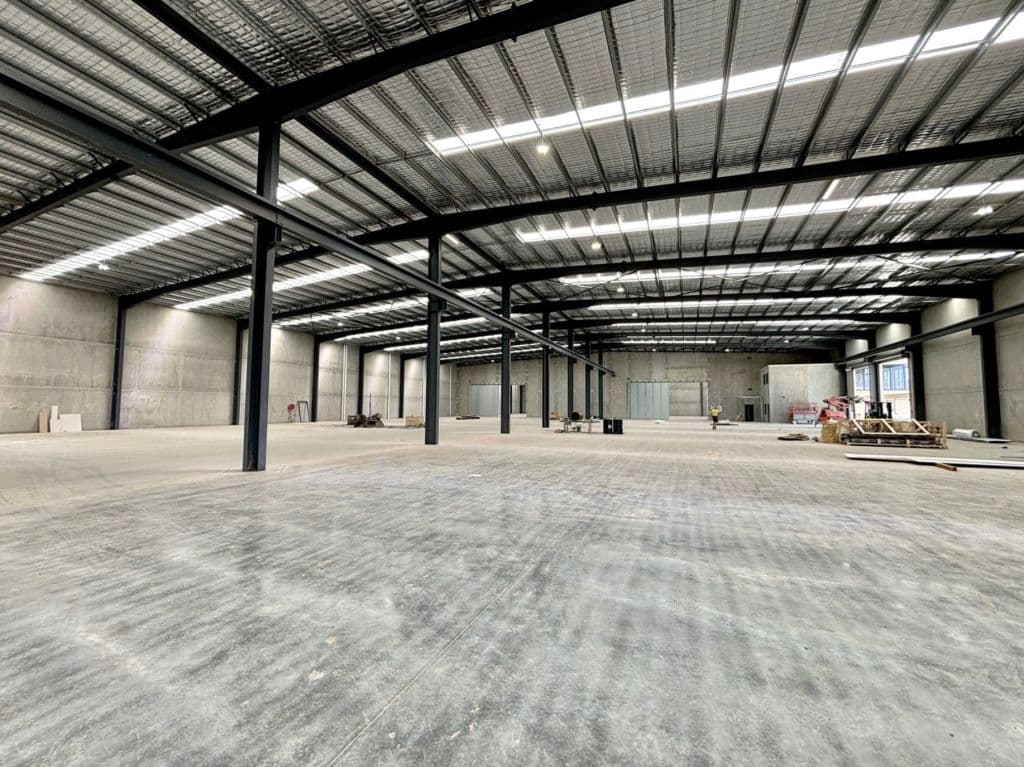
The national leasing of industrial space is going from strength to strength, with vacancy tightening to 3.6 per cent in the June quarter, Colliers research shows.
Jordan Pangallo, senior manager, research at Colliers, says Brisbane and Perth are the standout performers, with take-up increasing in Brisbane by 58 per cent in a year and Perth increasing its share of national take-up to 18 per cent, well above its typical 8 to 10 per cent.
Construction firms involved in key building projects are propelling the surge in lease deals, Pangallo says.
“What we are seeing is – and it’s across the board, really, for different reasons – construction occupiers have seen a bit of a resurgence, and there’s a reactivity and stronger activity in that group,” he says.