Future of children's play spaces expands in Australia
Forget ball pits and jumping castles; the next evolution of kids’ indoor play spaces is a lot more sophisticated.
Children’s museums are built around the theory of play-based learning.
They offer activities such as interactive light displays, STEM experiments and hands-on art installations, and children are encouraged to explore, imagine and solve problems through play.
A new play model
Melbourne entrepreneurs Tom Mahon and Billie Georgieff were inspired to bring the children’s museums concept to Australia after visiting them while travelling overseas.
“We were in Rome when one opened there in 2019, and that was the first we heard of them because it wasn’t a thing in Australia,” Mahon says.
“We went to the opening, and it was amazing, a brilliant experience for kids. So we did a bit of research and found there’s a big economy of children’s museums in the US.”
The couple and their children, then aged one and four, road-tested more than 50 of the centres across the US and Europe.
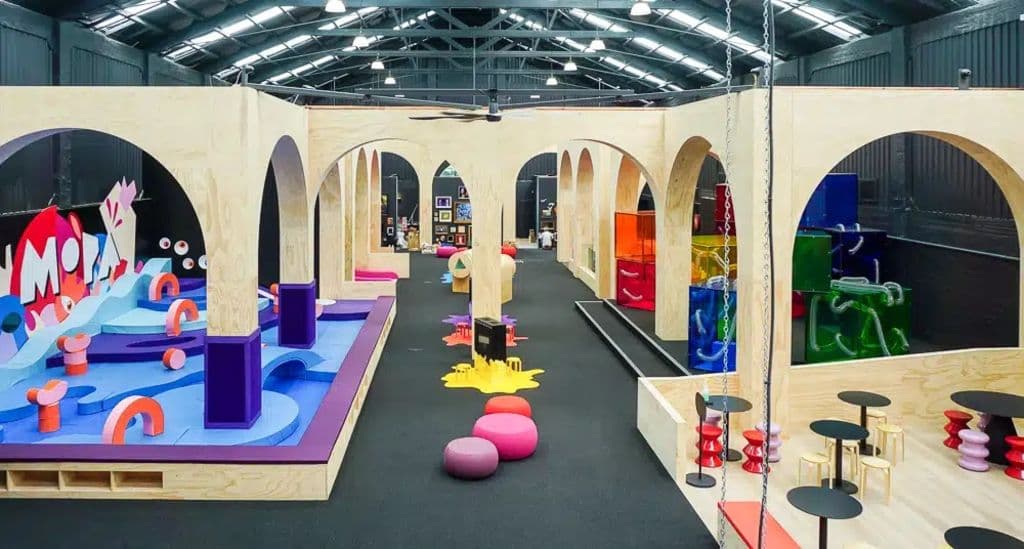
“They range enormously from almost like an open-door kindergarten with some communal play equipment all the way through to the children’s museum in Indianapolis, which is the biggest in the world and it’s like it’s an entire world; it’s like Scienceworks on steroids,” Mahon says.
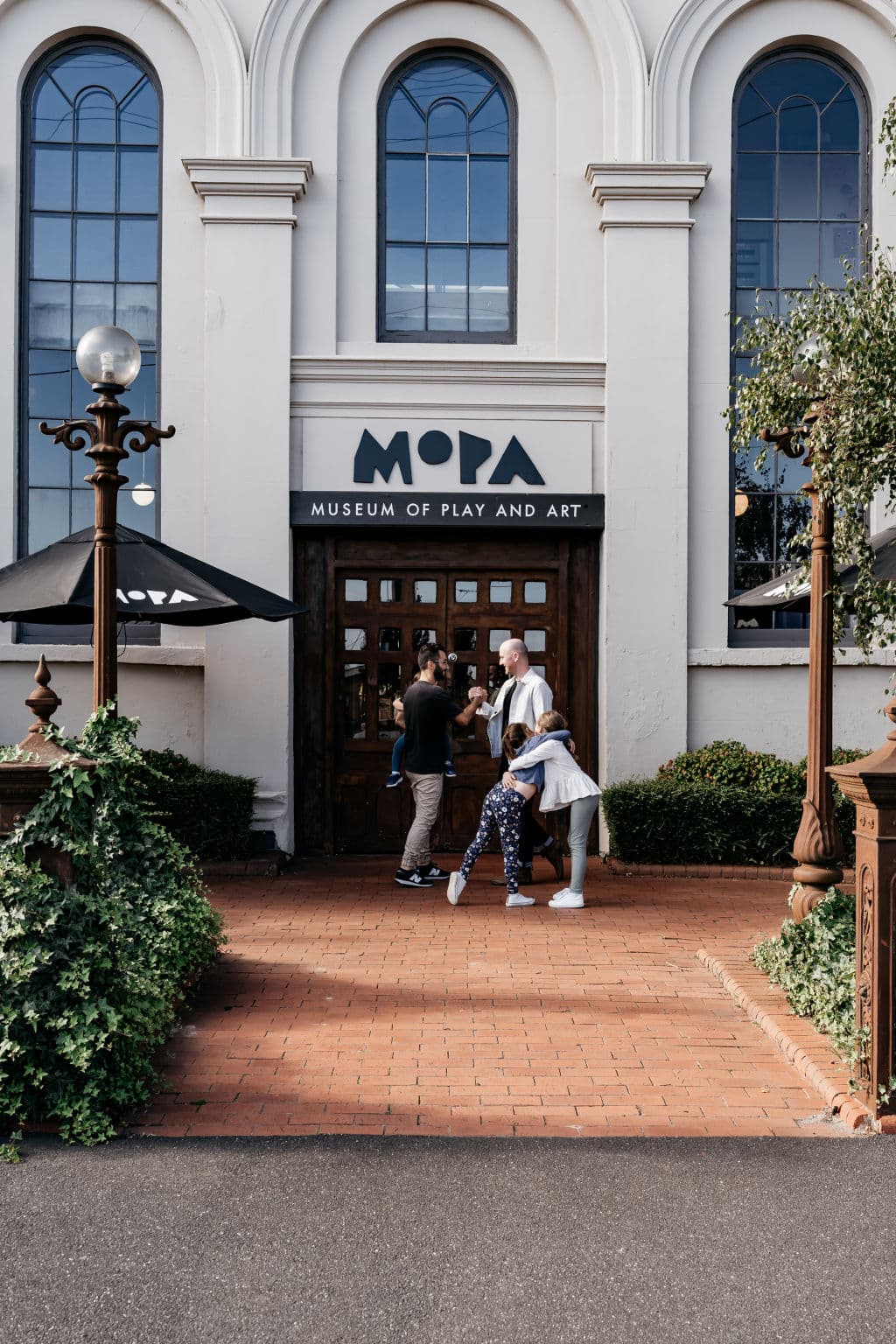
He and Georgieff returned home in 2019 eager to set up Australia’s first children’s museum. In 2020 they used $1 million of their own cash to open MoPA (Museum of Play and Art) in Geelong. But they were forced to close the doors 10 weeks later when COVID pandemic restrictions began.
However, the pair battled on and used funding from private investors as well as grants from the Arts Council of Australia to open a second MoPA in Sandringham in 2022, followed by Thomastown in 2024 and Nunawading in 2025.
Brisbane and Adelaide centres are set to open next year.
Funding the expansion
While most indoor play centres operate on a franchise model, MoPA has so far relied on private capital and funds secured via crowdfunding.
In late October, Mahon and Georgieff offered shares of the company to the public, with every shareholder entitled to a share of the IP, the brand and every future MoPA centre.
The minimum investment was set at $250 and the maximum at $10,000. Within a fortnight, more than 5000 families had registered their interest.
The pair say releasing company data would contravene crowdsourcing rules, but they can disclose that MoPA has generated $30 million in revenue so far and plans are afoot for a network of 20-plus museums nationally.
While the Melbourne museums have been fitted out in existing spaces – including an old church in Geelong and a homemaker centre in Nunawading – the Adelaide and Brisbane MoPAs will be built on land leased from airports.
A new category
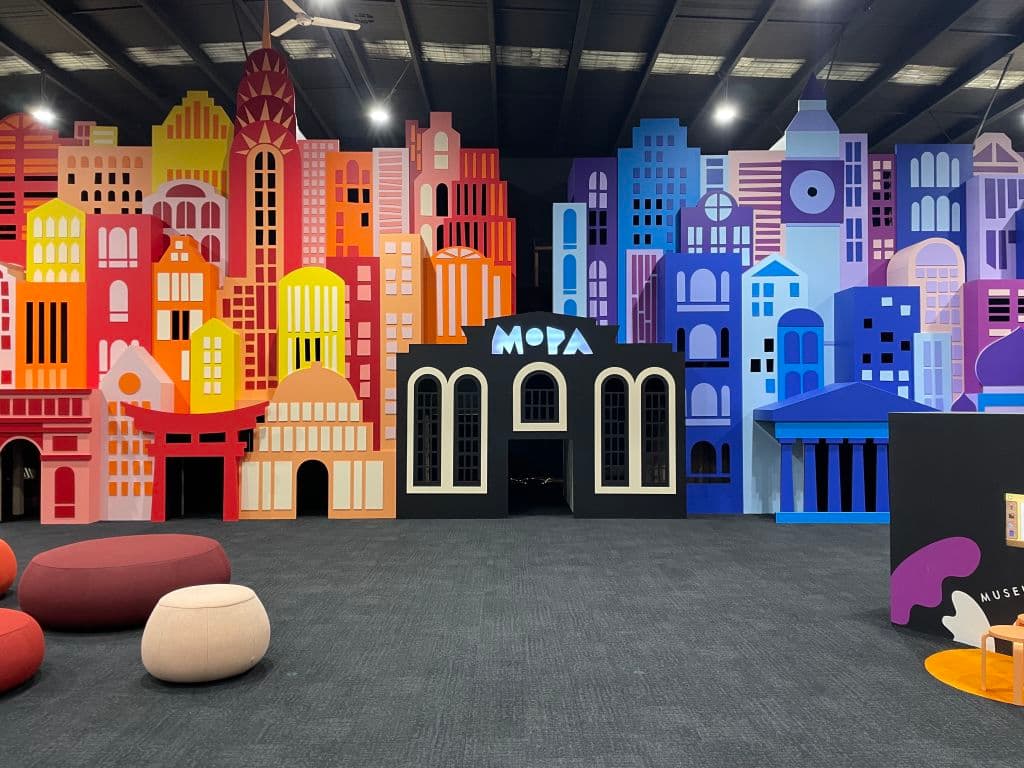
At first glance, children’s museums are similar to indoor play centres. There are activities to keep kids aged one to seven years busy while adults enjoy a coffee. Both are a rainy-day solution and an easy playdate venue.
MoPA entry costs vary depending on whether a membership is bought, but casual passes are $26 – steeper than an average play centre, which charges anywhere between $10 and $18, depending on the age of the children and day of the week.
Mahon says children’s museums are an entirely new concept.
“What we set out to do is create a new category,” he says. “Partly it’s the future of the play sector, but it’s also bringing something that feels like it should have existed for a long time.”
Solid data on indoor play centres is not easily accessible. Research firm IBISWorld lumps soft-play centres in with amusement parks, which are suffering declining revenue due to lower household discretionary spending. Revenue peaked in 2022-23 at $2.7 billion and was projected to fall to $2.4 billion in 2026-27.