Sydney and Melbourne CBD foot traffic nears pre-pandemic levels
Foot traffic in the Sydney and Melbourne CBDs has climbed to within 16 per cent of pre-pandemic benchmarks, signalling a sustained recovery for capital-city retail and office precincts.
Drawing on seven years of data, Colliers’ Pounding the Pavement report frames this phase as a “final sprint” back to 2019 levels, with momentum already driving retail performance and productivity in the top 10 CBD shopping centres up 19 per cent since 2023.
While return-to-work office workers are part of the reason activity has returned, the report points to a broader mix of customers now using city centres, with growing residential populations, student accommodation, tourism and visitor demand creating more diverse customer bases in major CBDs.
“We’re seeing a broader mix of workers, residents, tourists and visitors coming into CBDs, with international tourism also supporting spending,” said Colliers senior research analyst for retail Sam Ryan. “That is helping CBDs become less dependent on traditional weekday office trade.
“What’s important is that people are spending more when they are in the city, even where foot traffic remains below pre-pandemic levels.”
Spending by international visitors in Australia rose 19 per cent in 2025 to $39.2 billion, while 3.6 million overseas travellers visited for a holiday, an increase of 11 per cent year-on-year, according to figures cited in the report.
Dining and hospitality spend surge
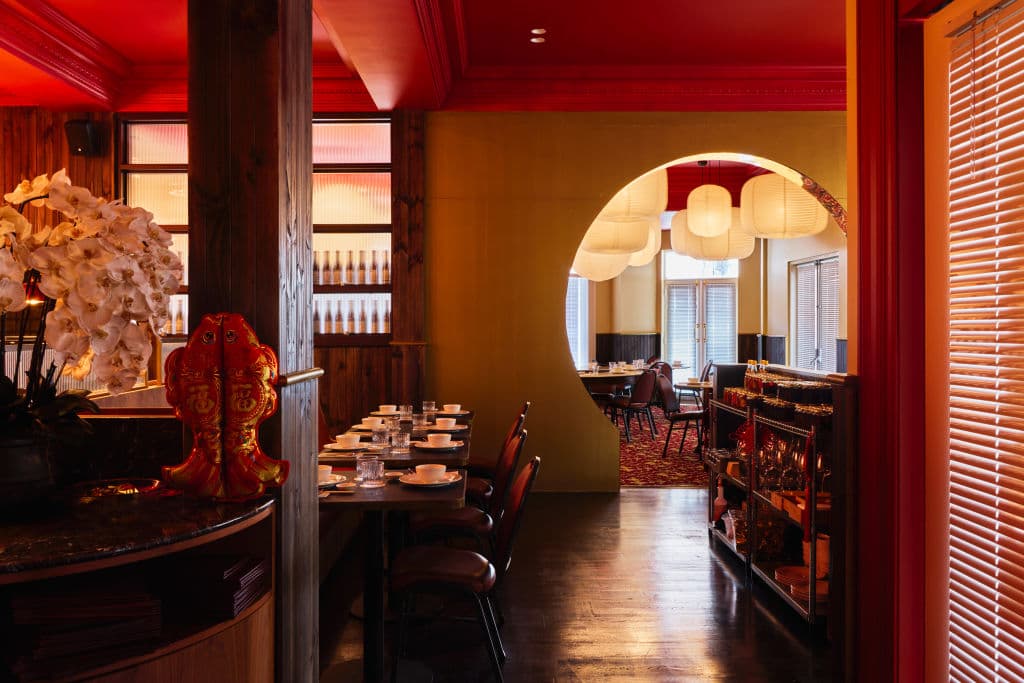
Changes in food and beverage spending are among the clearest signs of how people are now using CBDs.
Australian Bureau of Statistics figures quoted in the report show spending at cafes, restaurants and takeaway food services has risen 47 per cent since 2022, compared with 23 per cent growth in total retail spending.
“Food and beverage has become a major driver of CBD visitation,” Ryan said. “F&B gives people a reason to come into the city and stay longer, so it is playing an increasingly important role in activating CBD precincts.”
Demand is also flowing through to leasing markets. Colliers recorded national average CBD rental growth of about 7 per cent for dining and venues, compared with about 5 per cent across all retail categories.
Landlord strategy and experiential tenant mix
The report also identifies tenant mix as an increasingly important factor in attracting visitors and encouraging them to stay longer.
For property owners, the shift is changing the calculation around who occupies a tenancy.
“We’re seeing more focus on what a tenant can contribute to the overall customer experience, rather than simply filling a tenancy,” Ryan said. “Dining, entertainment and experiential concepts can give people a reason to visit a precinct and spend more time there.”
Major CBD projects are reflecting that approach.
In Melbourne, Colliers points to the $170 million expansion of Melbourne Central and the redevelopment of Melbourne Walk as part of a broader push towards upgraded retail, dining and experiential offerings.
Almost 8000 new student beds across approved and under-construction developments are also expected to increase the CBD’s resident population and support retail demand.
Ryan said Melbourne’s core precincts were benefiting from tourism, major events and a diverse retail and hospitality offering, while Sydney’s core precincts were also performing strongly.
“The common theme is that the strongest locations give people multiple reasons to visit, whether that’s working, shopping, dining or attending an event,” he said. “The CBDs that can create compelling destinations should continue to attract retailers and consumers as working patterns evolve.”