Can zero-alcohol venues pay commercial property rents?
While the local pub or bottle-o has always been a fixture in Aussie neighbourhoods, zero-alcohol drinks are booming, as younger, health-conscious consumers choose to drink less.
Sam Ryan, senior research analyst at Colliers, points to IWSR data that found Australian no-alcohol wine volumes grew at an 18 per cent compound annual growth rate (CAGR) between 2019 and 2024. Meanwhile, a recent Flinders University study found Gen Z is nearly 20 times more likely to abstain from drinking than Baby Boomers.
This has led to a new wave of hospitality and retail concepts slowly emerging as a niche of their own: bars, bottle shops and distilleries actively championing the no-alcohol movement and using it as their primary selling point.
But is there enough appetite for dedicated dry venues to be commercially viable and occupy a proper place in the property market?
Remixing underused CBD retail
Suzee Brain, director of consultancy Titanium Food, cites the post-pandemic wellness boom and Gen Z’s growing spending power as the reasons behind the shift towards zero-alcohol socialising.
“A couple of things have converged at the same time to see this gather some momentum,” she says. “People post-pandemic really want these big community connections, and these zero-alcohol experiences fit well into that type of mindset shift. The Gen Zs are really trying to move away from that heavy liquor drinking culture that went on at universities.”
Brain says there’s been a small but noticeable uptick in destinations that are entirely alcohol-free, including zero-booze bars and bottle shops in Australia, and a couple of hotels in the UK.
While dedicated dry venues still represent a small part of the hospitality mix, Brain believes they may provide an opportunity for underused commercial spaces – particularly office buildings and CBD retail precincts, and spaces where conventional bars don’t sit comfortably beside other operators.
“Commercial property owners have often wanted to avoid mixing [alcohol] with the office,” she says.
“These new zero-alcohol [venues] are starting to be of interest to the commercial property sector as a potential way to remix retail in their assets that have been pretty much slaughtered by the work-from-home and hybrid-working conditions.”
Ryan says the category is also presenting new opportunities for retail. He points to Sydney alcohol-free bottle shop Sans Drinks as an example of how the trend is successfully spilling into the sector.
“Sans Drinks operates a dedicated non-alcoholic bottle shop at Westfield Warringah Mall, demonstrating how zero-alcohol products can be offered through a conventional shopping centre tenancy,” Ryan says.
Distilleries pivot to hospitality
Carolyn Whiteley and her husband founded Seadrift Distillery, which produces non-alcoholic spirits from its Brookvale base in Sydney.
They opened the distillery around six years ago, when they returned from living in the UK and noticed a gap in the Australian market for zero-alcohol drinks.
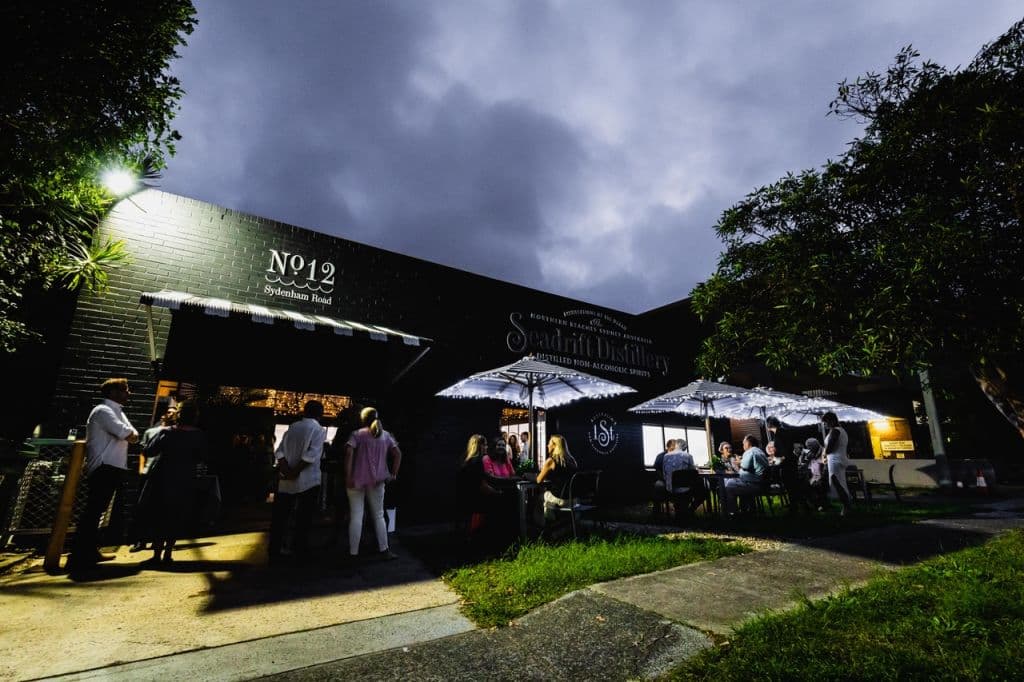
“When we started, it was very niche, very counterculture in lots of ways,” Whiteley says. “Now people see it as a positive lifestyle choice and doing the most to maximise their wellness and longevity.”
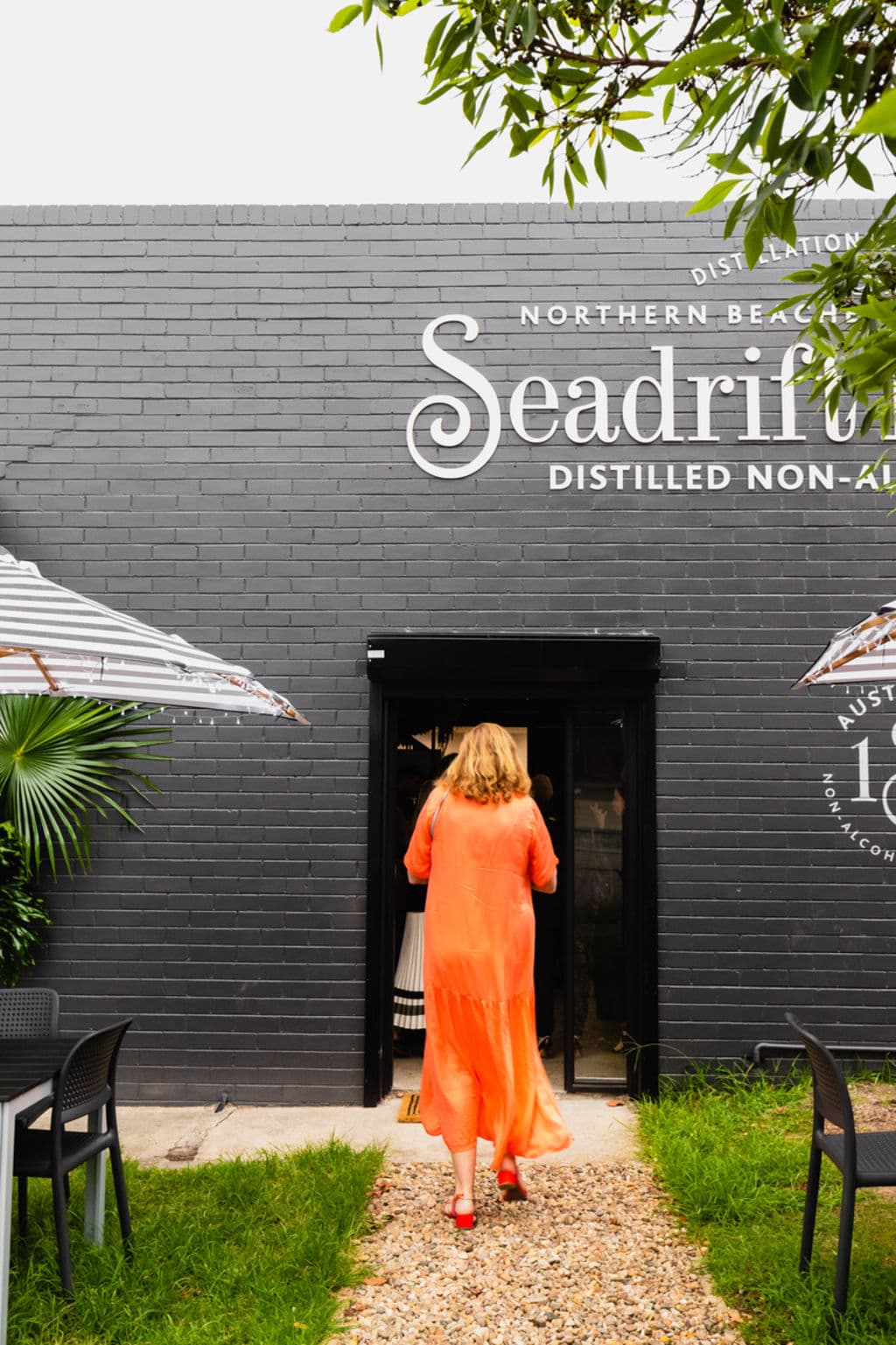
Since launch, Seadrift has evolved to include an adjoining bar and tasting space. Hospitality wasn’t part of the original plan, with the location chosen specifically for its proximity to transport and its ability to accommodate manufacturing and warehousing. But Whiteley and her husband felt it was a natural evolution for the brand, and now customers from a variety of demographics come for tastings, events and social gatherings.
“I think actually what we’re seeing is a shift across all generations and for lots of different reasons,” Whiteley says.
“There’s a whole heap of drivers behind it. There are negative things that are going wrong, [such as when] people have a health issue, and there are positive reasons: ‘I want to live a better life, a longer life, a more fulfilled life, a more connected life.’ And I think it’s the combination of those two that we’re seeing across all generations.”
However, while the distillery only produces non-alcoholic drinks, Seadrift’s bar isn’t entirely booze free. Whiteley says they made the decision to obtain a liquor license to open the venue to more customers and create a more inclusive space.
“We weren’t sure about it, and you can imagine it was quite difficult,” she says. “But it’s been fantastic in that it creates this more ‘everyone’s welcome’ type of environment.”
Hybrid models safeguard viability
While dedicated dry venues are still finding their feet in Australia, it appears that, like Seadrift, many operators are opting for a hybrid model.
Ryan points to Heaps Normal Health Club in Sydney’s Marrickville, where the brand’s original non-alcoholic beers are served alongside full and mid-strength options.
Brunswick Aces – which first launched in Melbourne as a fully dry distillery and bar – is another venue that decided to slot booze back onto the menu.
Brain says venues that offer both options are better positioned to appeal to a broader market, and may be more attractive to landlords.
“As a standalone, sustainable, commercially viable [business] paying commercial rent perspective, it’s still a very, very small component of the mix,” she says.
“As a landlord, I would be more wanting to seek operators that can bring the no-alcohol and the alcohol components together so that they get extended trading hours instead.”
Whiteley agrees. She sees no-alcohol drinks becoming more integrated into existing hospitality and retail businesses rather than becoming a leasing category of their own, which could help support their growth and maintain their appeal.
“I think it will grow within existing venues and retailers,” she says. “It’s important that we integrate it into the community, so it’s much more a normal part of life, not a separate ‘if you’re sober, you go here’ type of thing.”