Why retailers are becoming the new third spaces for teens
Wander past a Yo-Chi branch on a weekday afternoon, and it’ll likely be teeming with teens – but they’re not necessarily there just for an after-school treat.
“A lot of our venues are busy with after-school catch-ups; the venues near universities are used for study breaks; we see birthday celebrations and post-sports celebrations. And Yo-Chi dates are happening every day,” says Yo-Chi’s co-chief executive, Brooke Rodger.
A number of reports have highlighted the steady decline in “third spaces” where teens can comfortably hang out, largely due to cost, safety concerns, changing social habits and a lack of suitable locations.
However, Yo-Chi is just one example of a broader shift, with dessert bars, cafes, shopping centres and entertainment venues increasingly meeting the needs of young people seeking face-to-face connection and physical experiences.
Why physical spaces still matter in the age of social media
Scott Watters, chief executive and founder of the preventative youth mental health and wellbeing non-profit LifeChanger Foundation, says physical connection remains essential for teenagers, despite much of their socialising happening online.
“There’s no question technology and social media have completely changed the way young people socialise,” he says. “They can connect with their friends at any time, make plans in an instant and find communities well beyond the people they see at school every day.
“That’s why physical spaces still matter so much. Young people are looking for places that are easy, flexible and social – somewhere they can meet their mates, spend time together and just be present without everything needing to be planned or structured.”
That said, Watters believes they’re an often-forgotten demographic and that there remains an obvious gap in places where they can simply spend time together.
“We have playgrounds and activities designed for younger kids and plenty of social spaces for adults, but teenagers can often get lost somewhere in the middle,” he says.
Watters adds that designated youth spaces aren’t always a complete solution, as they effectively separate teenagers from the broader community rather than integrating them into it.
“For me, the biggest opportunity is to look at the spaces we already have – our parks, sporting clubs, shopping precincts, libraries, cafes and community spaces – and ask whether we’ve genuinely considered young people in them,” he says.

The retail opportunity in attracting Gen Z and Gen Alpha
Shopping centres have long provided teenagers with a place to gather, but there may be good reason for landlords and operators to pay closer attention.
Gen Z (those born between 1995 and 2009) currently makes up 22 per cent of the global population, McCrindle says, which indicates the sheer size of the cohort, while recent UBS research has found that its spending intentions are at an all-time high, mostly driven by non-essential categories like apparel and footwear.
The commercial opportunity may also grow significantly: McCrindle estimates that Gen Alpha (born 2010 to 2024) will have an economic footprint of more than $US5.46 trillion ($7.58 trillion) by 2029.
This makes the role of physical retail in engaging young consumers even more relevant.
“Shopping centres are evolving from transactional retail environments into social, lifestyle and community destinations,” says Andrew Benjamin, general manager of leasing at Vicinity Centres. “For teenagers, they offer places to meet friends, spend time together and take part in shared experiences.”

He says younger visitors can deliver long-term benefits to retailers.
“For landlords, attracting younger visitors builds long-term relevance, increases visitation and dwell time, and supports retailers looking to reach customers influenced by experience, peer recommendation and social discovery,” he says.
Yo-Chi’s own experience points to how social destinations can support broader retail activity.
“We’ve had restaurants tell us that their visitors have increased anywhere from 20 to 50 per cent when we’ve opened nearby, which is amazing,” she says.
What young people want from a place to gather
Watters says certain qualities make some spaces more appealing than others.
“The spaces they naturally gravitate towards tend to have a sense of energy about them,” he says. “There are other people around, there might be food, music or something to do, but equally, there’s no pressure to be doing anything at all.
“Convenience is a big part of it too. Is it close to where they already are? Can they get there easily after school or on the weekend? Can a group of friends meet there without needing parents to organise it for them?”
Benjamin also emphasises the importance of creating a welcoming environment.
“The most successful destinations give younger visitors multiple reasons to visit and stay, supported by well-designed spaces where groups can comfortably gather,” he says.
How brands like Yo-Chi are building social destinations
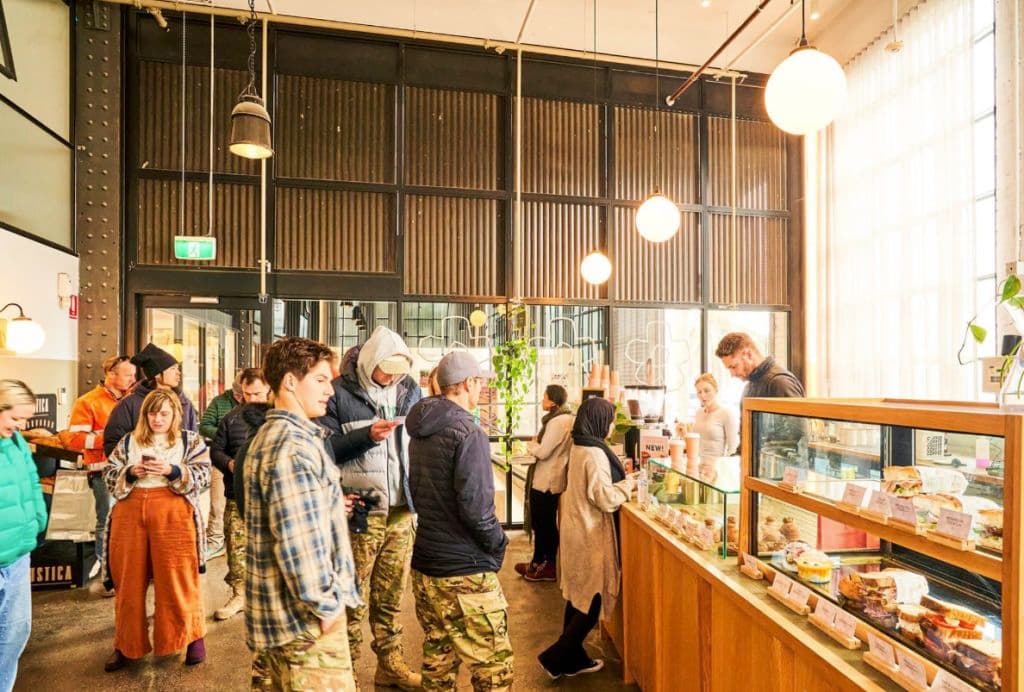
That focus on customer experience is central to the appeal of several commercial operators, including Yo-Chi. Rather than being designed specifically for teenagers, they have many of the ingredients they’re naturally drawn to.
“The venue experience is everything,” Rodger says. “Every design decision – lighting, seating, artwork, colours, textures, music, how the space flows – is made with our guests in mind, wanting people to feel welcome and comfortable and in no hurry to leave.”
The formula might seem obvious, but it’s not always easy to get right. Watters says developers and landlords sometimes get it wrong by simply assuming what teenagers want.
Instead, he suggests involving them in the design of the very places that seek to attract them – finding out what they want in a space, how they’d use it and what would make them return.
“Bring young people into the conversation early. Ask them where they spend their time, what they value in those spaces, what’s missing and what would make them want to come back,” Watters says.
“They don’t want to be marketed to. They want to be heard, included and given a genuine voice in shaping the communities they’re part of.”