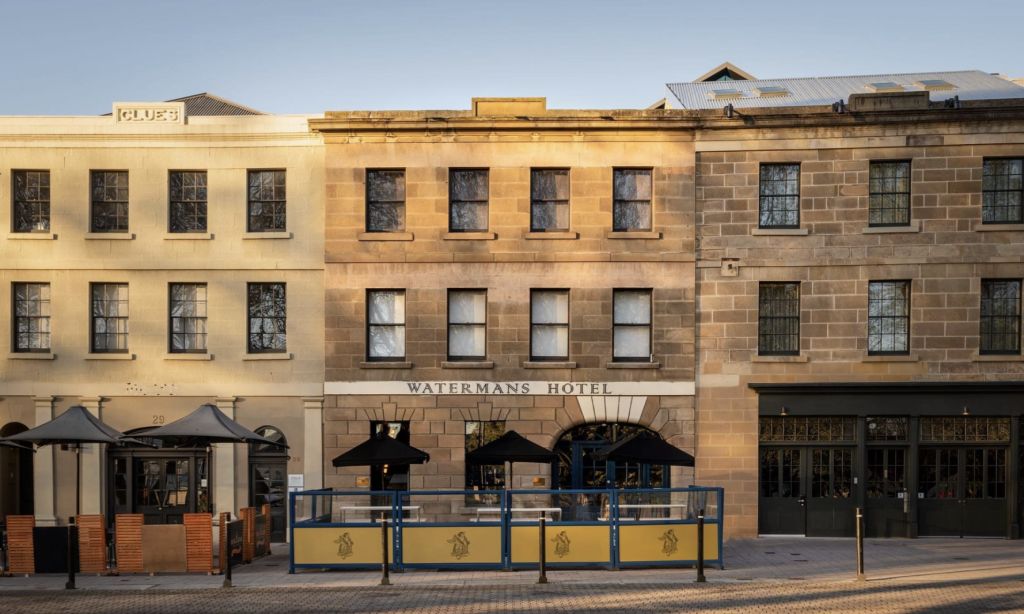
Salamanca landmark listed for sale with a wealth of stories etched into its walls
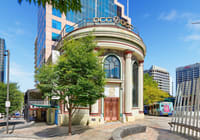
Waterman’s is synonymous with Salamanca Place as the go-to for locals and visitors gathering for a drink along Hobart’s historic waterfront. Dating back to the 1840s, the convict-built building has amassed a colourful past, from hidden passageways to clandestine gambling rooms.
Now, buyers have the rare opportunity to become part of its next chapter, with the tightly held property hitting the market for the first time in nearly 50 years.
“It’s an extremely rare offering,” said agent Justin Parr of Fall Real Estate Hobart. “Even within the first few hours of going live, we’ve already seen enquiry from local, interstate and international buyers, including interest out of Hong Kong.”
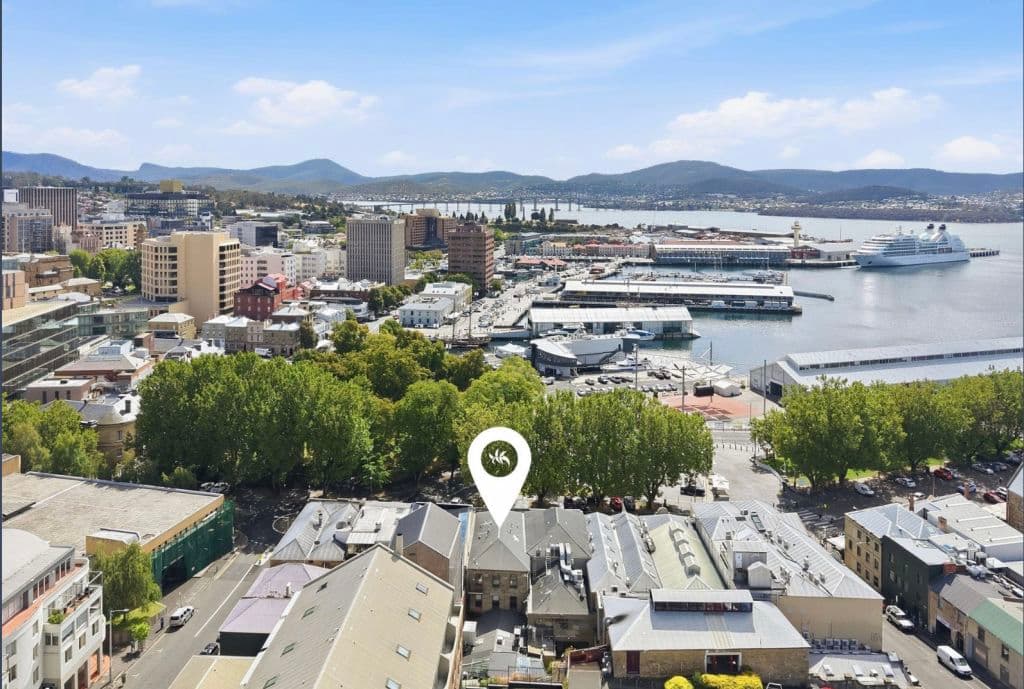
Positioned along Salamanca’s iconic strip of Georgian sandstone buildings, it was constructed by convicts in the 1840s using locally quarried stone and operated as a ship chancellery when the waterfront extended directly to Salamanca Place.
In more recent decades, the building took on a very different identity and was known to play host to the occasional friendly game of cards.
MONA founder David Walsh also used the space as rooms to conduct his business ventures prior to opening the art destination.
“The owners at the time used to deal with him [David Walsh] and bring his mail up for him etcetera and they would say he was a little bit out there, but he was lovely. He then went on to found MONA.”
Neighbouring properties also contribute to the intrigue, with one adjacent building formerly operating as a brothel, reportedly linked via internal access points, remnants of which can still be seen within the property today, with secret doors in the hotel rooms now plastered up.
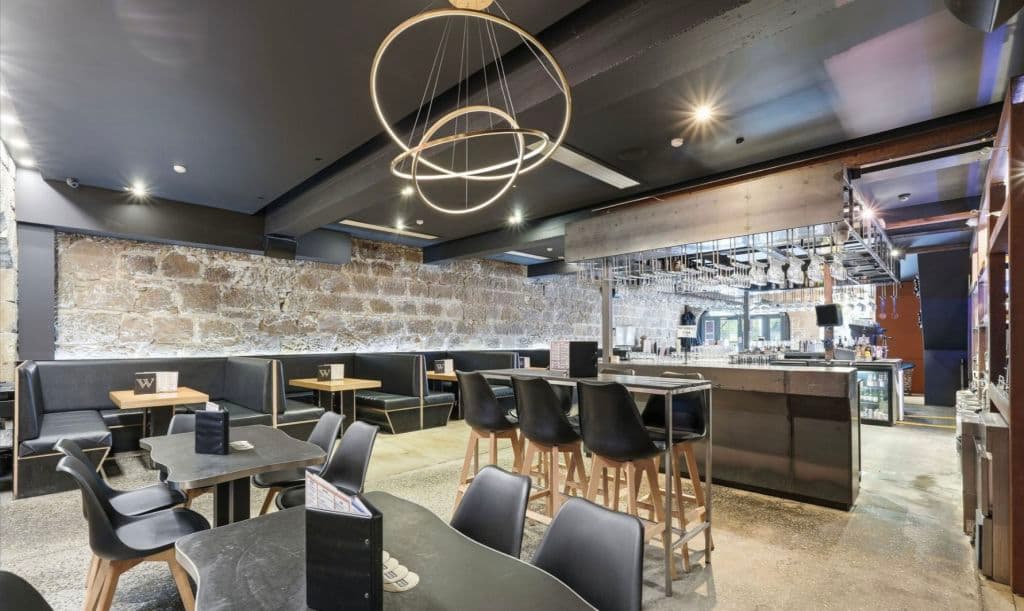
While the property maintains its distinct historical character and quirky stories, it also offers investors a strong, income-producing profile. The floor plan spans 440 square metres of licensed ground floor space, currently operating as a multi-zone bar and restaurant venue, with expansive frontage and multiple service areas, including a courtyard area (the only one in the Salamanca precinct) as well as eight studio accommodations across the upper levels designed by renowned Tasmanian architect, Mark Drury.
The property is supported by a long-term, double-net lease to a proven hospitality operator with nearly 25 years of experience, delivering a net annual income of approximately $296,000. With around 19 years remaining on the lease and CPI-linked increases, the structure offers security that appeals to investors wanting to set and forget.
“The benefit here is that all outgoings are covered by the tenant, and both leases are held by the same operator,” Parr said. “That streamlines management for the owner and provides confidence in the ongoing performance of the asset.”
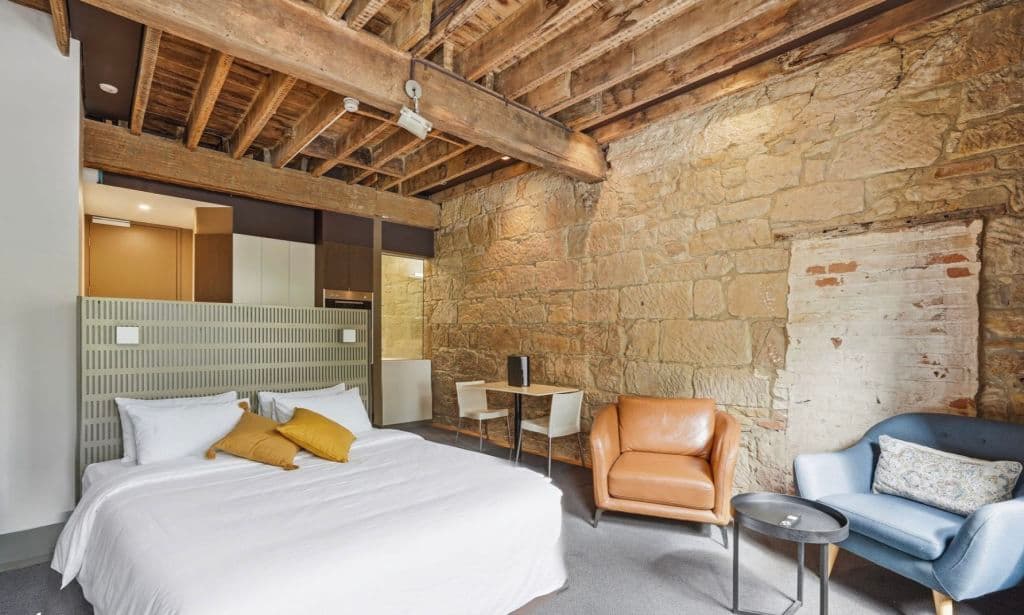
Looking ahead, 27 Salamanca also presents value-add potential, with scope (subject to planning and heritage approvals) to expand the existing accommodation offering. A neighbouring property has already undertaken a similar expansion, proving the feasibility.
“With the ability to potentially add further accommodation, there’s an opportunity to enhance the income profile over time,” Parr said.
Beyond its income credentials, Parr said the property’s position within Salamanca Place, which is often described as Tasmania’s answer to Sydney’s The Rocks, continues to underpin strong buyer demand. Salamanca Markets alone attract between 30,000 and 40,000 visitors each Saturday.
“You’ve got a constant flow of locals and tourists through here every week and the property itself sits just over 100 metres from the MONA ferry terminal, and within walking distance of Parliament Square and the Tasman Hotel, so you’re right in the centre of everything that’s happening,” Parr explained.
Expressions of interest close at 12pm, 7 April and Parr suggests it could be a record breaking sale for Salamanca.