
Victoria is promising data centres less regulation under a strategy to land the country’s biggest new facilities over the next five years and says it will only intervene if problems arise.
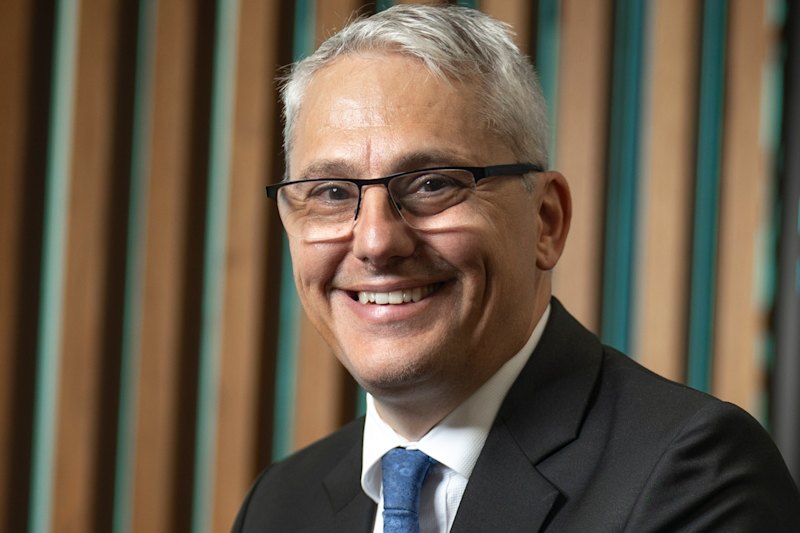
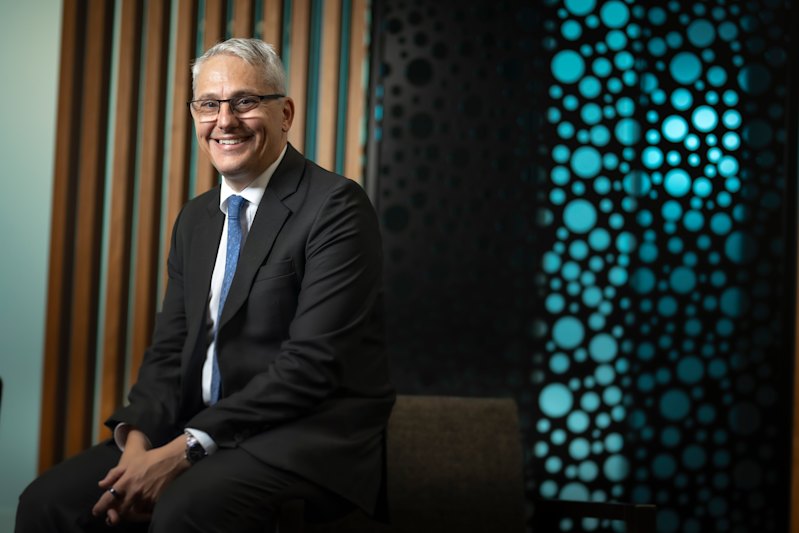
Minister for Economic Growth and Jobs Danny Pearson said the state, which has less than two-thirds of the NSW total of data centres, aimed to attract new investment without new regulation and could keep voters on side by managing the sector’s increasing demand for water and power.
“You put AI on a leash and you let it run,” he said.
“If it starts to get away from you, if there are adverse consequences that none of us can foresee now, but become realised, then you look at trying to say, ‘we need to intervene and to try and deal with this’.”
The fast-evolving field of artificial intelligence meant Victoria could not afford to impose new regulation – not even by setting up a fast-track approval system for data centres – as any process would take at least 18 months to put in place, Pearson said.
The “unswerving commitment” to the sector would come at the cost of his ability to support other sectors of the economy, he said, without specifying which ones.
“What you give up with that is probably bandwidth and capacity for other sectors or other areas of endeavour,” Pearson told The Australian Financial Review.
It is a high-risk strategy for an unpopular Labor government that goes to the polls seeking a fourth term in November, amid a cost-of-living crisis in which surging power prices are a key concern.
It is also very different from NSW, where the Minns government is looking at making data centres pay for the extra burden they put on power and water networks so households do not foot the bill from surging demand.
Climate Council figures show Australia’s data centres consume about 2 per cent of the power in the national grid, due to grow to 6 per cent by 2030 on the growth of AI and cloud computing.
Pearson said shifting computing power from “grossly inefficient” small-scale individual computers to data centres would free up some resources. He also said data centre operators secure long-term offtake power agreements with renewable energy providers, but did not give any examples.
He and Premier Jacinta Allan are betting that throwing open the doors even before the completion of a federal Labor government investment strategy paper is a winning strategy to boost activity and jobs.
“This is a race,” Pearson said. “We’ve got to bring in the capital. We’ve got to make sure that we’ve got a really good investment climate here in Victoria, so they want to come here to set up shop, and let them innovate, let them come up with new products, new services, through super computing or through quantum computing.”
In November, Allan said Victoria would spend $5.5 million on resources to help planning and location choice for data centres, and a further $8.1 million to reskill workers most at risk of losing their jobs to AI.
In a new mission statement setting out its ambitions to become Australia’s leading state enabling AI, the government says it will manage the competing demands for resources sustainably.
“We will use transport, energy and water usage data, including recycled water, to determine where data centres can be built sustainably,” the statement says.
Pearson said Victoria wanted the very biggest facilities.
“You’d want to have as many of the largest, most efficient, most innovative that will be built over the next … five years, here in Victoria.
“The hyperscalers with the very large capacity, with their ability to use quantum or supercomputing to be able to try and really push the dial – they’re ideally, the ones you want. Hyperscale might be – just pick a number – 600 megawatts. That’s probably going to be worth much more to have than six 100MW data centres that might be 10 years old.”
The state would not set up a bespoke approvals process because that would take time.
“The existing approvals processes we’ve got work fine.
“If I’m talking to … [AirTrunk CEO] Robin Khuda, or if I’m talking to [NextDC CEO] Craig Scroggie, I want to give them the confidence that Victoria is a place where you can come here and invest.”
The prize of providing AI computing services to regional markets was great.
“With the time differences, you’ve got the capacity to think about having those workflows and work streams that are currently operating right here, right now in America, coming across to work in Melbourne for us to service the Asia-Pacific region before we can then pass that on to the next link in the chain.”