The small but lucrative market for school camp properties
As economic tides lift and tilt the value of commercial property sectors, there is one niche asset class that defines resilience and delivers million-dollar profits.
School camps have a massive customer-base – there are 9600 schools in Australia – but only 600 specialist properties deliver this core experience in the national education curriculum.
Business broker Brett Bowden has been selling school camps for 25 years. While he has seen the landscape change – major corporate aggregators have entered the field that was once the domain of mum and dad operators – he is convinced of its resilience.
“School camps book out well ahead, and if you look after your clients, they tend to stay with you,” said Bowden.
“I sold a camp a while ago that still had the first customer they ever had – and that school was still going every year, 27 years later.
“Another business I deal with has over $2 million worth of forward bookings for next year with deposits paid and contracts signed.”

The yields are significantly higher than standard commercial assets. Bowden said while capitalisation rates vary based on risk and location, they typically sat between 13 and 17 per cent.
However, there is a catch to this investment opportunity – the barrier to entry is immense and the number of school camps is shrinking.
At any given time there are only 10 to 15 school camps publicly listed for sale across the country; the cost to build and time to secure “special zone” permits for new facilities is often prohibitive; and many established camps have been held by the same operators for decades.
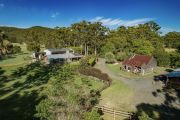
Bowden’s latest listing is a great example. Licola, Victoria’s only privately owned town, was bought in 1969 by the Lions Club of Victoria and Tasmania. The organisation transformed the old logging town into an off-grid camp village that has hosted disadvantage youth and people with special needs for decades. The town, 254km east of Melbourne, includes a caravan park, general store, three residential properties and a 34-acre wilderness village that can accommodate up to 300 people.
The vendor is inviting expressions of interest and the sale document states interested parties will need to demonstrate the capacity to fund a transaction between A$6 million to A$10 million.
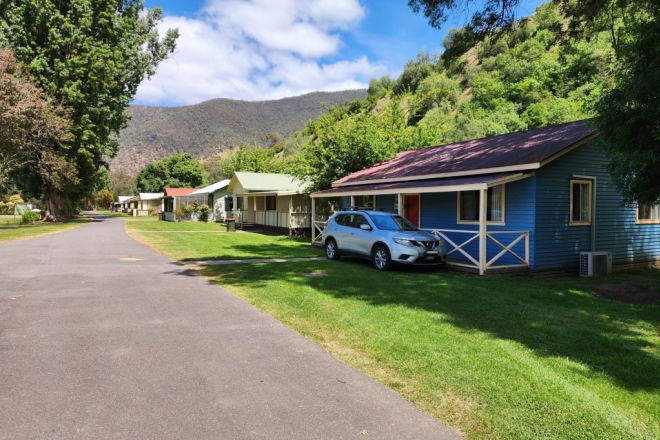
“It’s really hard to build these properties new,” said Bowden. It’s not just hard to get permits, compliance is so expensive – most of the properties are in the bush, so you have to have a high BAL (Bushfire Attack Level) rating and property sewerage plants.
“At the end of the day, a second-hand camp is a bargain. You would never replace these places for what they sell for,” said Bowden.
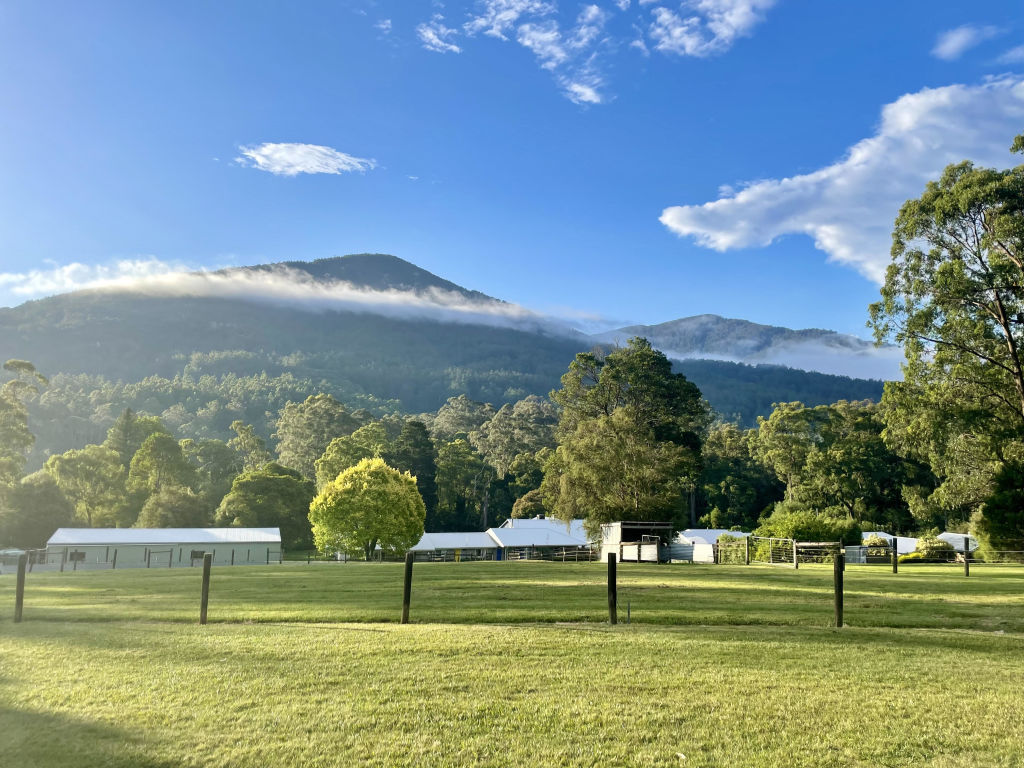
Peter McEldrew bought his first camp in East Gippsland in 2005 and since then, the family portfolio has expanded significantly. His daughter Jenna Stuart and her husband Luke purchased Arrabri Lodge in Warburton eight years ago for $5.3 million; his daughter Brooke and son-in-law Chase Pearce paid $800,000 13 years ago for the underdeveloped, but now highly successful, Alexandra Adventure Resort; and his son Sean McEldrew recently purchased Camp Marysville for more than $4 million.
“If you turn over a million dollars, you’ll net about $500,000 after all costs,” said McEldrew. “It’s given our family a good life.”
But McEldrew is careful to warn would-be investors that school camps are not passive investments.
The Stuarts employ 12 staff and host two schools every week of the school year, and on weekends, private schools travel from Melbourne to conduct music rehearsals at their Arrabri Lodge property.

While Jenna Stuart emphasises the great lifestyle the camp provided for her family, she said it required hands-on management, from maintenance—”mowing, whipper snipping, spraying”— to PR with teachers.
“If you’re the type of person that can’t change a light globe, you’re going to be in trouble because there’s always maintenance issues,” she said.
“It only really works well if you live and manage on site. I know camps that don’t, but in my opinion, if you’ve got 100 school kids, you need to be on site to make sure that everyone’s safe. If anything goes wrong, you don’t want to be 10 to 15 minutes away.”
Bowden said syndicates, or absentee owners, often struggled if they attempted to “breeze in and breeze out” without understanding the operational intensity. He cites an example of an investor syndicate that failed because they didn’t understand the “moving parts” involved.
In recent years, Bowden has also watched smart operators boost yields by seeking opportunities to fill their camps beyond the standard 40-week school year. Often set in beautiful country or seaside settings, many of these properties are now hosting church retreats, blesiure groups, corporate team building events and weddings.
The Stuarts host Diabetes Victoria camps each year and Stringmania, an international group of musicians, who have stayed at the camp annually for the last eight years.
McEldrew said he was always on hand to help his family take a break from running the camps.
“If the kids want a holiday, I say to them take anything you can get and pay someone to be there, or I’ll be there, because you can get some good money through those school holidays, like $50,000 to $80,000,” he said.
The school camp sector has faced some headwinds in recent times. When the COVID pandemic hit, it left many camps empty, forcing operators to focus on maintenance works to keep their staff employed. More recently, a Victorian Government agreement requiring teachers to be paid for overnight stays, in the form of time in-lieu, has seen some schools reduce multi-day trips or cancel bookings because of the increased cost. And the growing pool of multicultural guests has forced operators to become more agile, allowing some schools to bring in their own cooks and, in a sign of the times, security guards.
Bowden says the school camp sector is entering a maturing phase, as corporate aggregators begin to consolidate assets. He provides the example of the business Great Aussie Bush Camps acquiring portfolios worth over $100 million.
But for the private investor, the appeal remains the same as it was for McEldrew twenty years ago: a solid business underpinned by the simple fact that kids need to get outdoors and experience the natural world.
“You see little Johnny come on Monday and go home a different kid on Wednesday,” he reflected. “It’s like a chicken breaking out of its shell.
“Camps are even more important than they used to be. You can’t get much confidence looking into a screen, can you?”
What to look for in a school camp:
- Within two hours of a capital city or regional centre
- Close to a hospital
- Has been well maintained
- Infrastructure provides a range of activities
- Provides 150-200 beds
- Caters with quality food
- Has built up a series of repeat bookings
- The opportunity to expand bookings on weekends and outside school term
- Reliable staff