From flame to framework: Rethinking Olympic infrastructure for life after the games
For much of modern Olympic history, the success of major event infrastructure was judged by how it held up during the Games themselves. Today, the real test comes years later: whether those venues and precincts operate as productive, commercially viable parts of the city rather than as expensive reminders of a once-in-a-generation moment.
Ahead of the Brisbane 2032 Olympics, it’s a key consideration for developers and governments alike.
It mirrors a broader change underway across the built environment. According to Gensler’s Design Forecast 2026, experience has become a central measure of real estate value, with successful places increasingly defined by how they perform day-to-day for communities, visitors and tenants, not just by scale or spectacle.
In practice, that has pushed stadiums, arenas and event districts away from being single-purpose assets and towards mixed-use, experience-led precincts designed to generate activity, revenue and relevance year-round.
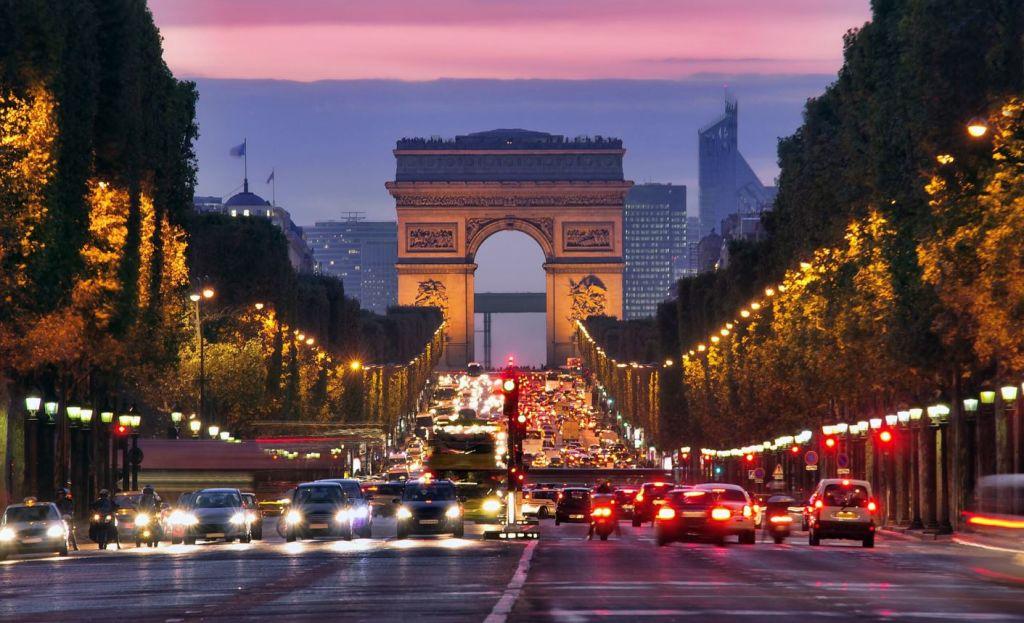
For Olympic and major event hosts, the shift is reframing the idea of legacy. The focus is now on whether these investments can anchor long-term urban regeneration, support surrounding commercial development and integrate into everyday city life.
From London’s Queen Elizabeth Olympic Park and Barcelona’s waterfront to Sydney Olympic Park and the adaptive strategies seen in Tokyo and Paris, the most successful examples now treat event infrastructure as part of a broader, flexible urban estate rather than a collection of standalone venues.
London’s multi-use anchor
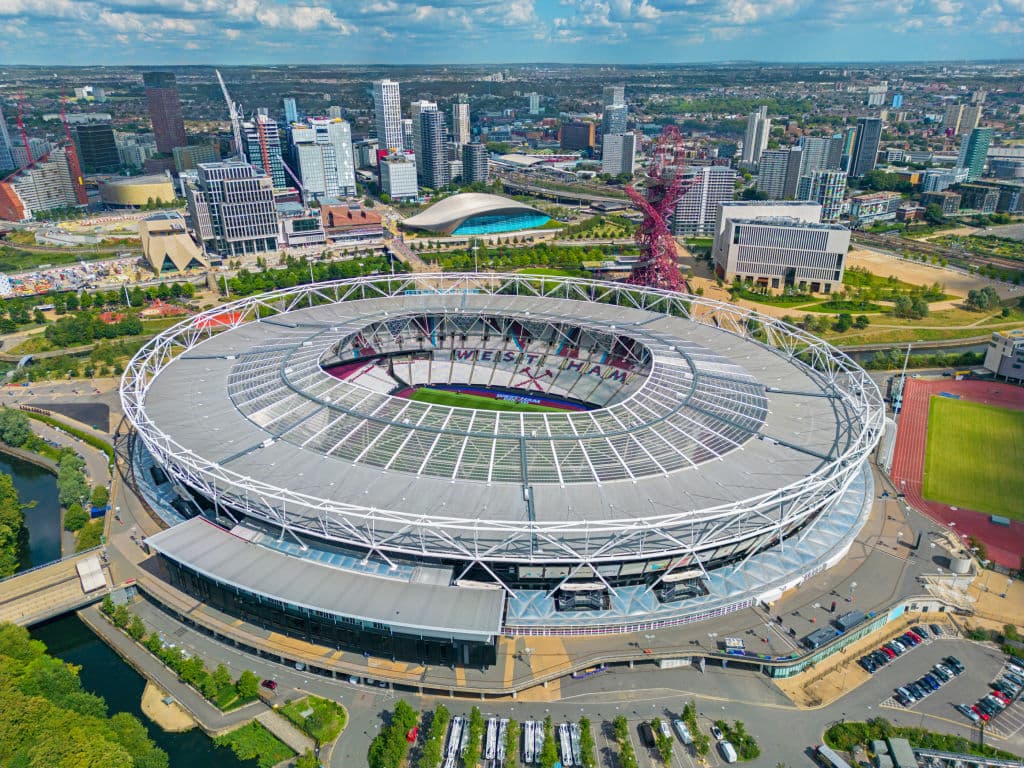
London Stadium is often cited as a case study in how Olympic infrastructure can be repositioned as a long-term economic asset rather than a single-event showpiece.
Originally built as the flagship venue for the 2012 Olympic and Paralympic Games, it sits, as a spokesperson for the venue puts it, “at the heart of one of the UK’s most successful large-scale urban regeneration programmes and is a blueprint for Olympic and Paralympic legacy”.
The post-Games strategy was not straightforward. When London bid for the Olympics, the intention was to scale the stadium down from an 80,000-seat Olympic venue to a 25,000-seat national athletics facility. That plan was later abandoned.
“It became clear that an athletics-only stadium of that size would struggle to be financially sustainable,” the spokesperson says.
Instead, the venue was reimagined as a larger, multi-use stadium, anchored by an English Premier League football club, while remaining in public ownership under the oversight of the Mayor of London.
Today, West Ham United plays home matches in a 62,500-seat configuration, expandable for concerts and major events, positioning the stadium as both a sporting home ground and a flexible events platform.
The commercial impact of that shift is measurable. According to a Two Circles impact study, the MLB London Series 2024 delivered a £56.5 million ($104 million) boost to the London economy, with a further £8.7 million ($16.4 million) to the rest of the UK, driven by visitor spend on accommodation, food, retail and travel.
More broadly, a Mayor of London report found that six major sporting events in 2024 generated a combined £230 million ($424 million) uplift to the city’s economy (around A$424 million) while attracting more than 200 million global viewers, underlining how the stadium now functions as a recurring economic driver rather than a one-off legacy asset.
Balancing tenants, events and public access
Operationally, the stadium’s model is built around clear programming windows and a deliberately mixed event calendar.
“The Stadium operates under clearly defined agreements with its principal tenants: West Ham United in the football season and UK Athletics, who have access during a summer window when it is configured and ready for elite athletics events,” the spokesperson explains.
Outside those commitments, the venue is actively promoted to other promoters, allowing it to host a wide range of international events, including the 2015 Rugby World Cup, the 2017 World Athletics Championships and regular Major League Baseball fixtures, alongside a growing concert programme.
That diversity of use has helped keep the venue consistently active. Today, close to two million people a year attend top-class sports and entertainment there.
Importantly, the stadium’s role is not limited to ticketed mega-events.
“In addition to major events, community use is an important part of the Stadium’s operation,” the spokesperson says, pointing to the adjacent London Marathon Community Track, which is used each year by thousands of local residents, schools and clubs for training, events and grassroots sport.
Barcelona and Sydney: Legacy planning for urban transformation

London’s success is part of a wider global pattern where Olympic infrastructure becomes a catalyst for urban change. In Barcelona in 1992, Olympic investment sparked deep urban renewal, not just in sports venues but also in transport, housing and coastal access.
The city’s adaptive approach repurposed the Olympic Village into residential and mixed-use areas, helping to develop the city’s long-term tourism and leisure economy.
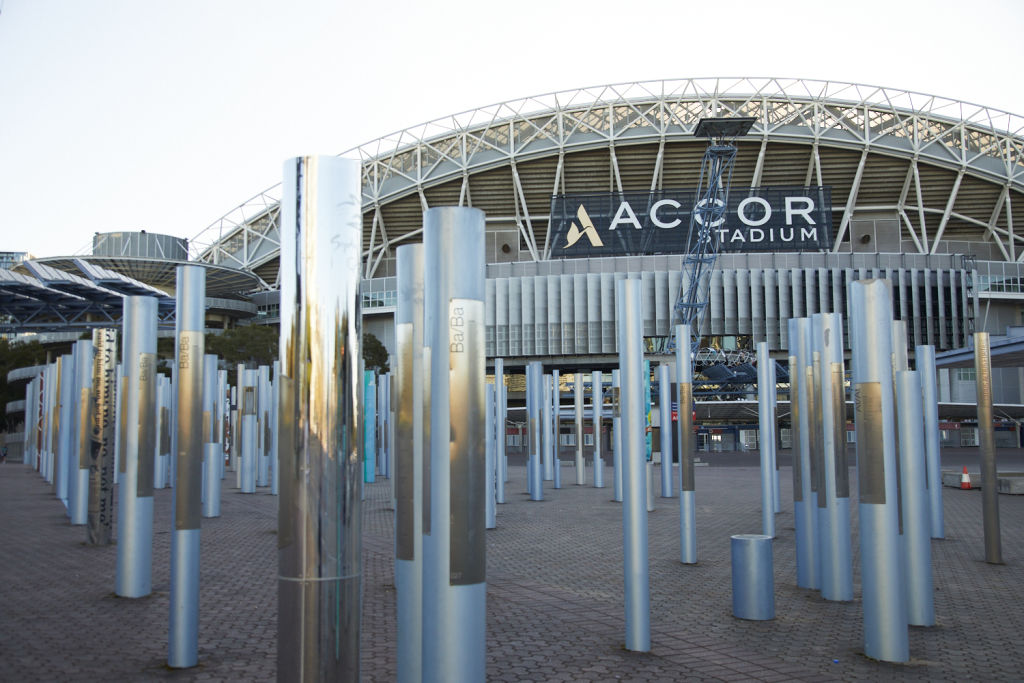
Likewise, Sydney Olympic Park, created for the 2000 Games, has evolved into a mixed-use precinct with event venues, residential, commercial and community facilities years after the Olympics.
While its trajectory has been gradual, today the park operates as an everyday urban precinct, with even more change on the horizon thanks to housing plans.

Tokyo 2020, Paris 2024 and the rise of reuse
More recent iterations of the Games have placed greater emphasis on adaptive reuse, temporary structures, and the design of venues with a clear post-event role.
In Paris 2024, that thinking has been baked into the master plan. Rather than building an entirely new suite of permanent stadiums, the city has leaned on a mix of existing venues, temporary installations and a small number of strategically targeted new builds.
The Stade de France has returned as the main athletics venue, while the Paris La Defense Arena has been adapted to host swimming with temporary pools installed inside an existing indoor arena.
High-profile temporary venues were also dropped into the city fabric, including the Eiffel Tower Stadium for beach volleyball and the Place de la Concorde for urban sports, b and were dismantled after the Games.
Where Paris did invest in permanent new infrastructure, it was tied directly to long-term community use. The Centre Aquatique Olympique in Saint-Denis, built opposite Stade de France, was designed from the outset to become a public aquatic centre for the local area, while the Olympic Village in Seine-Saint-Denis is being converted into thousands of new homes, offices and community facilities, embedding the Games into a broader urban regeneration programme rather than leaving behind isolated sports assets.
Tokyo’s approach to the 2020 Games followed a similar logic. While the New National Stadium was delivered as a permanent replacement for the ageing 1964 venue, much of the event programme relied on existing or temporary infrastructure.
Historic buildings such as the Nippon Budokan (judo) and Yoyogi National Gymnasium were reused, avoiding the need for new single-purpose construction. Other venues, including the Ariake Gymnastics Centre, were designed with temporary structures and demountable seating, allowing them to be reconfigured or scaled back after the Games.
Even purpose-built sites like the Sea Forest Waterway, used for rowing and canoe sprint, were designed with temporary spectator infrastructure, ensuring the legacy asset is the waterway and parkland itself rather than a redundant grandstand-heavy complex.
While the medal count in Brisbane in 2032 will be a hot topic, the real success for the Olympic and Paralympic Games host lies in designing and operating venues not as dynamic, adaptable economic assets that keep working long after the crowds have gone home.