End of an era, start of an opportunity: Mossman Sugar Mill ready for transformation
For 127 years, the Mossman Sugar Mill helped power Far North Queensland’s economy, its smokestacks rising above the cane fields as generations of farmers brought in harvests from one of Australia’s most fertile tropical farming regions.
Now on the market, one of the country’s oldest mills is uniquely positioned to trade its sweet legacy for a lead role in the nation’s green energy future, with potential uses spanning biofuels, sustainable aviation fuel, battery storage, renewable energy and advanced agricultural processing.
The sprawling 18.78-hectare industrial complex at 34 Mill Street, Mossman, is being pitched by Colliers International Cairns as one of the region’s rarest brownfield redevelopment opportunities.
“Mossman Mills has been established for over 100 years,” says managing director Stacey Quaid. “It was the backbone of the region until tourism overtook it.”
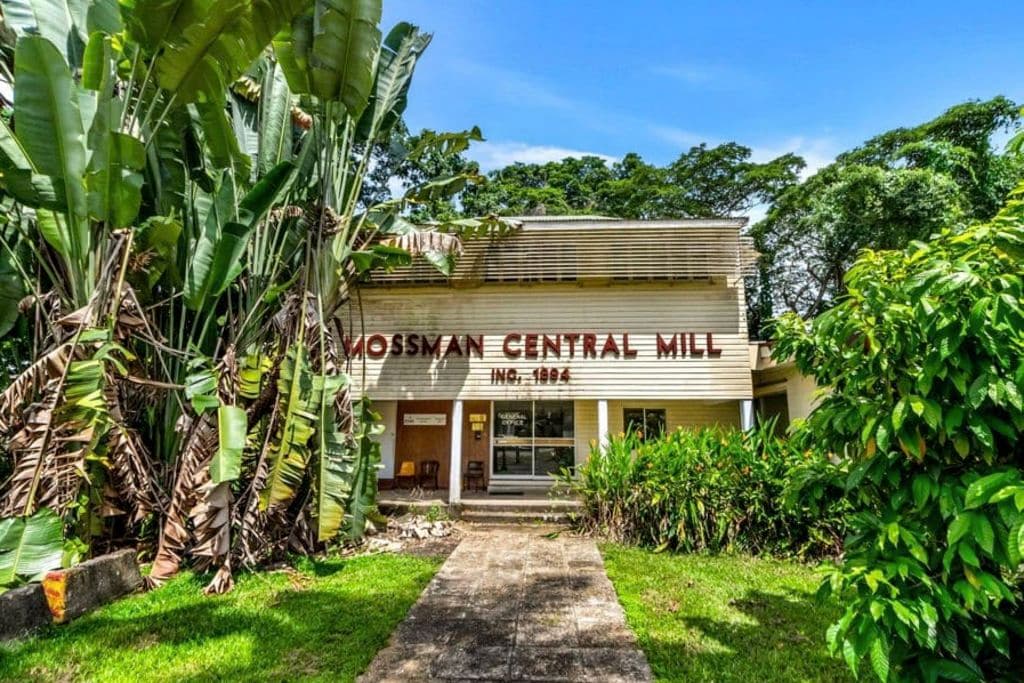
The former property is now being sold via formal offers on behalf of liquidator John Goggin of Worrells, with Quaid and colleague John Lynch marketing the four-title package on an as-is basis, with expectations of around $5 million.
A legacy built on water and soil
Established in 1897, long before tourism transformed the region into a gateway to the Daintree Rainforest and the Great Barrier Reef, it was the northernmost mill on the east coast.
Its longevity was a gift of geography. Unlike other regions, Mossman’s reliable rainfall allowed farmers to grow and cut cane without the need for complex irrigation.
Employing about 150 workers during crushing season, it once processed cane for farmers in areas including Daintree, Whyanbeel, Miallo, Mowbray, Cassowary and Julatten.
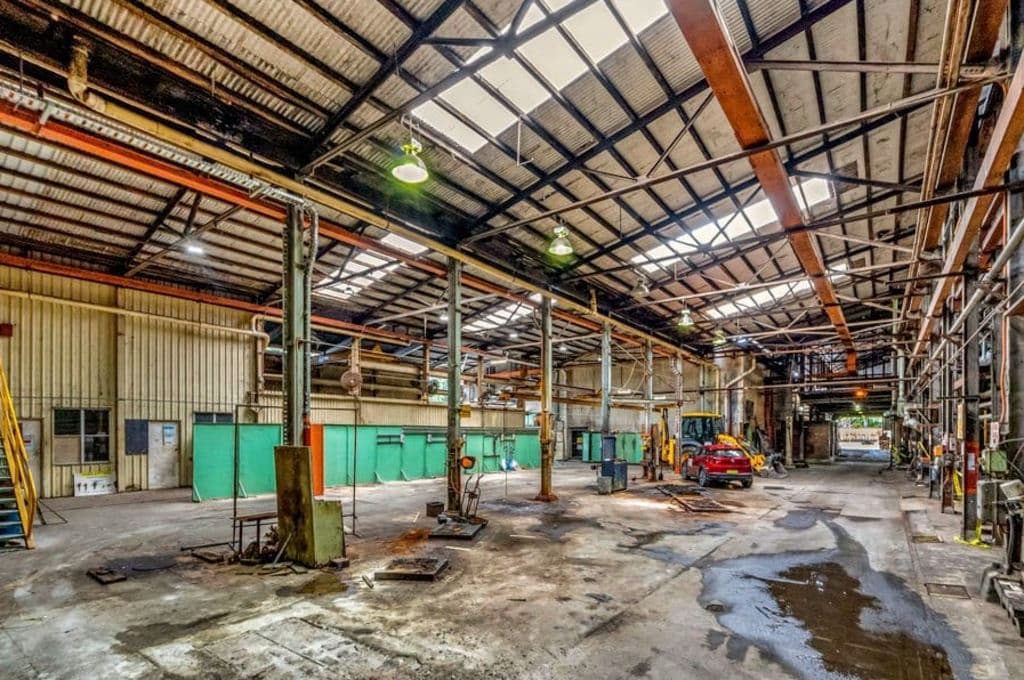
The vast cane rail infrastructure network that transported harvested cane from surrounding farms to the mill is included in the sale.
Over the years, as sugar production declined and transport costs rose, the economics of the traditional milling model became increasingly difficult to sustain.
Things came to a head with the collapse of Far Northern Milling at the end of the 2023 crushing season.
“They needed a throughput of somewhere near a million tonnes, and it was reduced with alternate uses down to less than 500,000 tonnes a year,” Quaid says.
“Transport and all those sorts of things were against it … hence we’ve now got a significant brownfield site, ideal for a new industry.”
Since the Mossman Sugar Mill shut down, growers in the region have been forced to truck cane more than 100 kilometres south for processing, intensifying industry discussions around alternative crops and new agricultural uses for the district.
Biofuels and batteries: the new frontier
Recent trials of emerging green-fuel technology using biomass crops like bana grass are fuelling interest in future biofuel and sustainable aviation fuel (SAF) production across the region.
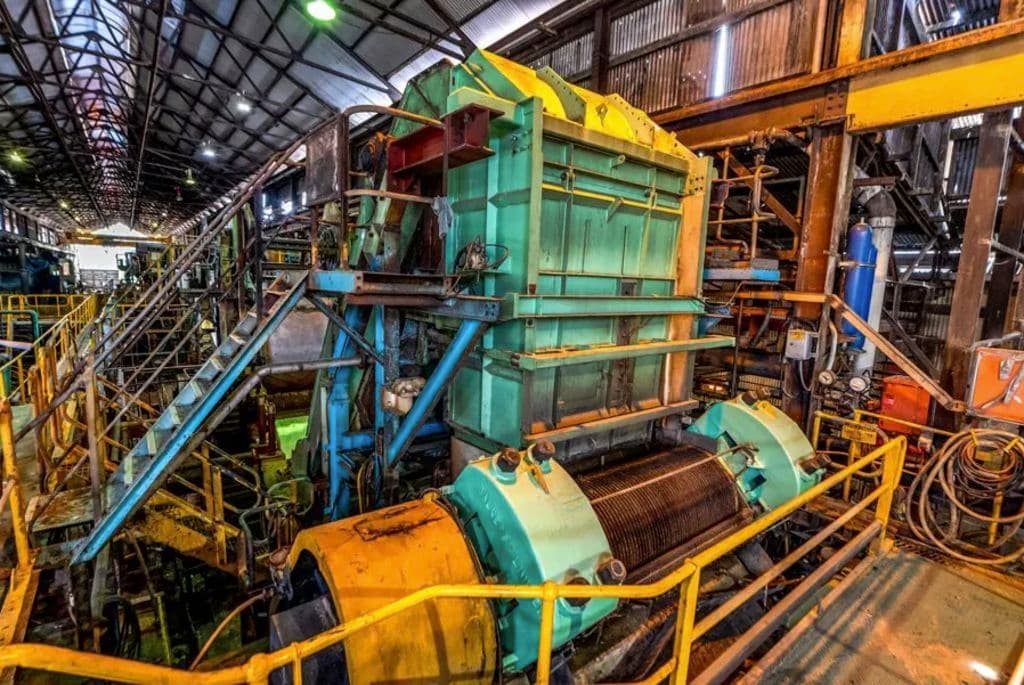
While the mill’s machinery has gone quiet, the infrastructure retains its value and is attracting interest from a wide range of groups exploring this cleaner energy.
“The interest we’ve had so far has been a lot of industries looking to replace sugar,” Quaid says. “Things like renewable energy, biofuels, solar farms, battery farms – whatever the new crop is going to be.”
The surrounding district still contains about 6000 hectares of potential cropping land, while the site itself already offers industrial zoning, power, workshops, warehousing, laboratories, offices, housing and significant water security.
“One of the biggest benefits of this site is that it is a brownfield site,” Quaid says. “If you were trying to find a brownfield site for a new factory, it could take five years before you’d get an approval from the state and federal governments … and replacement costs would be astronomical.”
The brownfield advantage
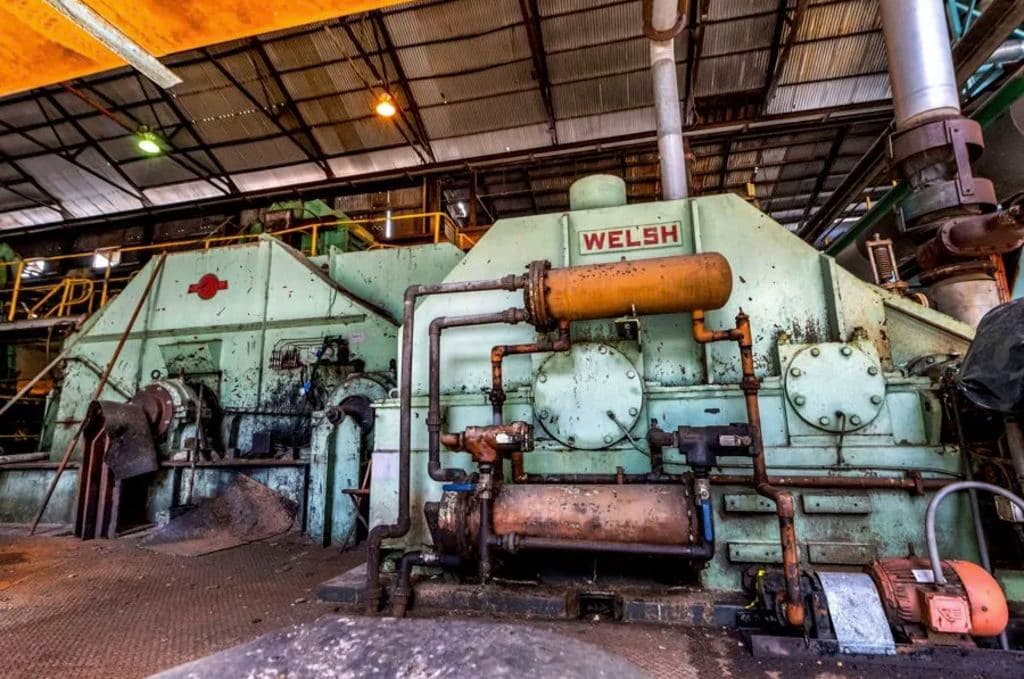
The property includes a 10,115-square-metre building complex featuring the train building with 11-metre clearances and heavy-duty steel portal frames. Besides the rail assets, the Extensive infrastructure includes molasses tanks, sugar dryers and cooling towers.
Operational versatility is further enhanced by a two-storey administration building, laboratory, chemical storage areas, and workshops for boilermakers and carpenters.
Providing accommodation for future staff or management, are seven pre-1960 three and four-bedroom detached homes, many updated internally. Some date back to 1915.
Perhaps most critically for future industrial users, the property comes with two substantial water licences attached to the Mossman River and Parker Creek, allowing direct access and extraction of more than 15,000 megalitres.
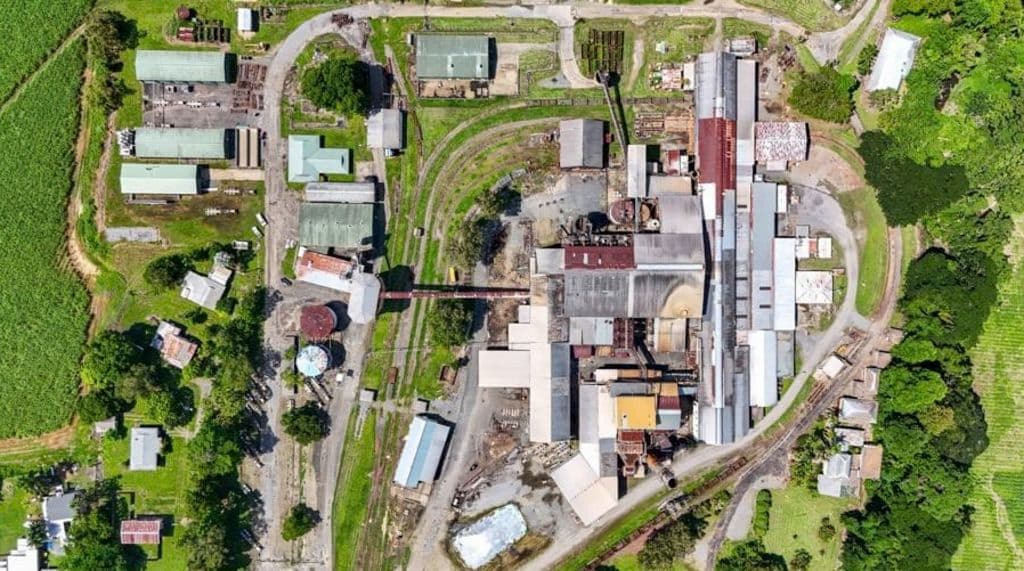
The site has direct access to the Captain Cook Highway. It sits just 500 metres from the township of Mossman, about 20 kilometres from Port Douglas and 75 kilometres from Cairns.
Mossman’s tourism industry is bolstered by visitors to the Daintree Rainforest and Indigenous ecotourism developments like the Mossman Gorge Cultural Centre at the Mossman Gorge World Heritage site.