Middle East crisis looms large over Australian commercial property market
The US-Iran conflict is set to affect Australia’s commercial property market, with the hotel and retail sectors expected to feel the biggest shockwaves.
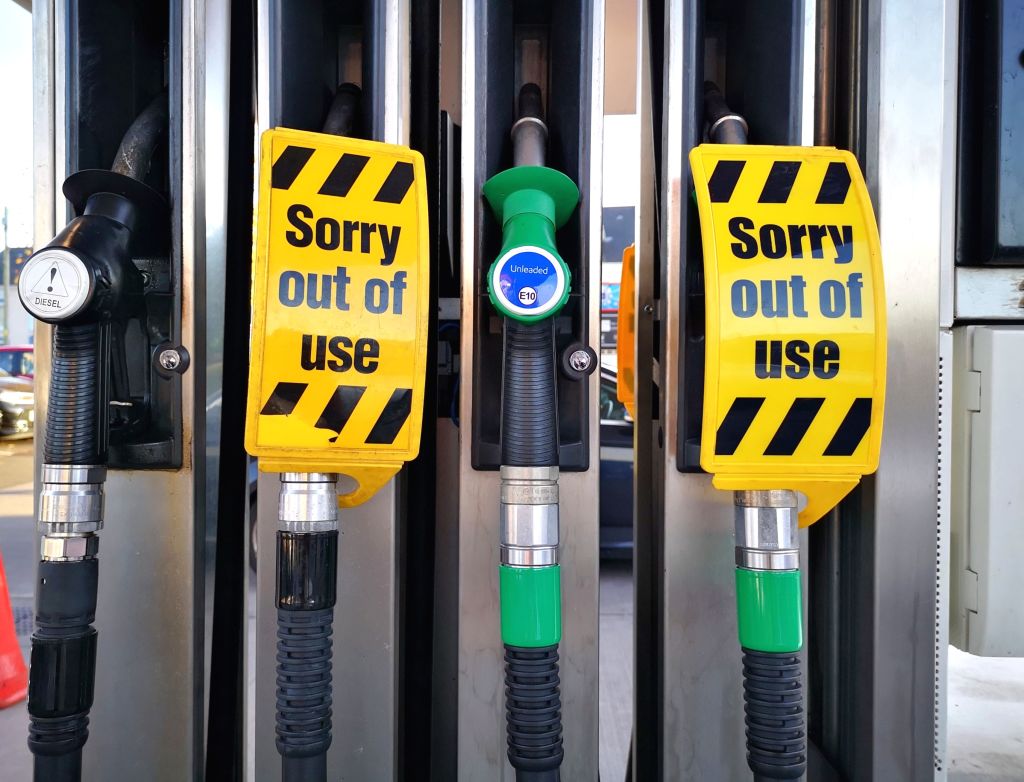
Skyrocketing petrol prices have already put consumers under pressure, and when coupled with two consecutive interest rate rises this year, it spells tougher economic conditions ahead.
Non-discretionary spending, including international and interstate travel, will most likely take a hit, and this will be felt by hotels and retail outlets, says Vanessa Rader, head of research at Ray White Group.
“Are we going to see fewer people travelling because of uncertainty? And what does that mean to our tourism market and our retail market that benefits from interstate or international visitors?” she asks.
“I think that there is a flow-on effect on everything, but I think the biggest thing to remember is whenever there’s war or there’s some sort of economic uncertainty, because that’s exactly where we’re at, everybody just does nothing. So transaction activity is going to be limited.”
Although widely debated, petrol rationing has not been instituted by the federal government. If it was to occur, Rader says it will push Australia’s office market back into conditions reminiscent of the COVID pandemic.
“We’re going to get back to, not a lockdown situation, but some sort of kind of rationing situation where that would affect the office market and it would affect the retailers that are in that office market that have started to see things come back,” she says.
The Middle East crisis has also pushed global energy prices up, adding to Australia’s inflationary pressures and the likelihood of further interest rate rises this year.
This is already beginning to take its toll on Australian businesses, particularly the industrial sector, which is feeling the pinch of rising distribution costs.
“We’re already hearing from businesses that they’ll need to raise prices,” says Belinda Allen, Commonwealth Bank’s head of Australian economics.
“Energy costs don’t just affect petrol _ they flow through to food, freight and manufactured goods.”
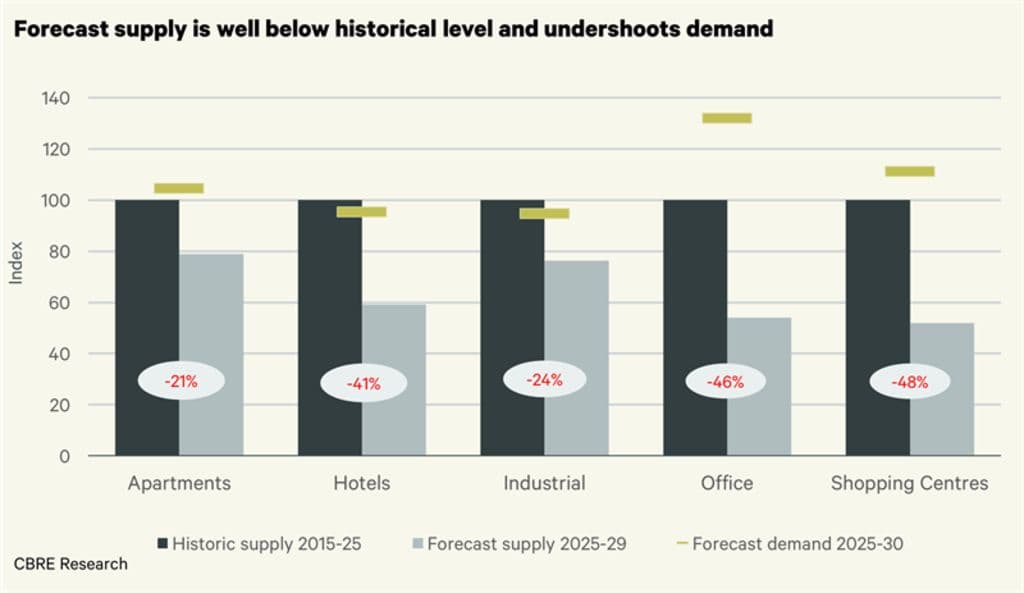
Construction costs, which were already high before the Iran war began, have blown out further due to steep increases in petrol and energy prices. This has widened the gap between demand and supply across Australia’s commercial property market.
Shopping centre construction is expected to fall short of demand by 48 per cent, offices by 46 per cent and hotels by 41 per cent, according to CBRE data.
However, there could be several potential upsides for the market.
Global investors are likely to look favourably at Australian commercial real estate, says Gavin Bishop, Colliers managing director, industrial and logistics and head of industrial and logistics capital markets.
“I think APAC will benefit, with global capital flows into the commercial sectors,” he says.
“So we are going to be seen as a region, the APAC region, as a safe haven. We’re a safe place to invest capital globally from the global pension funds and the larger global investors.”
Weak economic conditions may also drive investment into the core plus market, such as suburban shopping centres and industrial properties as well as build-to-rent complexes.
“In that part of the market, there are domestic investors together with offshore investors who will look to invest through the cycle, and they’ll see this as a good opportunity to buy because there’s perceived less competition,” Bishop says.
“At the end of last year, core plus investors found it hard to compete because it started to get very competitive and the returns started to get quite tight. Now with rates going up, the window for core plus buying has widened, so there are going to be good opportunities to buy.”