Mega deals send property investment past $50b in 2025

Several mega deals around the $1 billion mark in the commercial property sector have pushed this year’s transaction tally past $50 billion, as big local and foreign investors gain confidence that a recovery is under way.
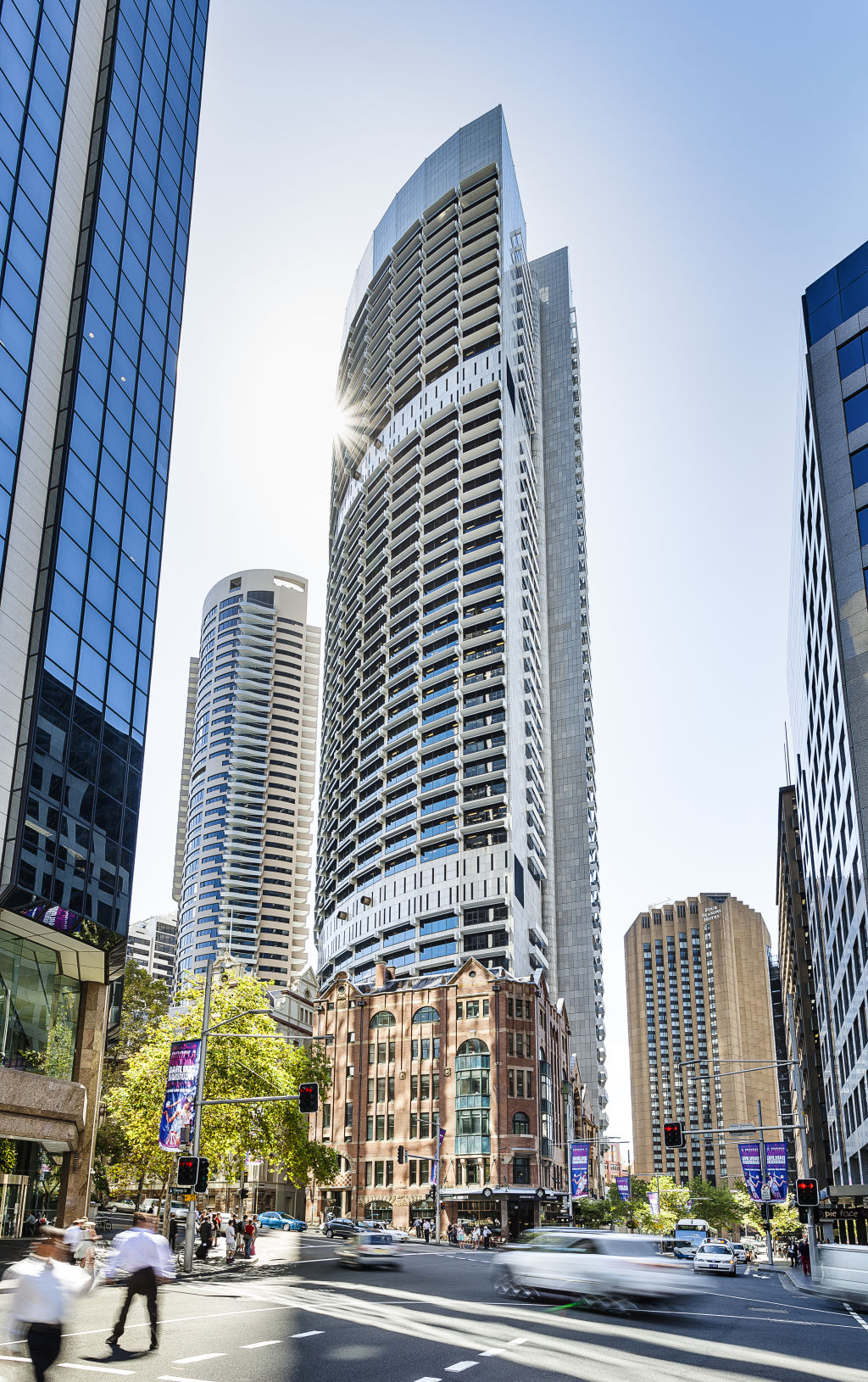
Among the headline deals this year, Melbourne-based syndicator Fawkner Property is buying the $900 million Erina Fair shopping centre on the NSW Central Coast, and in Sydney, ASX-listed fund manager GPT Group has taken an $860 million half share in Grosvenor Place, one of the city’s best-known corporate addresses.
Still to come, industry superannuation fund giant Australian Retirement Trust is in talks with Scentre for a near-$1 billion stake in Westfield Sydney, the jewel in the crown of the ASX-listed mall owner’s portfolio.
Preliminary figures from data house MSCI show transactions in the commercial real estate sector rose 8 per cent this year to hit $50.8 billion.
The MSCI tally underlines the expectation of big property players, such as Charter Hall’s David Harrison, that 2025 is shaping as a “year of inflection” as the sector’s long post-pandemic punishment from high rates and inflation finally eases.
Big investors, both local funds and offshore institutions, had held back as they waited for the downturn to work its way through the sector – including the sub-sectors of office, retail, industrial and alternatives such as build-to-rent – and for property values to stabilise.
The office sector was the hardest hit, with values for some assets falling 25 per cent or more.
Ben Martin-Henry, MSCI’s regional executive director and head of private assets research, said the increase in this year’s deal-making reflected clearer price discovery, stabilising debt conditions and renewed willingness from domestic and offshore investors to deploy capital across several sectors.
“Investors have gained comfort that pricing has reset and that yields now appropriately reflect the higher cost of capital,” said Martin-Henry.
“The combined strength of domestic and offshore participation is a clear signal that confidence has returned to the Australian market.”
Investment in shopping malls and office towers rose substantially, to $11.5 billion and $13.4 billion respectively. Deals in industrial – logistics facilities and warehouses – dipped slightly to $11.4 billion.
The MSCI tally, which includes investment in the booming sector of data centres, nevertheless dropped to $2.1 billion, after the previous year’s total jumped on the record Blackstone acquisition of data centre giant AirTrunk.
”Capital is flowing back into sectors where income resilience is strongest and where valuation risk has moderated,” said Martin-Henry.
“Offices in particular are benefiting from improved liquidity and more transparent pricing, but retail has been the standout performer with $13.5 billion in transaction volumes, a 41 per cent increase on last year and its strongest year since 2021.”
Offshore capital played a big part in this year’s tally as big foreign investors pounced on the local assets, fuelling the recovery.
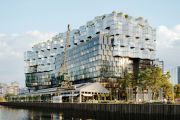
That renewed confidence was apparent in the office market, in particular. This month, global investor Barings bought a Sydney office tower for $360 million, and Singaporean fund manager TrustCapital Advisors acquired an office block in Melbourne’s Docklands for $383 million.
A separate analysis compiled by CBRE highlights just how significant the role of big offshore institutions and funds has been in the local market recovery.
The total offshore capital invested this year reached $9.3 billion, 12 per cent higher than the previous year. Using different metrics, the CBRE annual transaction tally is $33.6 billion.
The office and industrial sectors were most favoured by offshore investors in 2025, accounting for just over 70 per cent of inflows.
“Australia remains a key destination for capital in the APAC [Asia-Pacific] region, given the country’s stability and market transparency,” said Tom Broderick, CBRE’s Australian head of capital markets research.
“North American capital led the charge, injecting $3.9 billion, supported by a weaker Australian dollar and a push for global portfolio diversification.
“Japanese investors maintained strong interest, particularly in development projects, allocating $2.3 billion over the year, while Singapore rebounded after a subdued period, lifting investment to $1.6 billion in 2025.”