How airport lounge design is responding to rising demand and diversity
Premium airport lounge space was once reserved for elite frequent flyers, but through loyalty programs, paid entry and airline partnerships, lounges are now far more accessible, and the audience has broadened significantly.
As a result, these spaces must operate at scale while balancing a premium brand experience with operational efficiency, density, and dwell time, all within a tightly constrained footprint.
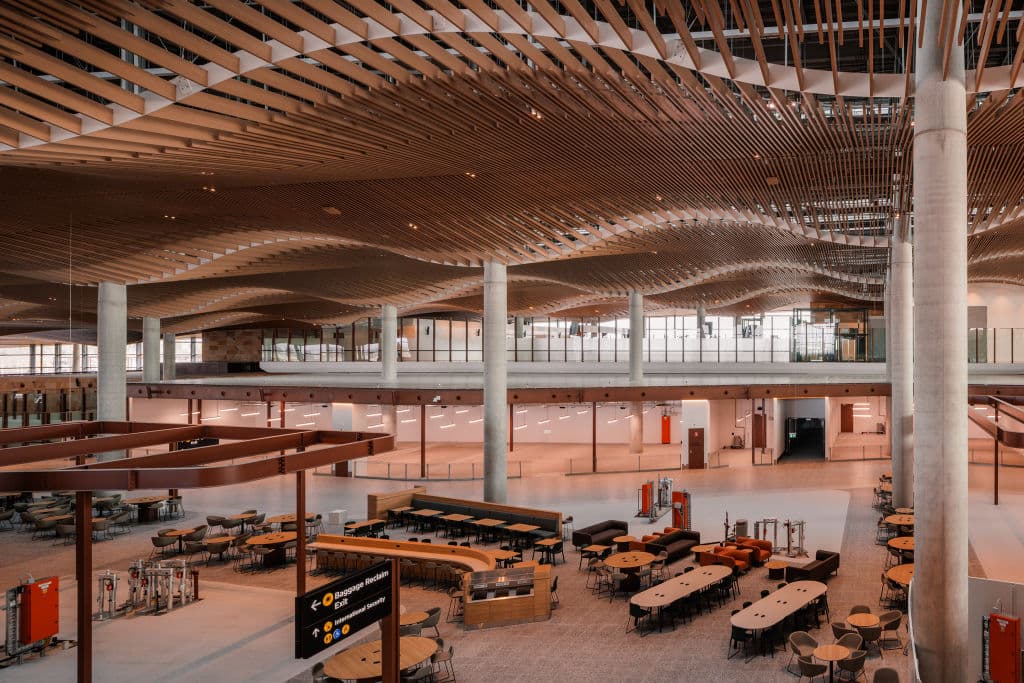
The shift has fundamentally changed how designers approach lounge environments, according to Jodi Archer, regional aviation leader at Woods Bagot, the firm behind the newly completed Western Sydney International (Nancy-Bird Walton) Airport (WSI).
“What stays current are the needs of the user, what has changed is how broadly we define that user,” Archer explains.
“Lounge design has shifted from serving a narrow, premium audience to supporting a wide spectrum of travellers – families, casual flyers, frequent business travellers and long-haul passengers – often within the same footprint.”
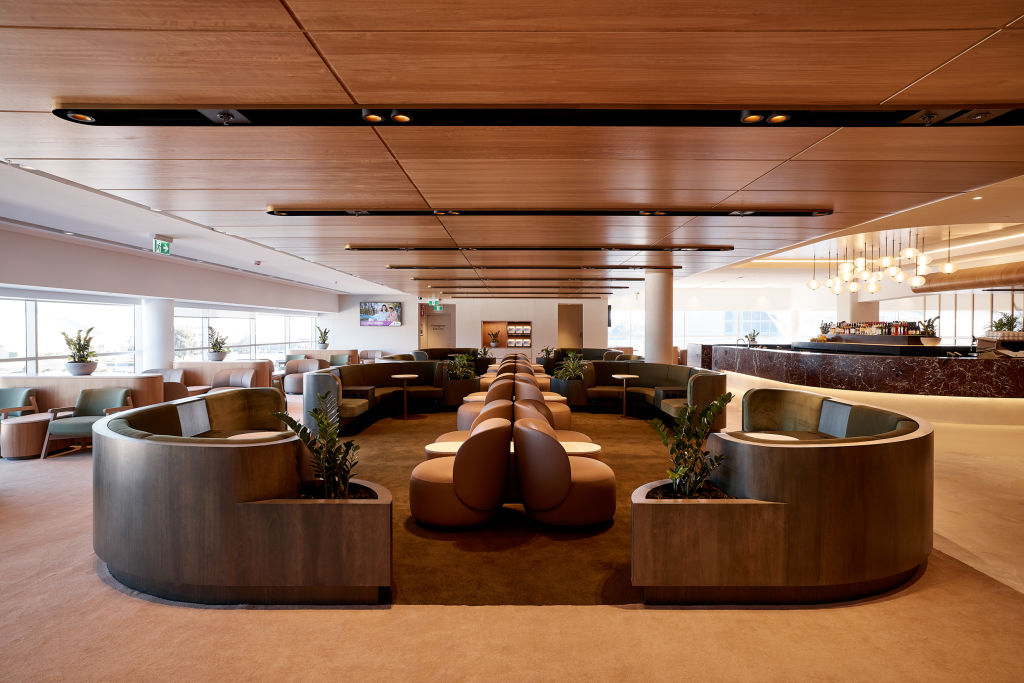
Greater access has transformed lounges from quiet waiting rooms into high-performing hybrid environments, drawing on workplace, hospitality, and wellness design while functioning as critical assets within the airport real estate ecosystem.
Designing for diversity
The contemporary lounge now needs to facilitate multi-purpose use, ranging from productivity and socialising to rest and dining, which in turn requires a deeper interrogation of who the lounge is designed for.
“We no longer design for a single archetype, engaging diverse working groups through accessibility workshops to better understand different lived experiences,” she says. “As we often say, we don’t know what we don’t know.”
Inclusive design is now at the centre of lounge planning. Accessibility, legibility and flexibility are essential to ensuring that these spaces are usable and commercially viable as access continues to broaden.
Zoning for density management
Managing density has become one of the defining challenges of lounge design.
“Rather than rigid separations, we think of zoning as activity-led and porous, spaces that intuitively guide movement while maintaining visual connection, comfort and calm,” Archer says.
Clear spatial cues play a critical role in maintaining flow, with entry and queuing zones separated from service and seating areas to prevent congestion.
Quiet spaces are distributed throughout the lounge, rather than isolated, relieving pressure on central spaces and allowing travellers to self-select their preferred environment.
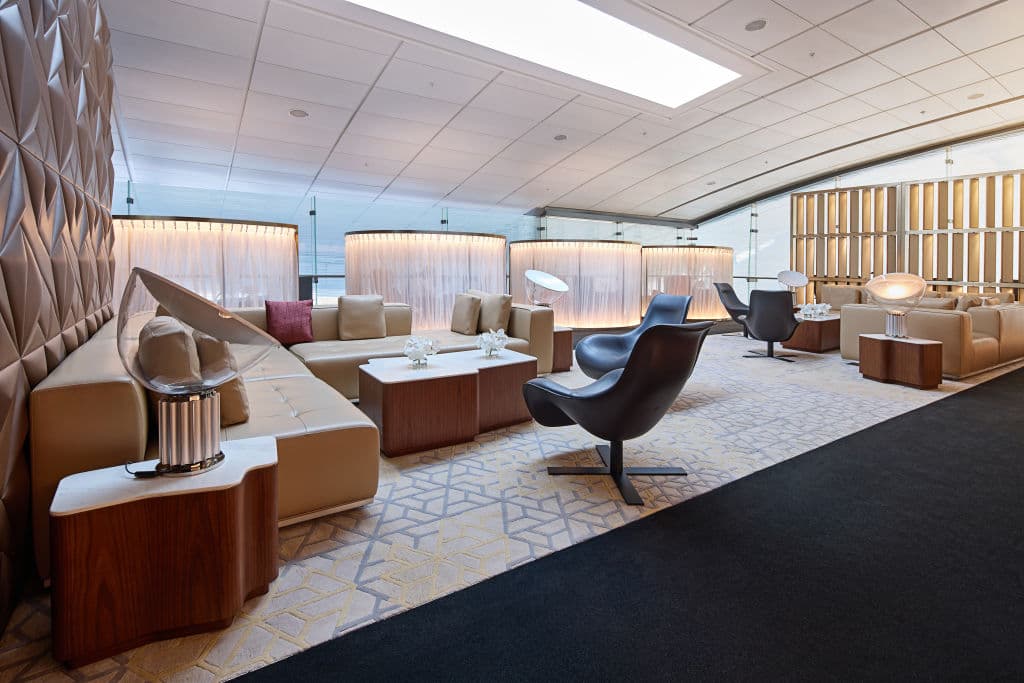
“Flexible access rules and modular furnishings allow zones to shift purpose across the day,” Archer says. Enabling lounges to respond dynamically to peak periods, extended dwell times and changing user needs is a key consideration.
Sensory zoning is equally important. Acoustic treatments and layered lighting help shape behaviour, supporting focused work in quieter areas while allowing social interaction in more animated zones without isolating users or fragmenting the space.
“Density becomes a design parameter that informs a zoning strategy that balances flow, choice and ease of use,” Archer explains.
The rise of the hybrid environment
In 2026, a good airport lounge should reflect its users: travellers who often occupy multiple roles at once.
“Lounges today draw equally from workplace and hospitality design because contemporary travellers inhabit both modes simultaneously,” Archer says. “The lounge has become a hybrid environment: a place to focus, rest and engage socially, often within a single visit.”
Such duality influences everything from furniture selection to lighting, ambience and service models. The space must support productivity without feeling corporate, and comfort without sacrificing operational efficiency.
“We see the lounge as both a hospitality hub and a micro-workplace,” Archer says. “Travellers want to feel at ease in a busy world, able to work quietly, recharge, or transition into a more social setting as needed.”
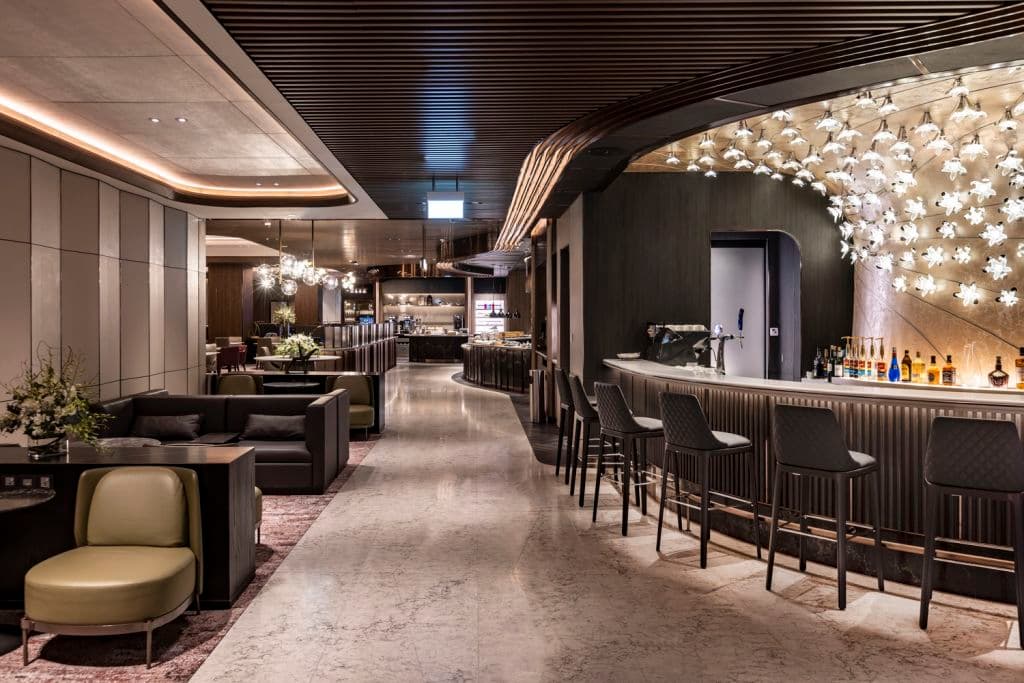
To execute this successfully, designers are creating spaces that respond fluidly across the day, with zones that feel purpose-built yet visually cohesive.
Subtle shifts in lighting, atmosphere and service allow lounges to adapt to changing energy levels and dwell times, creating what Archer describes as “a seamless continuum of use, where form follows function and every experience feels intentional, generous and grounded in comfort.”
Non-negotiables in high-traffic spaces
As lounges accommodate higher volumes and for longer dwell times, certain inclusions have become non-negotiable.
“It’s those elements that quietly support comfort, clarity and resilience at scale,” Archer says. “A premium experience doesn’t come from a single brand gesture, but from a design language that travels well while allowing for regional nuance.”
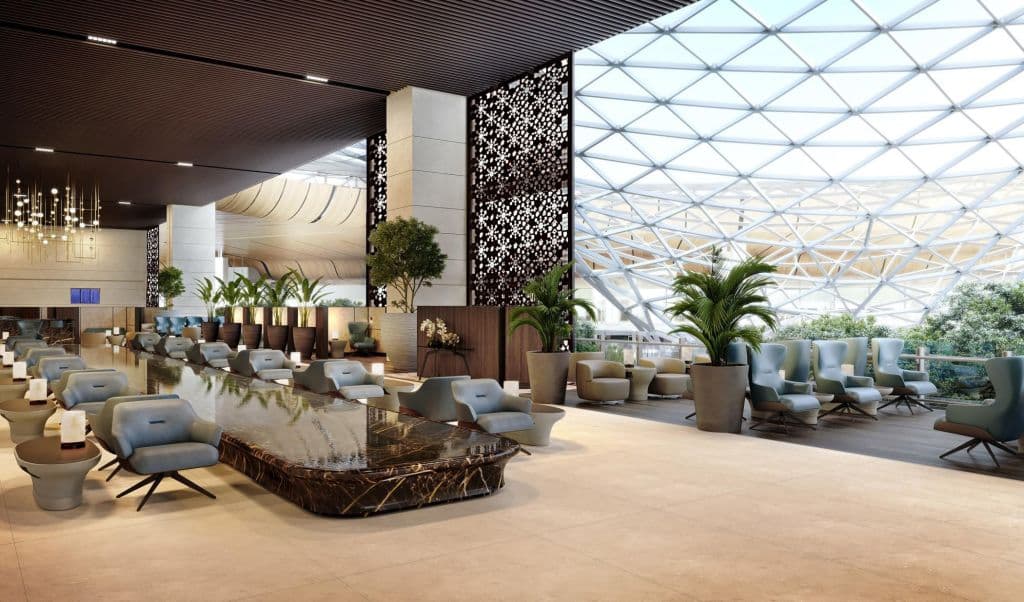
An acoustic strategy is fundamental to calmness and usability. Flexible, modular furniture enables reconfiguration as demand shifts, while inclusive design ensures accessibility is embedded rather than retrofitted. Technology should feel seamless and unobtrusive, from wireless charging and intuitive way-finding to contactless services.
Thermal comfort, durable yet tactile finishes and thoughtful climate control support both long dwell times and high passenger turnover.
Dining has also become a key spatial driver, with layouts designed to manage variable throughput without compromising quality or experience.
“Together, these elements create lounges that are robust, intuitive and quietly refined,” Archer says.
Future-proofing premium assets
Looking ahead, the challenge for airports and airlines is to ensure lounges remain relevant as access models, airline partnerships, and passenger expectations continue to evolve.
“Airport culture is in the midst of a shift,” Archer says. “Where flying was once defined by romance and exclusivity, it moved into an era of efficiency and throughput. Today, we’re seeing a renewed focus on hospitality.”
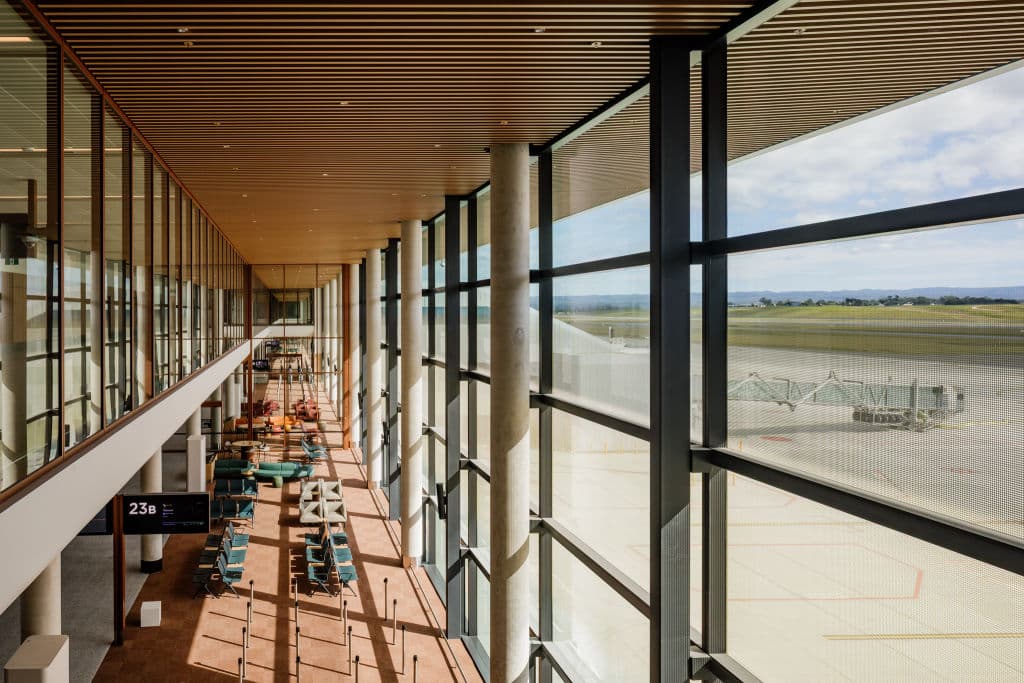
She points to Western Sydney International Airport, where airline lounge experiences are integrated directly into the boarding zone, signalling a broader redistribution of premium services across the terminal.
Future-proofing lies in scalability and adaptability, according to Archer. Spatial strategies need to flex with changing access models, supported by service concepts that can adapt without requiring full rebuilds.
Technology-forward ecosystems that monitor occupancy, dwell times and user satisfaction allow operators to make targeted refinements over time.
“Brand-agnostic legibility, local nuance, and durable, sustainable materials ensure longevity,” Archer says, “creating resilient environments that can respond gracefully as expectations, access and patterns of use continue to change.”