From 'wall of Lantana' to $2.7m sanctuary: The incredible 30-year legacy of Rose Gums
A Far North Queensland rainforest retreat grown from a “wall of lantana” into an $800,000-a-year eco-tourism business has been listed for $2.7 million.
The four-star Rose Gums Wilderness Retreat, at 324 Land Road, Butchers Creek, is being marketed by Stacey Quaid of Colliers International in conjunction with Peter MacPherson of Queensland Rural.
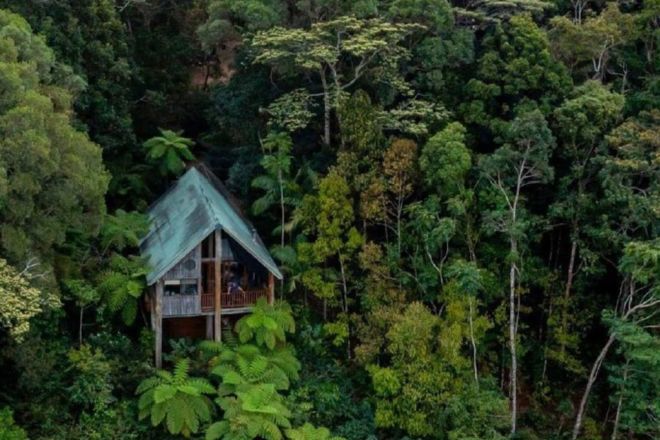
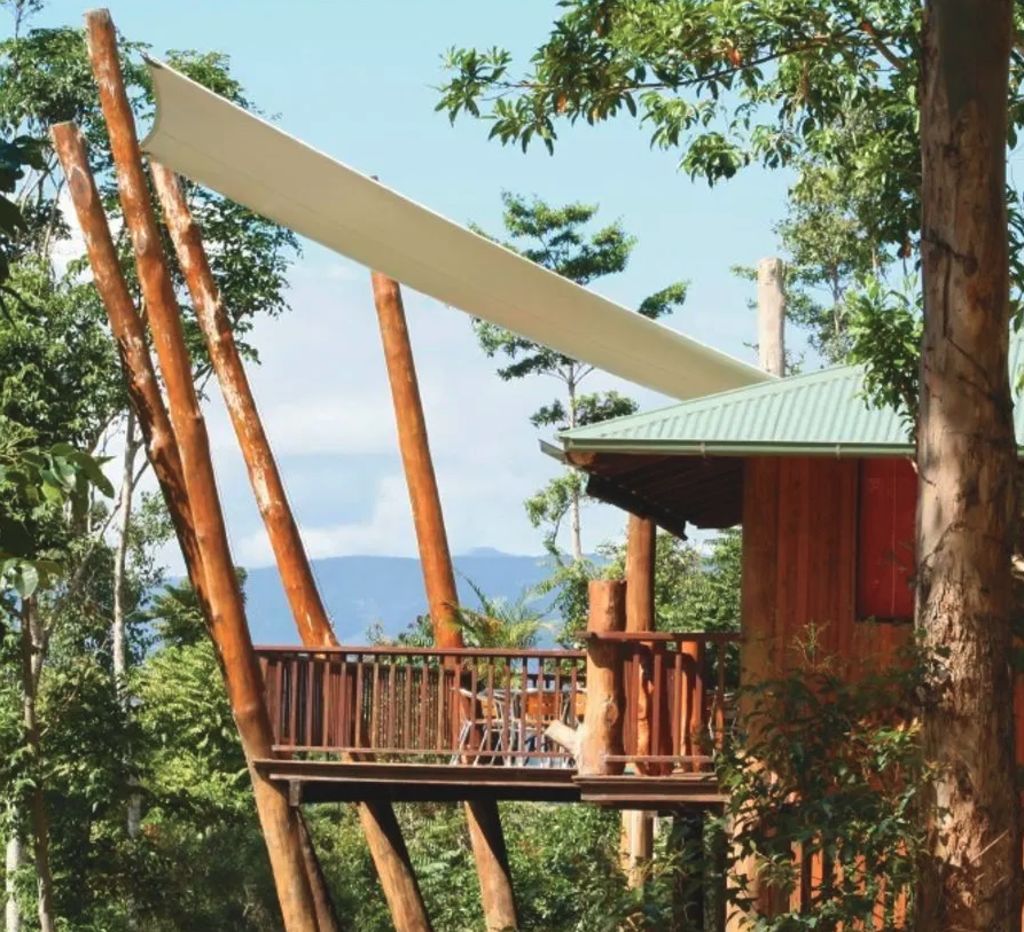
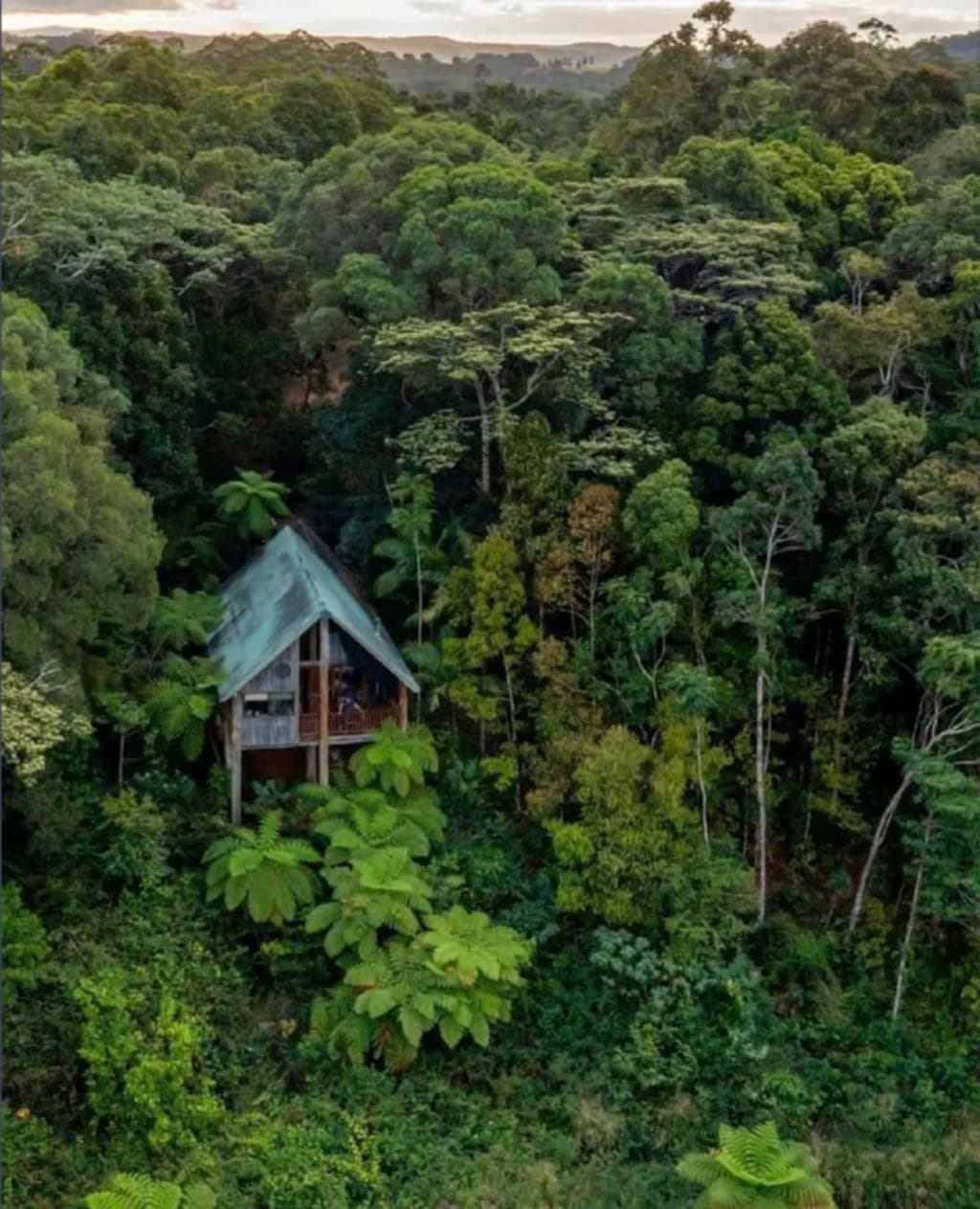
Set across more than 77 hectares on the Atherton Tablelands and bound by World Heritage-listed rainforest, the property features 12 eco-designed and handcrafted treehouse villas, a three-bedroom residence, reception building and staff cottage, all dispersed through regenerated forest, about 90 minutes from Cairns.
The property had been cleared for farming following World War I, but proved unsuitable for dairy, and large portions had been overrun by “a wall of lantana and tobacco bush” when vendors Jon and Peta Nott first saw it in 1994.
The couple, who have been married for more than 33 years, first inspected the rainforest block with their young daughter, climbing onto the bonnet of their Toyota to take in the view.
“We climbed up on the hood of the truck and went, ‘Wow,’” Nott said in a social post late last year.
Over the following decades, the pair painstakingly planted more than 30,000 native trees to create a functioning rainforest ecosystem – a labour of love, Quaid says.
“We just wanted to share it with people,” Nott adds. “It was probably a lifelong dream of mine to start something that involved nature, wildlife, the environment, birds … all my favourite things in life.”
Working initially with the Community Rainforest Reforestation Program, the couple planted about 20,000 trees between 1995 and 1998, followed by years of ongoing weed management and a further 10,000 plantings, which brought long-dispersed wildlife species back home.
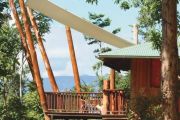
The retreat opened in 1998 with a treehouse built on the previously degraded top areas. This expanded to 12 wooden villas crafted by Nott, a professional builder specialising in resort-style accommodation.
“It’s a great story,” Quaid says, adding how now, three decades later, it comes with established income, international demand and approved expansion.
Annual revenue reached $823,000 in the 2025 financial year, with international visits driving performance.
“It’s been on a projected increase since going back to even COVID time … it’s just been annual growth every year,” Quaid says. “They’ve got a good pipeline into the overseas market.”
The property has established a reputation and loyal client base, particularly since 2007, with 85 per cent of guests arriving from overseas, including Germany, the Netherlands, Switzerland, the UK and the United States.
“The retreat has been in operation for many years, garnering numerous accolades and awards for its commitment to ecotourism and unique accommodation offerings,” the information memorandum states.
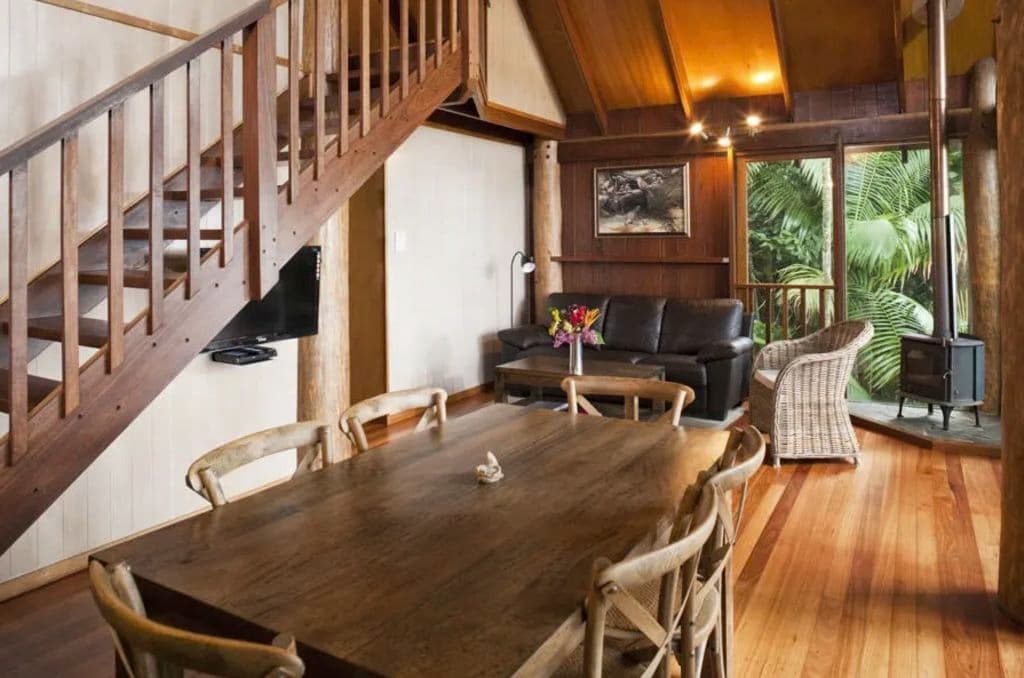
The self-contained villas – a mix of studio, two and three bedrooms – are designed to integrate with the surrounding landscape, and are positioned about 100 metres apart to maximise privacy and rainforest views. Features include full kitchens, large bathrooms, fireplaces, and elevated balconies with views to Mount Bellenden Ker and Mount Bartle Frere, Queensland’s tallest peak.
“[The vendor] was renowned for resort-style timber accommodation … it is very bespoke accommodation with big timber poles and finishings,” Quaid says.
“All the tree houses are segregated so you’re not getting a neighbour on top of you here … the bespoke nature of the improvements and land create an enchanted destination.”
Nature-based experiences underpin the guest experience, with a 10-kilometre network of walking tracks through the property, including creek and waterfall trails, a reforestation walk, and a 600-year-old rose gum tree that rises 45 metres above the canopy and inspired the resort’s name.
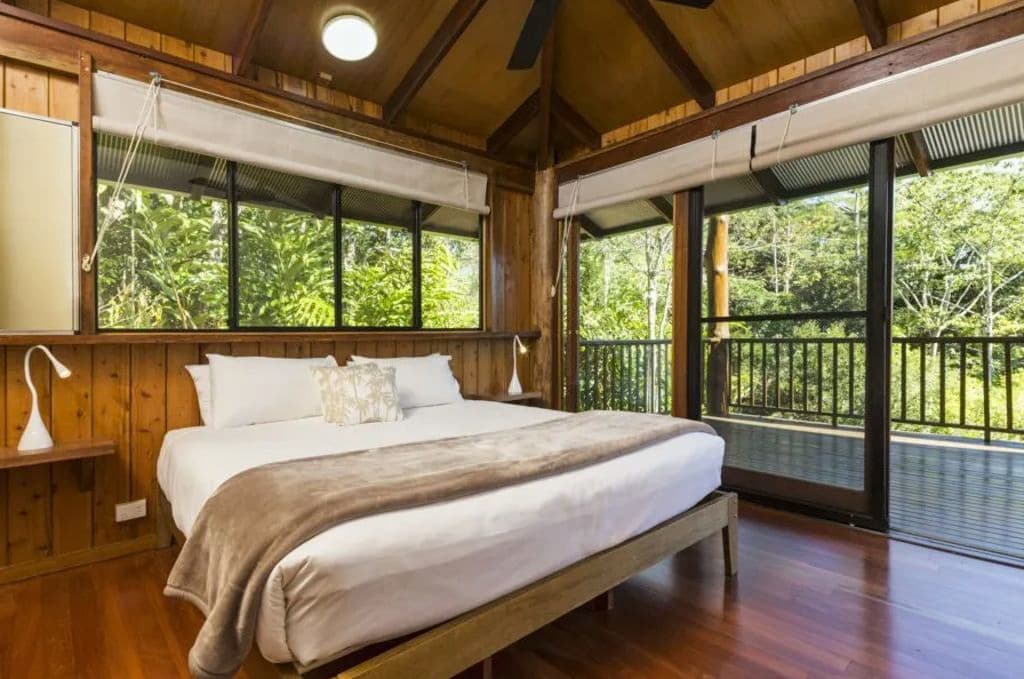
The property – which has attracted a near-perfect 4.9-star Google rating – borders Wooroonooran National Park on two sides and supports high biodiversity, with cassowaries, platypus and musky rat-kangaroos (the smallest kangaroo species) regularly seen alongside nine of the Wet Tropics’ 10 endemic bird species.
In recognition of its environmental significance, the property was declared a Nature Refuge by the Queensland Government in 2007. This protects vine forest and eucalypt woodland habitat for species like the southern cassowary and other rare and threatened wildlife.
“It’s really one of those idyllic retreats in nature,” Quaid says. “So it’s really lovely … the improvements there far outweigh the value of what they’re seeking for the entire operation.”
The business is currently operated under management, with the manager overseeing bookings and day-to-day operations, while the owners look to step back after decades of building the retreat, which is accessible year-round at the end of an unsealed no-through-road.
“The owners are really selling because they’re at that retirement age,” Quaid says. “We have seen a mix of enquiry from established operators and new entrants, given the affordability price point.”
Tourism in Tropical North Queensland continues to strengthen, with international visits rising 14.6 per cent to 595,000 in the year to September 2025, driving record visitor spend of $1.1 billion, underpinned by its unique rainforests and the Great Barrier Reef.
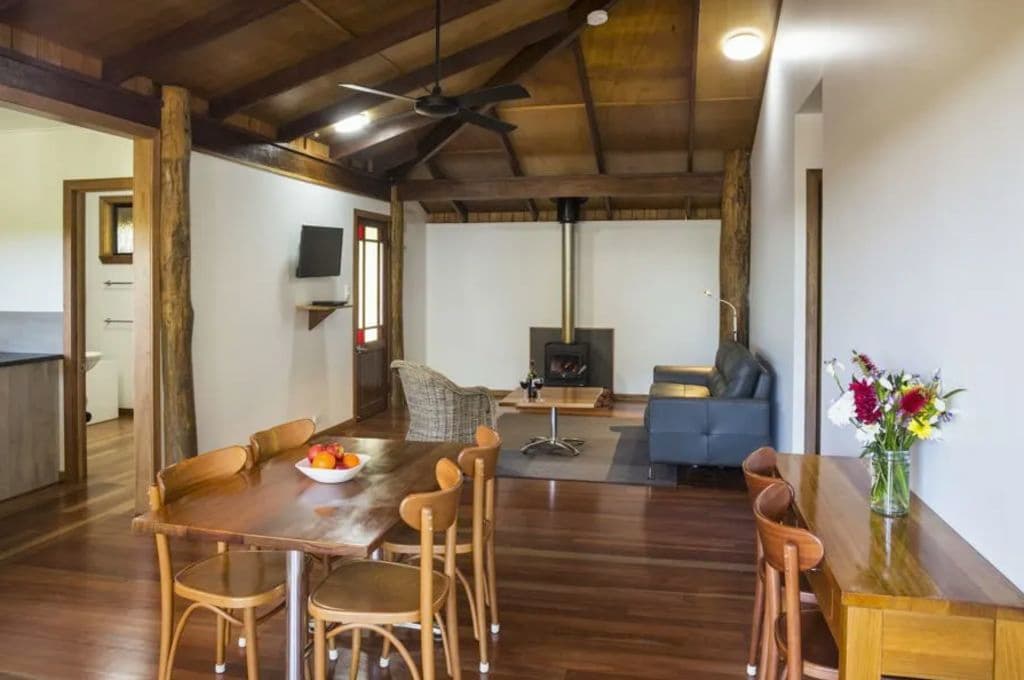
The retreat, which caters for couples through to groups of up to six guests, also offers exclusive guest access to Butchers Creek, a pristine flowing stream with a charming five-metre waterfall. The villages of Malanda and Yungaburra are just 15 minutes away.
“Natural beauty, climate, lakes and creeks. [It’s a] magical part of North Queensland,” Quaid says.
“We’ve had interest from mostly localised buyers … they range from potential owner-occupiers to those looking at adding it to a bigger chain.”
The offering includes approval for expansion, with scope to deliver six additional treehouses, two eight-room lodges, a 300-square-metre research centre, plus a restaurant and caretaker’s residence.
Quaid says the retreat’s enduring appeal lies in the experience it offers visitors, something the Notts have long valued.
“They’ve often said to me, ‘It’s the guests that make the experience,’” he says.
“Sharing their wondrous labour of love with people from all over the world that love and appreciate what they’ve done … the natural side is really what drives them.”