Data centre boom drives Australia’s industrial outdoor storage yields up to 7.5 per cent
Industrial outdoor storage is emerging as a diamond in the rough with yields of up to 7.5 per cent driven by the data centre construction boom, land shortages and continued demand for e-commerce.
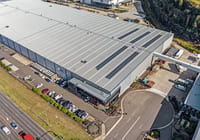
Industrial outdoor storage, or IOS, is mostly yards for trucks, trailers, containers, construction equipment and other industrial equipment, and it commonly sits alongside warehouses and distribution centres.
Until recently, institutional funds have overlooked the asset class, with private investors and owner-occupiers dominating. But with lower maintenance costs and lower incentives than industrial assets, that’s all about to change.
More than $1.5 billion worth of IOS assets have traded nationally since 2023, with a surge in 2025 and the first half of 2026, Colliers data shows.

“IOS has emerged as one of the most compelling alternative industrial asset classes in Australia, transitioning from a niche private and occupier market to an institutional-grade investment sector,” says Sean Thomson, Colliers national director, industrial and logistics capital markets.
Thomson says a combination of land scarcity, rising industrial land values and growing demand from transport, logistics, infrastructure, construction and waste management operators has changed investor perceptions of IOS.
“We’re already seeing groups including Realterm, Cosgrove, Eastgate, Kinkora Investments, Goodman and Charter Hall rapidly increasing their exposure,” he says.
“Importantly, the institutionalisation of IOS in the United States has provided a blueprint for Australian investors, demonstrating the sector’s ability to deliver resilient income, strong land value appreciation and attractive risk-adjusted returns.”
Yields were solid across Australia in the June quarter. Adelaide led the way with yields between 7 and 7.5 per cent thanks to strong container and automotive activity in Port Adelaide.
Perth followed with yields sitting between 6.33 and 6.83 per cent thanks to tight stock conditions, while Melbourne’s yields ranged between 6 and 6.5 per cent driven by storage needs around data centre construction.
Brisbane sat between 5.78 and 6.28 per cent and is expected to rise in the lead-up to the 2032 Olympic Games, while Sydney posted yields between 5.17 and 6.12 per cent in a market split between expensive infill areas and affordable outer-ring yards.
Colliers intel found rents per square metre varied hugely between the capital cities, as low as $23 in Adelaide and as high as $103 in Sydney.
Rent costs are driven not only by location, but also by hardstand surface, with crushed rock the cheapest, followed by bitumen, then concrete and container-rated hardstand the most expensive.
However, the main driver behind the asset is land shortages. More than 70 per cent of a typical asset’s value is estimated to sit in the underlying land while site coverage is generally below 30 per cent, according to Colliers research.
Brisbane and Perth IOS assets have seen the strongest land value growth, driven by rapid population growth and major infrastructure projects, and Thomson says this trend is set to continue.
“Historically viewed as more affordable alternatives to Sydney and Melbourne, both markets have attracted significant occupier and investor demand, particularly from logistics, transport, construction, infrastructure, mining services and IOS users,” he says.
“While growth is likely to be more measured than the exceptional increases seen over recent years, the outlook remains positive.
“Ongoing land constraints, continued infrastructure spending, population growth and increasing institutional interest in IOS are expected to support further value growth, particularly in infill and transport-connected industrial precincts where replacement opportunities remain limited.”
Transport and logistics users account for most IOS demand, but that’s being challenged by the massive data centre boom.
Colliers figures show more than 210,000 square metres of hardstand was leased to data centre operators and contractors in the first half of 2026.
Ecommerce providers are another major occupier of IOS, particularly in infill zones where proximity to consumers for timely deliveries is a priority.