How agentic AI is reshaping Australian retail and logistics property
Similar to the e-commerce boom of the early 2000s, Aussie retail is undergoing yet another monumental shift.
This time, however, it’s not consumers doing the shopping but AI.
Agentic AI is changing the way people discover and buy products, allowing much of the purchasing process to be handled by AI assistants – and it’s reshaping the role of physical retail.
Rise of autonomous agents
Compared to generative AI tools like ChatGPT and Claude, agentic AI is a branch of artificial intelligence whereby an agent can act independently with minimal human intervention.
Its decision-making capabilities make it well-suited to shopping, tackling everything from ordering groceries and comparing TVs to completing purchases on behalf of consumers.
“It really is quite a seismic shift towards a new way that we will actually shop,” says Gary Mortimer, professor of retail marketing and consumer behaviour at Queensland University of Technology (QUT).
“What we’re currently doing is shopping ourselves, whether that’s online or physically in store, but AI will simply enable us to delegate that task.”

Jeremy Smith, senior vice-president – head of enterprise ANZ at Salesforce, which has developed the AI agent platform Agentforce, says agentic AI has more advanced capabilities than the traditional chatbot.
“Earlier retail AI and chatbots were basically sophisticated guessing machines,” Smith says. “Agentic AI is an entirely new class of autonomous agents that don’t guess, they reason. By utilising a brand’s data, sitting within its trusted enterprise environment, an agent acts with deep business context to independently make decisions, solve multi-step problems and execute real work from start to finish.”
Agentic AI is already being used to find and compare products, discover new brands, manage returns and, increasingly, execute purchases.
For retailers themselves, agentic AI tools can be applied across customer service, marketing automation and inventory management.
“Customer service is seeing the most explosive immediate impact because it’s so easy to deploy agents to handle the routine bulk queries,” Smith says. “But the back-end transformation is just as profound.
“Marketing is shifting from batch emails to real-time, hyper-personalised journey orchestration. Meanwhile, merchandising and inventory management are being revolutionised by real-time stock visibility that instantly equips store managers and trade partners with data to optimise shelves on the fly.”
According to recent research, many retailers are already on board. New data from fintech platform Adyen found that 100 per cent of surveyed Australian enterprise retailers have used AI in some form, and 95 per cent are familiar with agentic commerce.
All of this begs the question: where does that leave physical retail and the infrastructure that supports it?
Experiential retail’s defensive edge
Mortimer believes it will largely be the more routine aspects of shopping that become automated.
“I think we’ll really see it predominantly in food retailing – supermarkets and groceries – and other businesses where the consumption event tends to be quite habitual and routine, as opposed to recreational or social shopping,” he says.
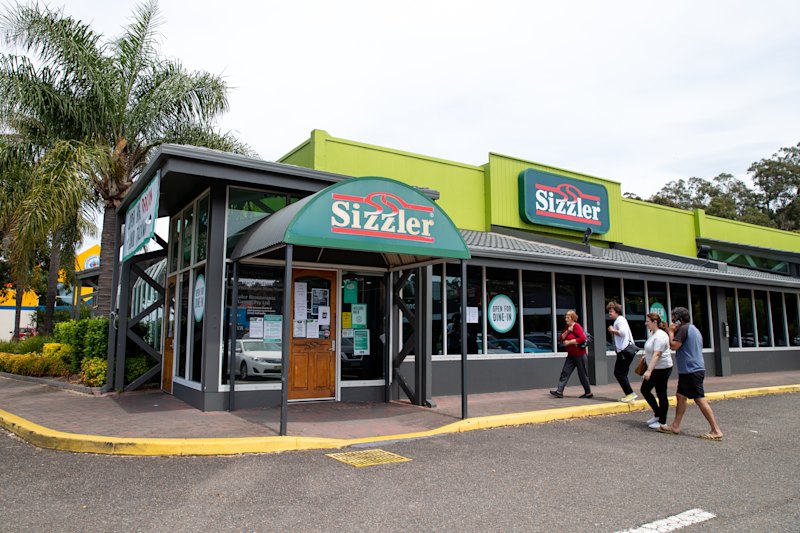
Physical retail certainly isn’t going anywhere. Instead, shopping centres and retail precincts are expected to continue evolving into experience-led destinations.
“I don’t think physical retail will change as a function of agentic AI from what it is today, where physical retail’s gone through an adaptation due to e-commerce,” says Richard Fennell, head of strategy and property and asset management Australia at JLL.
“Ultimately, shopping centres are a destination or a community and entertainment space these days.”

Fennell’s view is backed by recent JLL analysis, which found that retail property transactions reached a record $14 billion last year.
JLL notes that investors are backing experiential assets, which are expected to remain defensive in the face of the agentic AI rollout.
“Shopping centres have repeatedly demonstrated adaptability,” Fennell says. “The question isn’t whether A-commerce [agentic commerce] will change retail – it will – but whether our assets can evolve to capture the experiential spending that algorithms cannot replace.”
Industrial and last-mile demand
That shift is creating new demand in the industrial sector. Agentic AI isn’t just about how consumers buy products, but also about how retailers are able to deliver them.
Nathan Bingham, head of occupier services, logistics and industrial at JLL, says the speed of AI-powered commerce will likely drive demand for logistics infrastructure that can keep up.
“Agentic AI is very likely to accelerate e-commerce penetration and the need for faster fulfilment,” he says. “This will drive demand for last-mile fulfilment locations and adoption of automation and technology that can assist rapid fulfilment.”
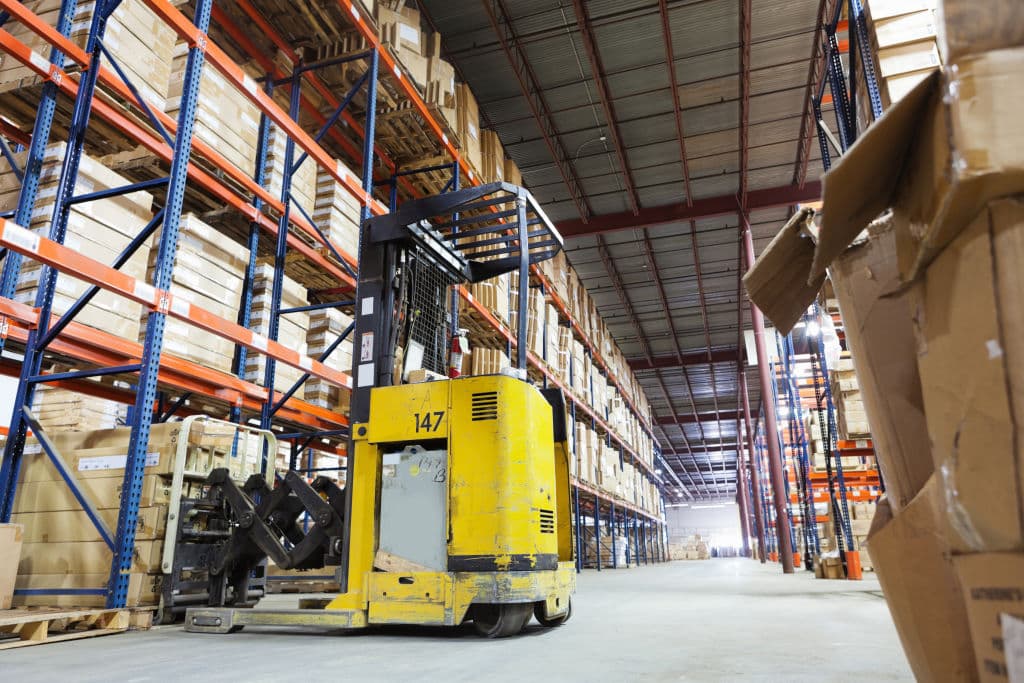
He says retailers will be able to optimise fulfilment locations and inventory levels, utilising AI tools to forecast demand, balance stock across their networks and speed up deliveries.
This also brings retail and logistics closer together, allowing retailers to use physical shops not just to sell products but to distribute them, too.
“Retailers look at their store network as a fulfilment node, so the interplay of their warehouse and store network will become more integrated, enabled by AI’s ability to inform them where their stock is being held and the faster way to fulfil orders,” Bingham says.
Mortimer says this change is likely to be adopted by supermarkets first, with more space allocated to fulfilment.
“I believe that we’ll see smaller supermarkets where a proportion of that supermarket becomes a micro-fulfilment centre,” he says.
“A lot of that product doesn’t physically get to the floor. It is simply dispatched from those stores … that stock never actually leaves the stock room. It just gets distributed from that point.”
Landlord positioning and data
Fennell says the technology may also prove beneficial for retail landlords. It has the potential to provide deeper insights into consumer behaviour, optimise tenancy mix, curate experiences that better match customer preferences, improve visibility and drive foot traffic.
“AI starts telling visitors where they should go, but it also tells landlords how to market to the people most likely to spend time and money in their shopping centre,” he says. “When someone asks AI to plan their Saturday, shopping centres will want their experiences to be part of that recommendation.”
Mortimer says this is actually where the most immediate challenge lies for retailers. Product search has markedly changed, with more and more consumers turning to AI platforms for recommendations rather than traditional search engines.
“AI search works very differently. Consumers are using significantly more conversational search terms, so retailers need to move beyond simple keywords and tell richer stories about their products,” he says.
Enduring physical retail value
Across the retail ecosystem, agentic AI has the potential to transform the way goods are sold and distributed. But that doesn’t negate the role of humans and physical destinations.
Smith says agentic tools will likely automate even more of the buying journey, but that humans are integral to the purchasing journey.
“We aren’t looking to take the human out of the shopping experience. Our focus is on augmentative technology, by building agents that take the friction, research fatigue and logistical headaches out of buying,” he says.
“While agents will handle the heavy lifting of sourcing, comparing and personalising options, the final purchase decision and judgment will always belong to the consumer.”
Mortimer believes that while agentic AI will change how consumers shop, it won’t necessarily change why they visit physical retail: “While you’ll have agentic AI playing in that space where we delegate shopping tasks that are pretty mundane and boring, we still will go to those physical shopping centres because we seek that recreational and social experience.”