Tasmanian caravan park with jail cell and $223k income listed for $1.35m
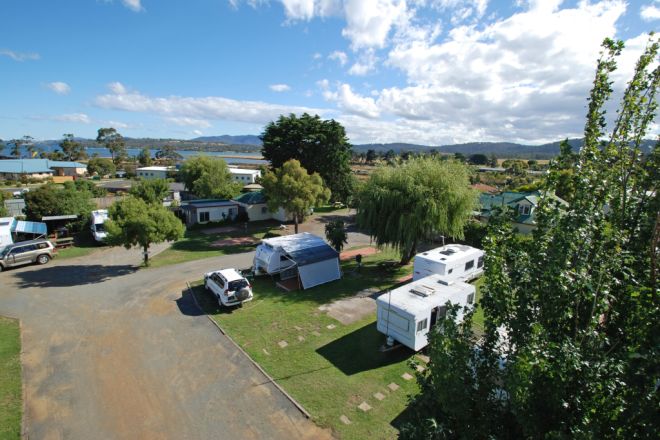
A compact seaside caravan park anchored by an 1893-built homestead – a former police house complete with an intact jail cell – has been listed for sale in the historic Tasmanian fishing village of Triabunna, positioned to capture steady overnight demand from visitors travelling to and from Maria Island.
The freehold going concern, Triabunna Cabin and Caravan Park at 4 Vicary Street, is on the market for $1.35 million, within walking distance of the Maria Island ferry terminal and about an hour’s drive north-east of Hobart.
“You’re buying yourself somewhere to live and a job, and making decent money on the way through,” says listing agent Marissa von Stieglitz, national sales manager at ResortBrokers.
“There’s an opportunity to uplift the net profit, and there’s huge demand for one or two-night accommodation for people travelling across to Maria Island,” she says.
Maria Island National Park – about 30 minutes by ferry, with up to five services daily – is a major tourism drawcard, attracting more than 50,000 visitors annually to see its abundant wildlife and World Heritage-listed convict sites, alongside striking cliffs and ancient marine fossils.
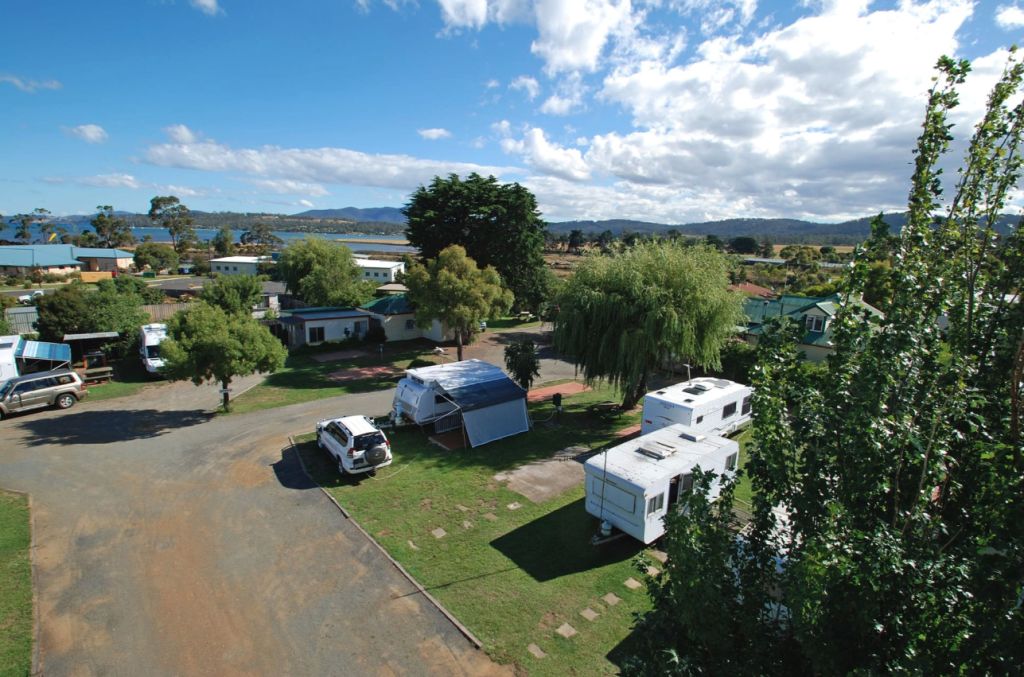
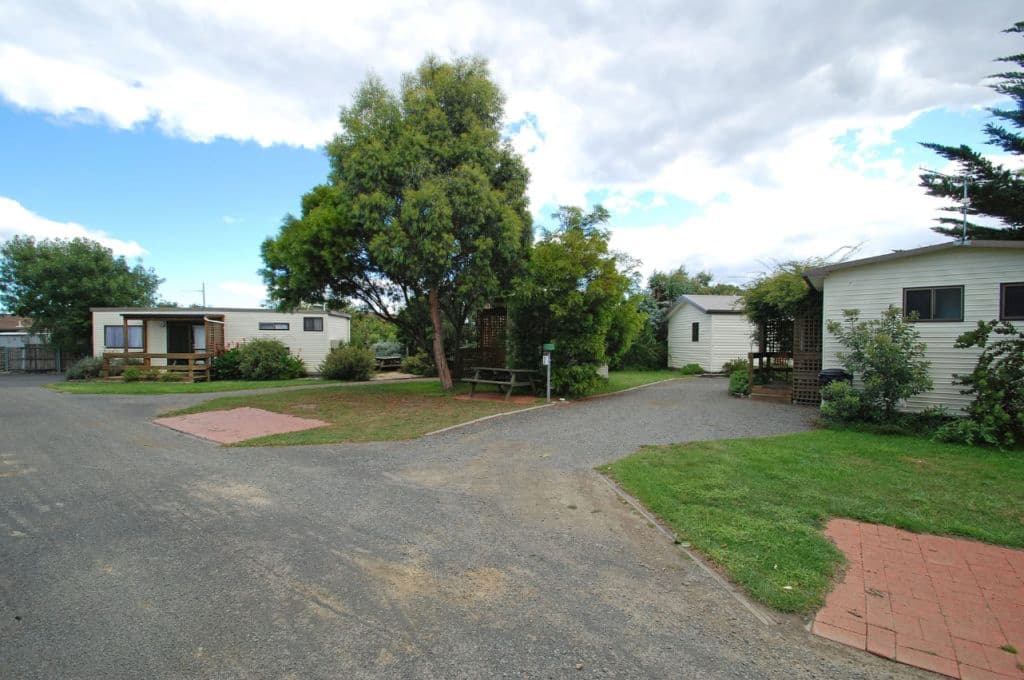
Not a large-scale BIG4-style asset, the park is modest, spanning a 4256-square-metre landholding with a mix of 21 powered sites and five cabins, which can be operated under an owner-occupier, two-person model.
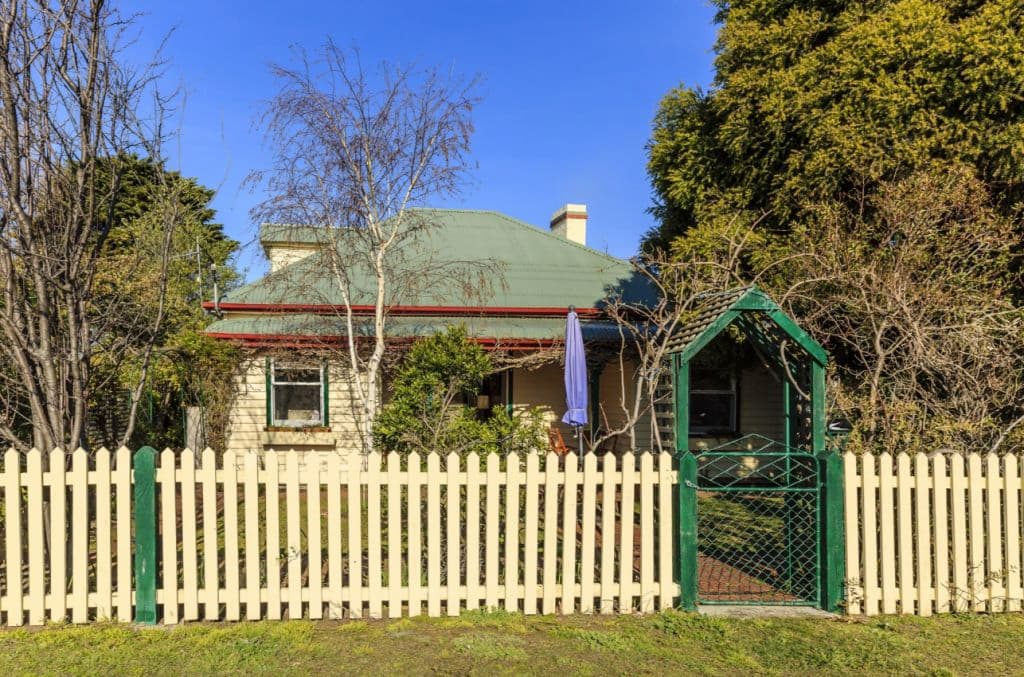
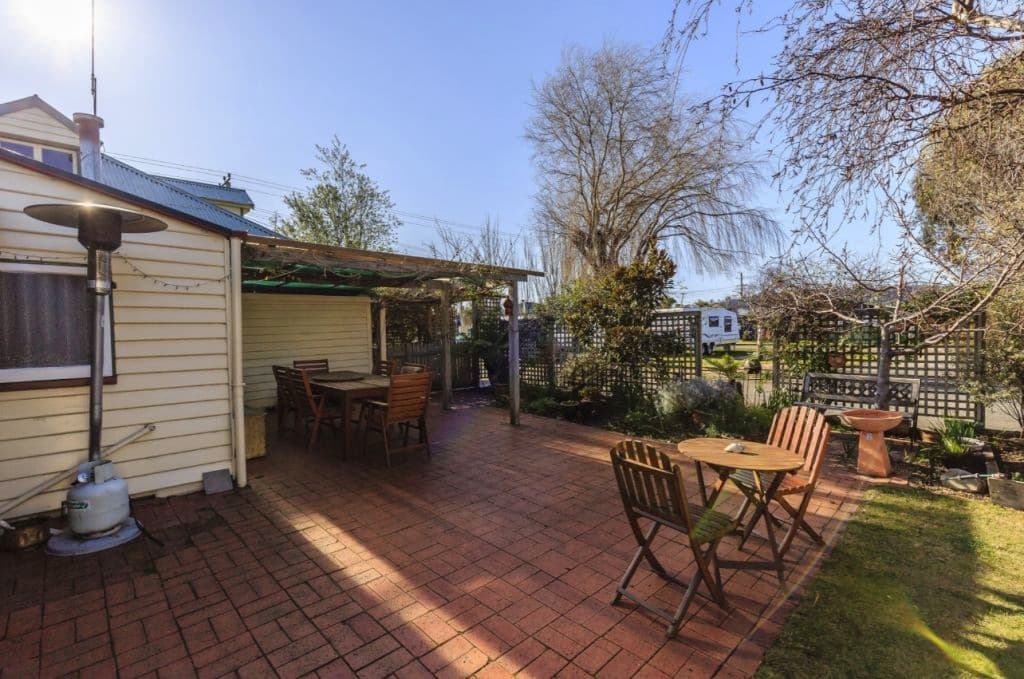
It also includes a heritage four-bedroom owner’s residence, amenities block, guest laundry and a newly covered barbecue area, operating under a stable, proven model with linen services outsourced.
“The interesting thing about this caravan park is the owner’s residence,” says von Stieglitz, noting that while it was built in 1893, it is not constrained by heritage overlays.
“It’s an old police house. There’s actually a cell on the side as well … they just use it for storage, but I’ve been pitching to incoming operators that they could make it really Instagrammable.”
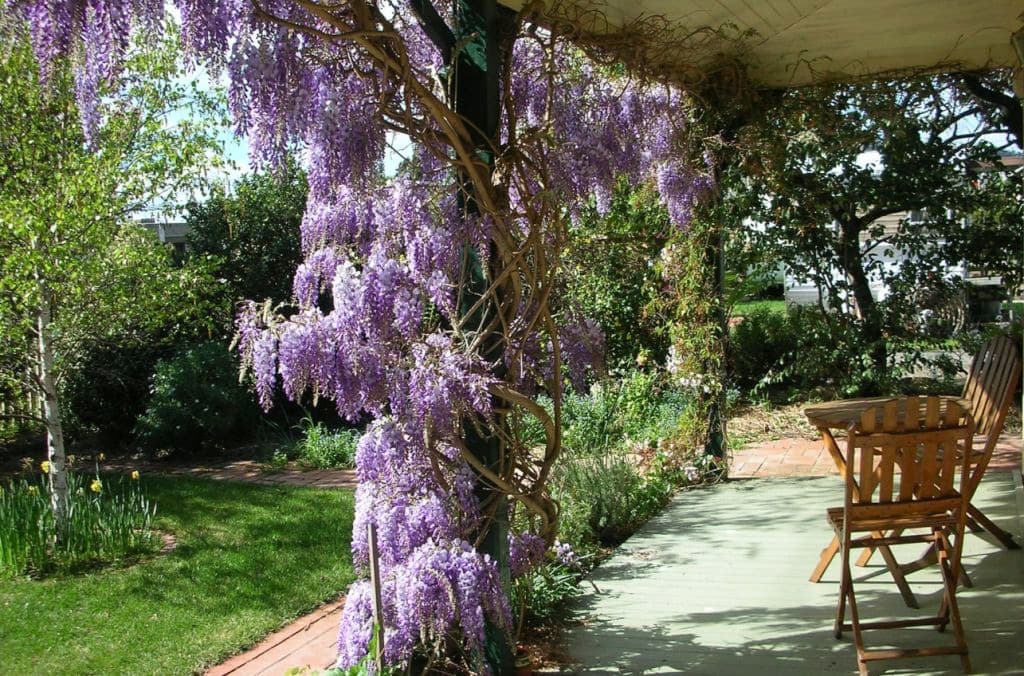
According to local accounts, the former police house is believed to have been relocated from the penal settlement on Maria Island, with its share of convicts passing through its doors.
The owner’s residence also features three bathrooms, a farmhouse-style kitchen and a reception area to the side, along with additional front rooms with en suites and private access, offering further income potential.
“And it’s got its own private garden, which is pretty cute,” says von Stieglitz.
While the property carries an unusual backstory, von Stieglitz says its future upside is equally compelling.
“I really want somebody young and dynamic and energetic to get in here and transform it – it could be an absolute cracker,” she adds.
The asset currently generates what von Stieglitz describes as “good money”, with further upside available to savvy investors who can capitalise on its gateway position.
The park produces about $223,000 in adjusted net profit. It benefits from its position as the only caravan park in the township, within a tightly held coastal location with long-term capital growth potential, as Maria Island’s future comes into sharper focus. Recent pricing increases have contributed to stronger revenue performance.
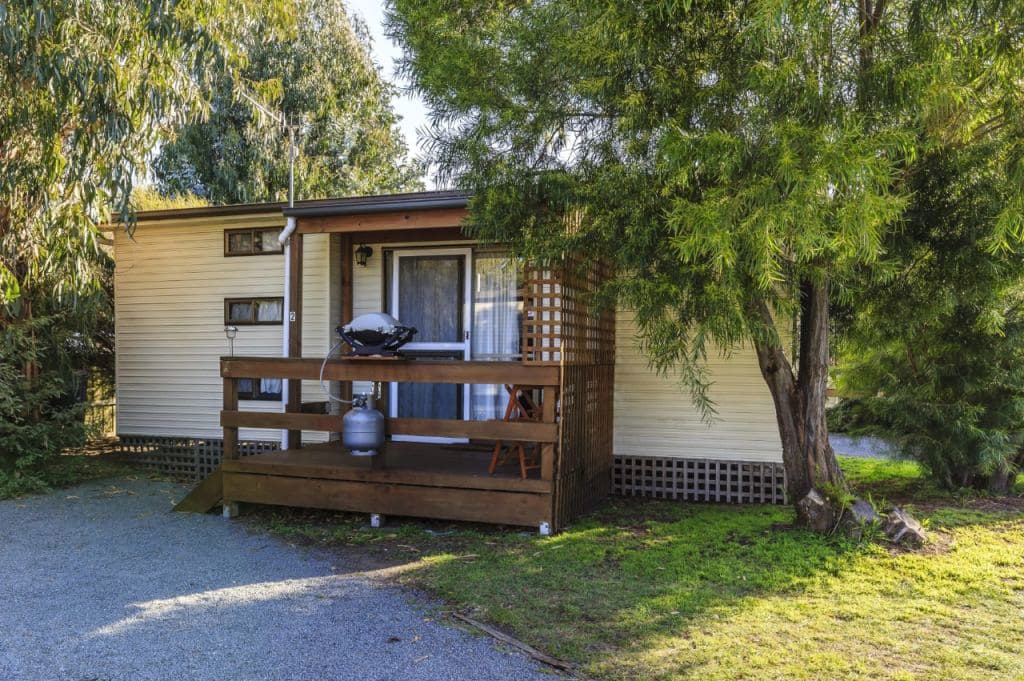
In addition to strong peak-season occupancy driven by tourism, the park also accommodates workers during the week, providing a secondary and more consistent income stream.
“The cabins run at a really high occupancy. For example, 95 per cent in January, 100 per cent in February, and 96 per cent in March,” she says.
Von Stieglitz highlights further upside through refurbishing older cabins, reconfiguring sites for higher-yield accommodation, or adding additional cabins, subject to council approval.
The current owners have not implemented dynamic pricing, presenting further opportunity for a more commercially minded operator to enhance returns.
“There’s definitely space to add more cabins. That’s what I would do if I was buying it. You’d probably add another two or three cabins because the occupancy supports it,” she says.
Reached only by ferry from Triabunna, Maria Island is one of Tasmania’s most tightly-managed visitor destinations, where wombats, wallabies, forester kangaroos, Cape Barren geese and Tasmanian devils roam freely.
At its centre is Darlington, home to the most intact example of a probation station in Australia, with 14 standing buildings and ruins dating back to the 1820s. Visitors explore on foot or by bike, with no vehicle access.
Efforts are underway to manage growing demand, including the introduction of a larger ferry to increase passenger capacity and infrastructure upgrades across the island.
Public consultation indicates strong support for preserving the island’s remote and low-impact character, with limited appetite for expanded accommodation or commercial development.
While overnight stays are permitted on the island, options are limited to basic camping or simple bunk-style accommodation within the historic Darlington Penitentiary. With no shops or cafes, visitors must bring in all their own food, other supplies and bedding.
Tourism has grown steadily over the past 15 years. Visitor numbers increased from 21,000 in 2014-15, according to Tasmania Parks and Wildlife Services, to 38,700 in 2018-19 – an 84 per cent jump. By the 2023-24 financial year, visitation reached a record 53,000.
“You have to take everything in and bring everything out,” says von Stieglitz. “Most people go across for a day trip and do a tour.”
The property has attracted strong inquiry, with the current owners – long-time hospitality operators – holding the asset for the past three years as part of their retirement plan while living on-site.
“They’ve operated it themselves for the past three years. They’ve worked in pubs and hospitality their whole lives.”
“We’ve had a lot of interest in it,” adds von Stieglitz.