Willo’s On Main: Heritage Coolamon shop hits the market amid pub revival
A stunning shopfront nestled along a busy main street in the small, picturesque town of Coolamon – a short stroll from a multimillion-dollar refurbished 1880s pub in a region known for producing some of Australia’s biggest sporting talents – is on the market.
The large, flexible open-plan retail space at 97 Cowabbie Street offers investors a chance to create something special in the heart of the Riverina region of NSW, an easy 30-minute drive north-west of cricket and football star-producing Wagga Wagga, the closest regional centre and a significant Australian Defence Force base.
“It’s where Wayne Carey grew up,” says listing agent Daniel Crocker of Miller & James Real Estate. “Mark Taylor, Michael Slater and Paul Kelly all came from the region … the Wagga area has produced good sports people.”
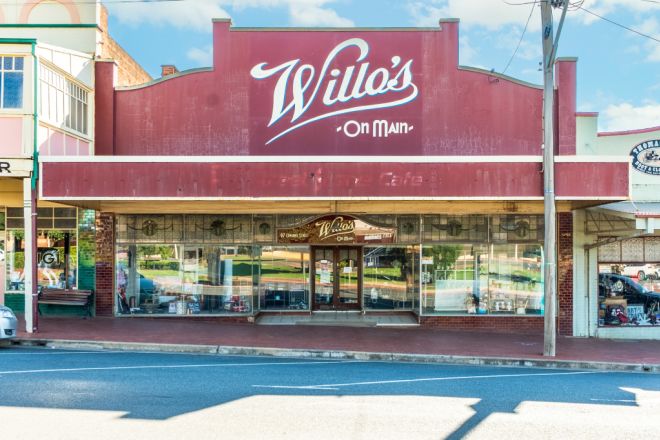
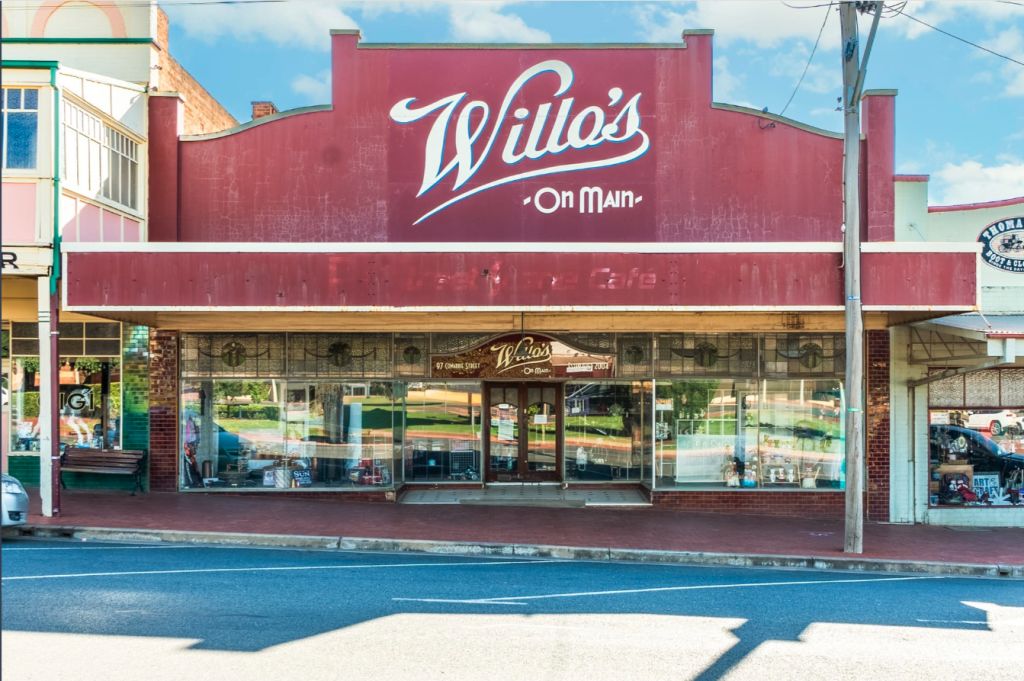
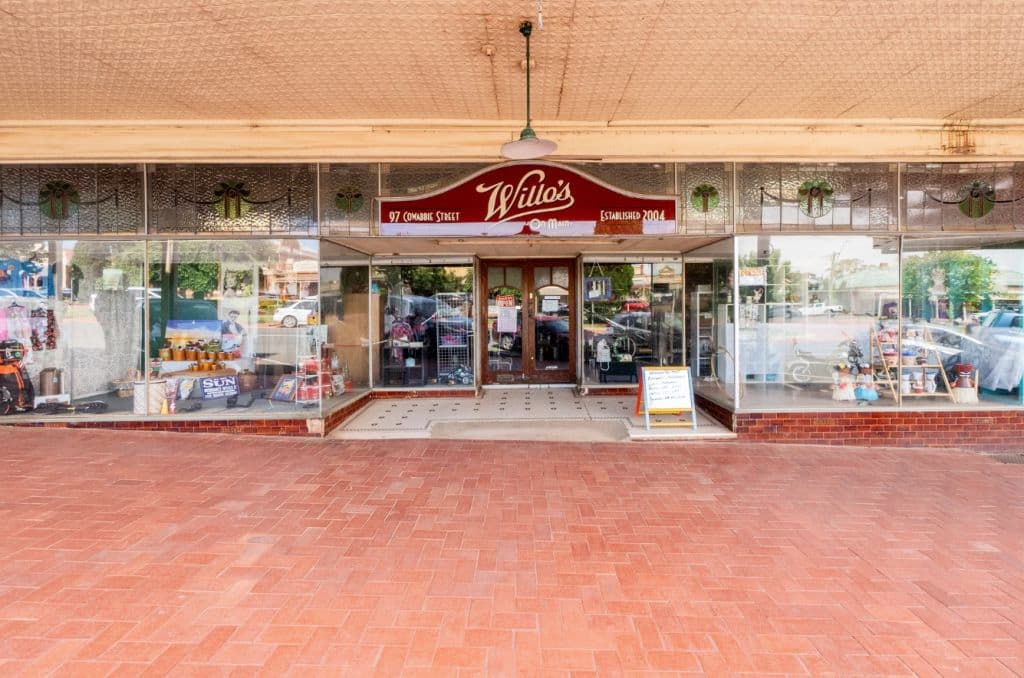
Sporting pedigree aside, Willo’s On Main – boasting a wide and striking heritage facade including a hand-painted sign and leadlight windows – was last week listed for sale for $539,000.
“It’s a relatively big shopfront and it’s smack bang in the middle of the Coolamon main street,” says Crocker. “It’s a lovely old shop. Hopefully the right person can latch onto it to keep it nice … and put the right industry in there to succeed.”
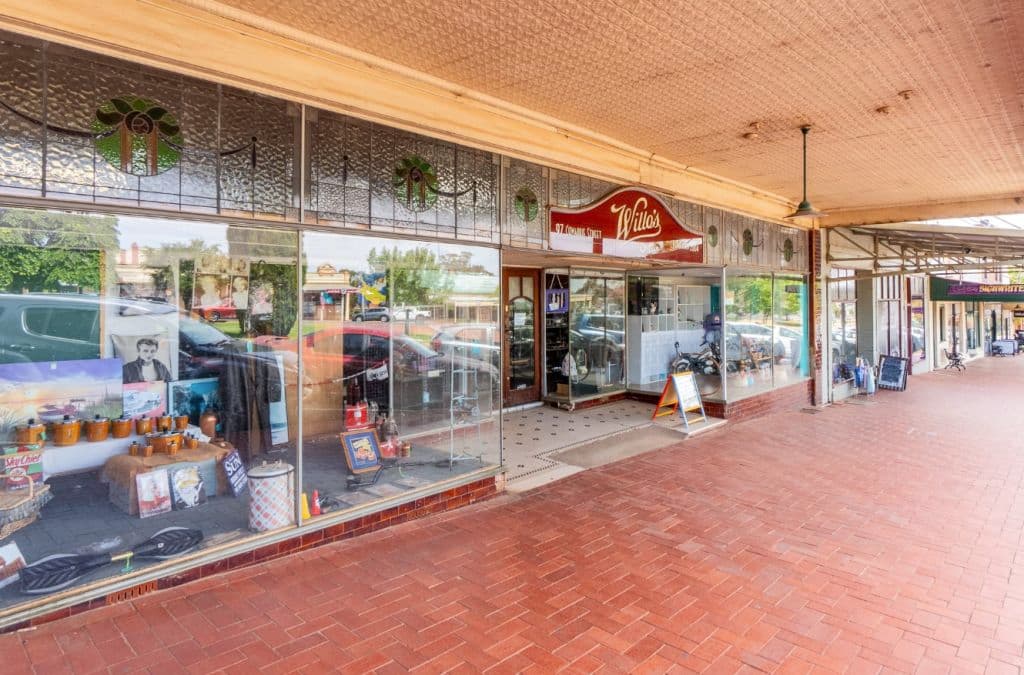
Willo’s On Main – named after vendor John Williamson’s family moniker – features endless potential with a 340-square-metre building on a 674-square-metre site, with rear lane access.
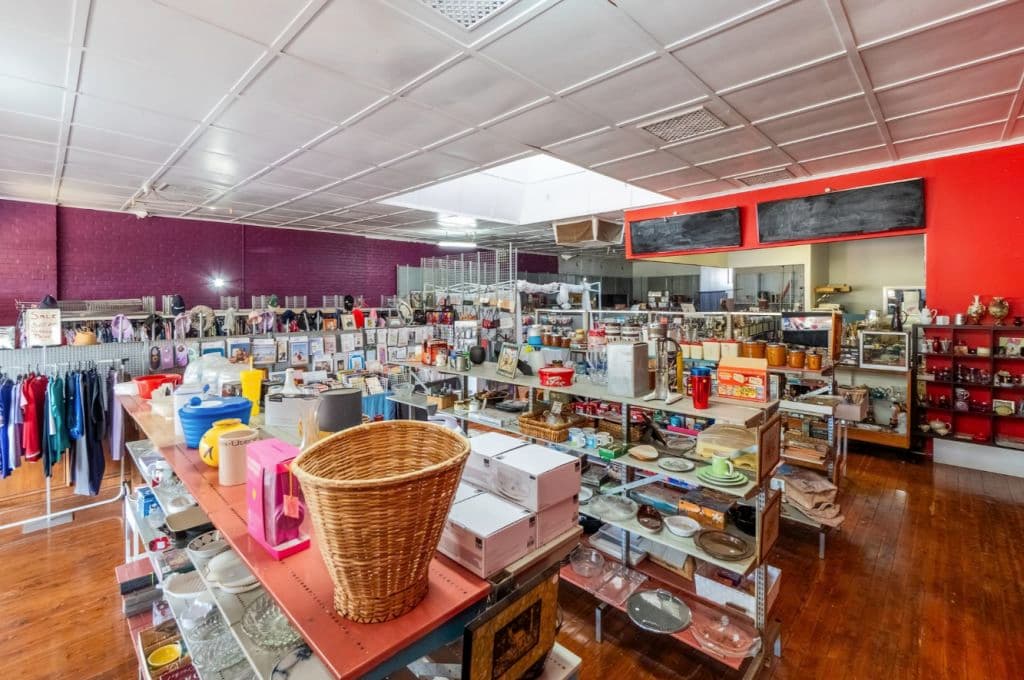
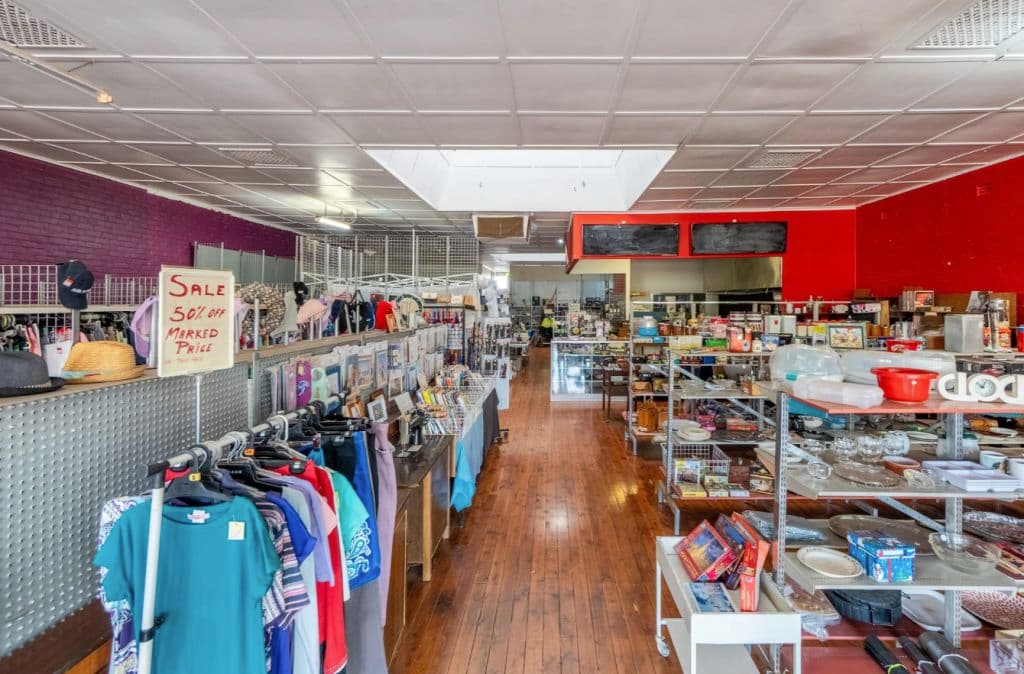
Crocker says the building’s traditional shopfront is key to its appeal and has historically been adaptable to different uses, from building supplies to a retro-style cafe of the same name more than a decade ago, and, more recently, to a collectables and op-shop-style enterprise.
“He’s got a massive collection of old stuff, all sorts of stuff, you name it. He’s got it,” says Crocker, referring to Williamson, who is selling after 15 years.
Positioned in a high-exposure location with strong foot traffic, the property could be used for a hospitality venture, retail, offices, a gallery, or a studio.
The property includes women’s, men’s, and disabled-accessible amenities, along with the remaining infrastructure of a former commercial kitchen, described as “ideal for anyone looking to revive a cafe or hospitality venture”.
Beyond the asset itself, Crocker says Coolamon’s retail strip remains comparatively tight for a regional town with a 2000-plus population.
“You go to a lot of small towns and there are a lot of vacant shops in the main drag, but here we’ve really only got one or two at the moment,” Crocker says.
“One of them already has plans for it, and the other is the bakery, which has closed down at the moment … but Coolamon itself is growing all the time.”
Crocker points to significant recent investment in Coolamon’s historic streetscape, including one of the town’s two pubs, the Coolamon Hotel.
The Cowabbie Street 1880-established landmark reopened last June after a five-year redevelopment, rescuing the languishing watering hole from its shuttered state while preserving its heritage character. The hotel was gutted and reimagined for the next century, including making its 50-metre front verandah safe and adding modern facilities such as a cocktail bar, a glasshouse dining area, and a terrace.
“It had been sitting empty for a few years so he [the pub’s vendor] just wanted to put a bit back into the community,” says Crocker.
The agricultural Riverina region is famous for producing wine, citrus, cereals and artisan delights, with attractions including the nearby Junee Liquorice and Chocolate Factory and the Coolamon Cheese Co. bringing foodie kudos to the charming town.
Like many regional spots, Coolamon’s main street is lined with grand heritage buildings reflecting the economic boom of the late 19th and early 20th centuries, but rather than being described as laid back and quiet, agents say it’s quite the opposite.
“The vibrant Coolamon main street is alive through the week and jam packed on the weekends. With amazing attractions and a peaceful, friendly and welcoming community feel, this is the perfect position for your next venture,” the listing reads.
Among the stunning streetscape is a state heritage-listed 1909-built department store that has been reimagined as a cafe and museum, the Up-To-Date Store Cultural Precinct.
Crocker says there is a preference to retain the shop’s facade in the future, given its location within the heritage-sensitive streetscape under council planning controls.
“The owner – and council as well – would love to see the shopfront stay in some form like it is,” he says.
The property has already gained interest, with early inspections already underway.
“We’ve had one inspection last week and another one coming up,” Crocker adds.