The story of Australia's iconic roadhouses
At the Pink Roadhouse in Oodnadatta, outback South Australia, owners Joe and Jess Calvert wear many hats.
One hour they are making coffee for hardworking truckies, the next fixing a tyre for a grey nomad, and later sorting the mail for local families.
That’s life running an Aussie roadhouse. These far-flung establishments are part of bush folklore. But more importantly, they are the lifeblood of the communities that live and work along the country’s most remote highways.
The term “roadhouse” came to Australia from Britain in the 1930s, describing petrol stations that offered food, entertainment and accommodation, historian and author Professor Peter Spearritt says. By the 1950s, the term was synonymous with the businesses that looked after freight drivers in isolated parts of Australia. Among the earliest and still most famous is South Australia’s Nullarbor Roadhouse, on the Eyre Highway, which opened in 1956.
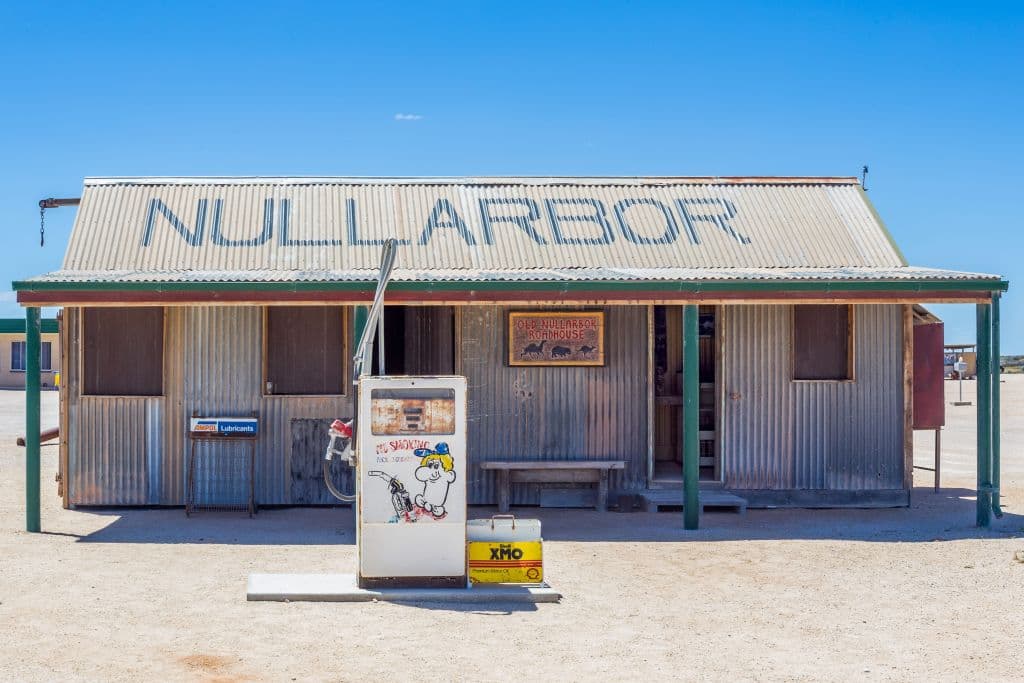
Roadhouses exist for practical reasons, but have reached icon status. “It’s largely still because of people’s fascination with outback Australia,” Spearitt says.
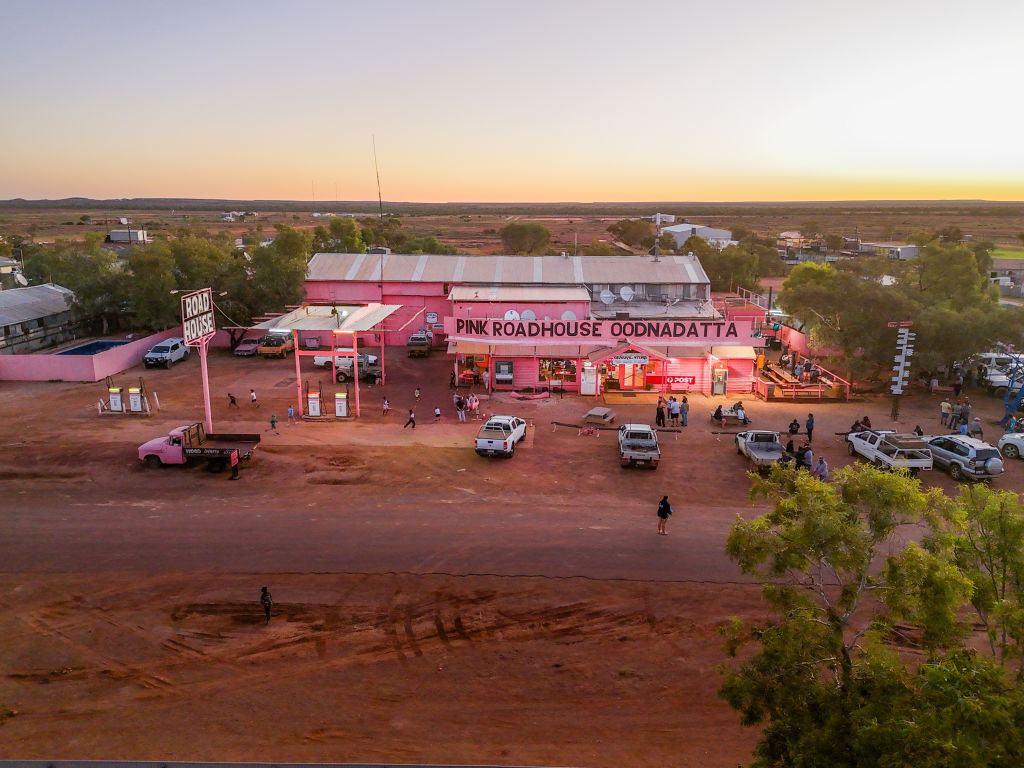
The Pink Roadhouse, about 200 kilometres north-east of Coober Pedy, has fans who travel long distances to see its vivid Barbie hue, framed by red dust and blue sky. Cultural kitsch aside, a roadhouse such as this is essential.
“Without roadhouses, the outback would come to a standstill and die,” Joe says. “They’re the cornerstone of the community. They’re the meeting place for the locals, and a meeting place for travellers. They’re a safe haven for the traveller to get information on road conditions, and tricks and hints on where to see and what to do in the area.
“Without that, all of it would disappear.”
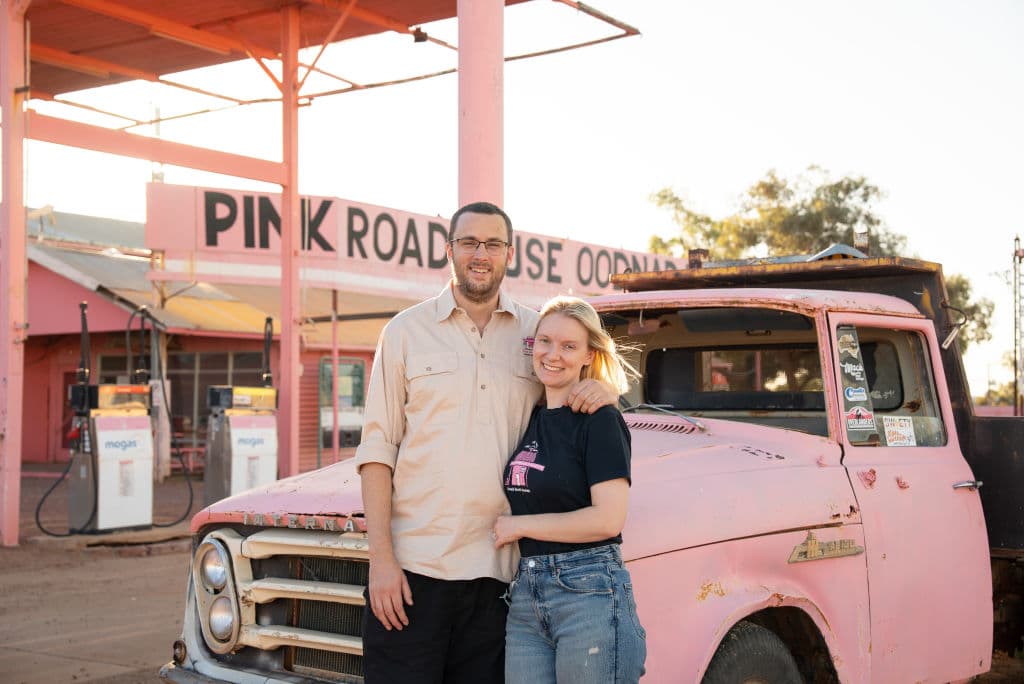
When the Calverts bought the roadhouse in September 2024, they were living in Marree, at the southern end of the Oodnadatta track, and seeking a career change. They’d previously run the hotel in Marree and knew the roadhouse’s then-owners. “They were looking to sell, and did I know anyone who would be interested in buying? I said, ‘Well, yeah, me and Jess would be’,” Joe remembers.
Today, they live on-site with their three children and foster a family-friendly atmosphere. “I always say to people in the city, you can be surrounded by millions of people and feel lonely and on your own, but out in the bush, you’re surrounded by maybe a couple of hundred people, but you never feel alone,” Joe says.
Their roadhouse is a tourist attraction, but above all, it’s a post office, supermarket, cafe, mechanical service centre and recycling depot. It has played an important role in the community since it opened in the 1970s.
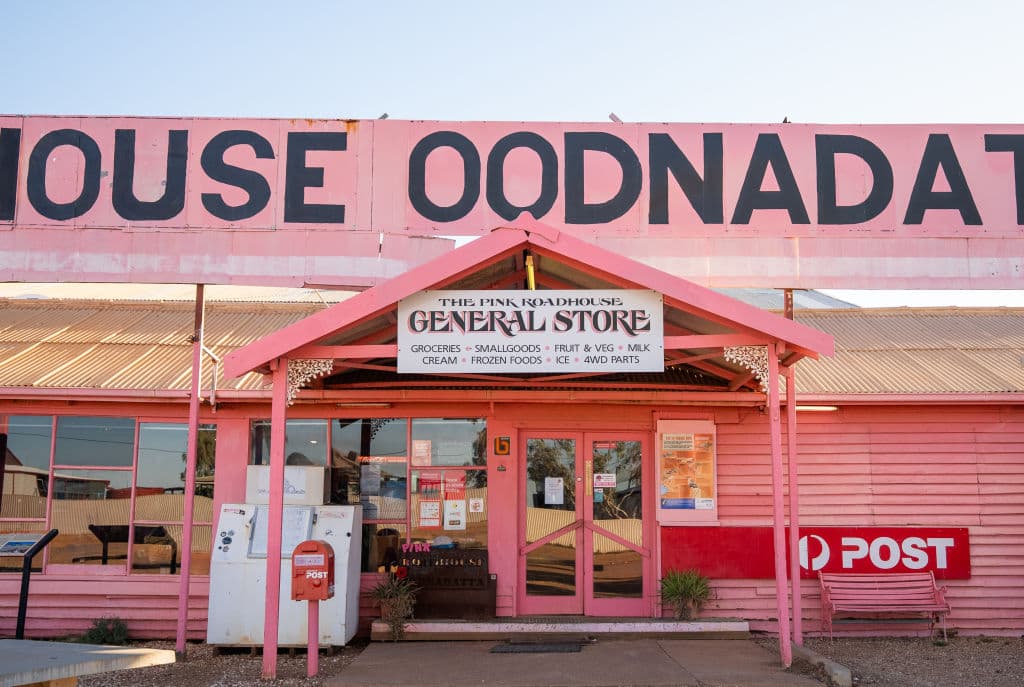
The Calverts don’t just run a business. It’s part of an institution with origins in stock routes.
Many of Australia’s roadhouses are on the old Cobb & Co horse routes. Starting in the ’60s and increasingly through the ’80s and ’90s, these long stretches of dirt were sealed with bitumen, reducing travel time and providing access to conventional vehicles.
Enter the grey nomads and their caravans. Sealed highways crisscrossing Australia gave retirees the freedom to explore places only travelled by the hardiest freight workers. “From the 1980s you’ve now got the double clientele at roadhouses – the truckies and the grey nomads together,” Spearritt says.
Marah Ludecke’s Aussie experience shows how roadhouses connect people from all walks of life, including backpackers on that rite of passage – the working holiday.
She and a friend arrived in Australia from Germany as tourists in 2011 and took jobs at the Augathella Roadhouse. It’s where she met her husband, farmer Sean Lyons, the same year.
“We went into an agency in Brisbane and they showed us a map and said, ‘we have a job here for you girls at the roadhouse’. I thought it might be the outskirts of Brisbane. They said, ‘it’s 12 hours on the bus’.”
Half a day later, they found themselves in Augathella, south-west Queensland. Ludecke quickly learnt the slang and customs. “People would drop things off – a dog, a parcel or a car part – and say, ‘Such and such, Spot or Nugget, will come through and get it’,” Ludecke recalls. “I remember people coming in and asking for a ‘hot chook’, and I didn’t know what it was. I’d never heard of a Chiko Roll until then.”
Marah and Sean now live with their three children on their sheep property, 40 kilometres west of the town. The roadhouse has been a constant in her life – Ludecke later worked there on and off for a few more years while studying nursing. “We’ve had a giggle about it, that I stayed on.”
For Mia Degoumois, running the Packsaddle Roadhouse in far-west NSW, is a way of life. She and her husband, Arnie, who bought it in 2003, do not adhere to strict business hours. “If you get a flat tyre, not everyone’s going to make it there at two o’clock for closing,” she says. “We will look after people, and as long as they need something, we will try to help them.”
They have grown the business about 170 kilometres north of Broken Hill, drawing on years of experience working on cattle stations and managing remote properties. The early years were quiet. “Back then, it was just dirt roads, and there wasn’t that much traffic,” Degoumois says. “Now we have bitumen roads, and we have really good, steady traffic through winter. A lot more [car] rallies come through.
“If you look at a photo of Packsaddle, it’s pretty much the roadhouse – it’s a community hub.”
Regardless of who walks through the door of an outback roadhouse, everyone is equal, Joe says. “You meet such a varied customer base. Last year, we had the CEO of Nando’s come through,” he says. “The thing about the outback is it humbles everyone. Everyone is the same. While they’re out there, they’re on one level.”