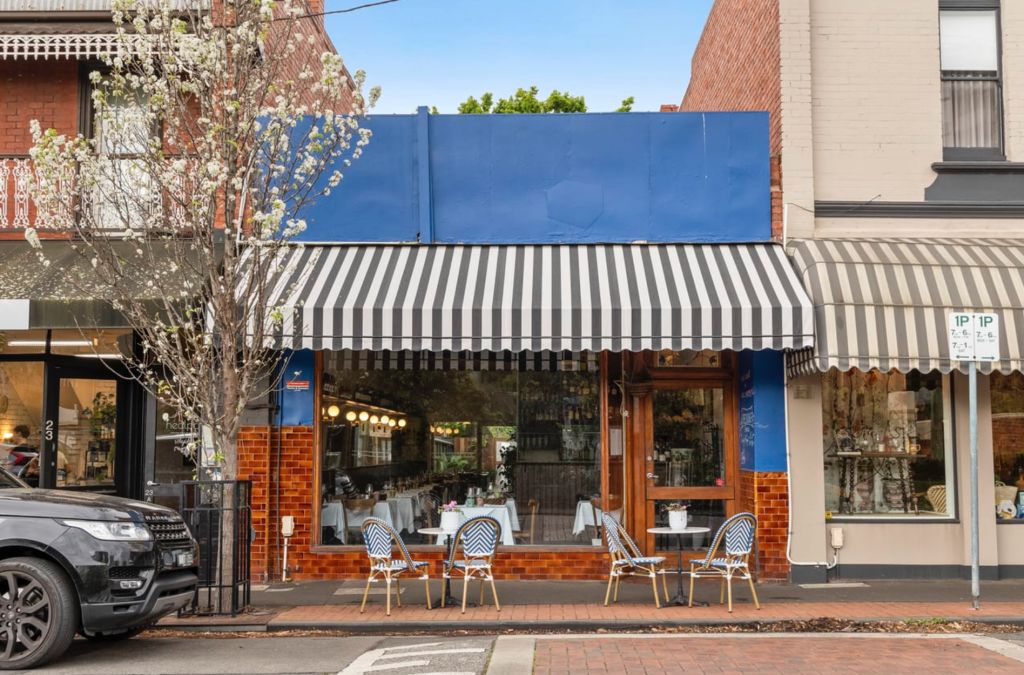
How suburban dining is reshaping the commercial property market
The power of local is no longer a lingering byproduct of the pandemic; it has reshaped the Australian economy.
In the past five years, suburban neighbourhoods have become the centre of our daily lives. While 36 per cent of Australians regularly work from home, even more of us avoid the commute to the CBD, preferring to dine, spend and socialise locally.
Drawing on millions of transactions and a national consumer survey, The Neighbourhood Nation report, produced by Square last September, captured our growing loyalty to neighbourhood retailers, restaurants and service providers.
It revealed that only 9 per cent of Australians felt more connected to the CBD than they did five years ago, while 54 per cent felt more connected to their neighbourhood. The sentiment was reflected in the report’s visitation data: two in five visited the CBD less than once a month, and almost one in five avoided it altogether.
One of the major winners of this consumer shift is suburban dining venues. The Neighbourhood Nation report revealed Australians spend 73 per cent of their monthly dining budget in local venues, compared to 27 per cent in the CBD.
“You become part of people’s weekly rhythm when you are their go-to-barista, baker or neighbourhood favourite,” said Square business development lead Colin Birney.
“The sellers building the strongest businesses today are those that invest in long-term, local relationships.”
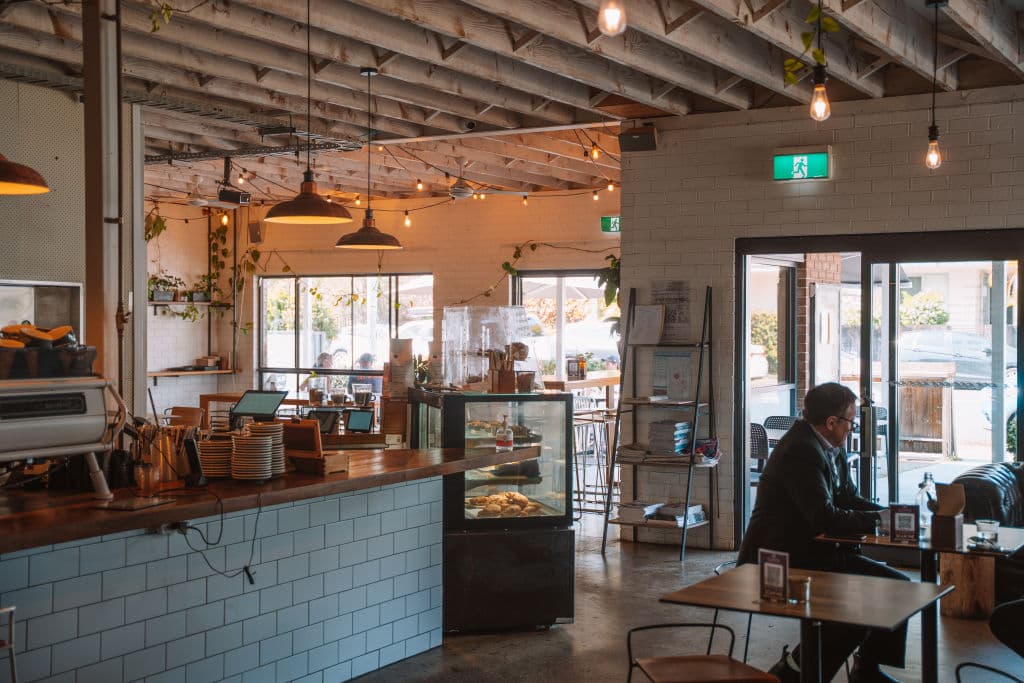
Square transaction data showed suburban food and beverage sales peaked on weekends, while CBD venues peaked at weekday lunchtimes, highlighting the difference between leisure in the suburbs and transactional visits in the city.
The research also revealed that suburban diners had higher repeat purchase rates than more transient CBD customers.
Figures from the nation’s two major foodie capitals clearly capture the trend: Suburban venues in Melbourne and Sydney recorded higher average transaction values ($15.15 and $14.52, respectively) than their CBD counterparts ($13.53 and $12.87, respectively).
The annual Fast Food & Quick Service Restaurant (QSR) Network Report by GapMaps measures the net change in restaurant locations, accounting for both openings and closures across tracked brands.
The latest report revealed net restaurant openings rose from 178 in 2024 to 250 in 2025, an increase of 72 locations, representing 40.4 per cent year-on-year growth.
“The Australian QSR sector demonstrated remarkable strength in 2025, despite rising cost-of-living pressures,” said Toby Wooldridge, GapMaps associate director, research and insights.
“It was the strongest year of net growth we have recorded, driven by the second-highest number of openings on record and the lowest number of closures in the past decade.
Wooldridge said QSRs were aggressively targeting suburban mortgage belts where high-density housing was growing.
The rising number of QSRs in inner suburbs and outer-urban areas, and consumers’ clear preference to spend more time dining and socialising in their own neighbourhoods, are major factors driving demand for commercial sites suited to cafes, restaurants and fast-food chains.
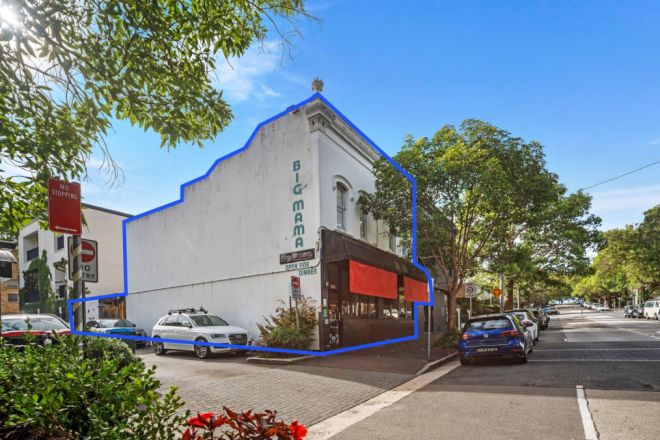
The sale of a freehold restaurant investment in the heart of Sydney’s affluent eastern suburbs is expected to test the area’s commercial property market when it goes to auction.
On the market for the first time in four decades, 49-51 Moncur St, Woollahra, is leased to Big Mama’s restaurant. The building includes two floors of restaurant space, an outdoor terrace, balcony areas and side-lane access.
Colliers senior executive for Sydney metro sales Charles Raine is co-managing the sale alongside Paul Grasso.
Raine describes Woollahra and the iconic Moncur Street retail and dining village as a “true set-and-forget” precinct for investors.
Colliers’ recent Capital Markets Investment Review reported that tightly held, small-format assets in prime, supply-constrained village locations continued to attract strong interest from private investors and owner-occupiers, driven by long-term scarcity, diversified income profiles, and the resilience of established lifestyle precincts.
The Moncur Street village and the surrounding suburb of Woollahra comprise one such precinct. Domain ranks it as one of Australia’s 10 most expensive residential suburbs – the median price for a three-bedroom home in the area is $3.92m, the median weekly household income is $3013, and 61 per cent of local residents are owner-occupiers.
“There is a very specific demographic of ownership profile in the eastern suburbs and specifically in Woollahra,” explained Raine. “There are a lot of ‘mum and dad’ investors who are typically 50 years plus – parents and grandparents – that have been long-term holds.
“The reason for this, is these investors are OK with essentially betting on capital growth, rather than really strong yield profiles. They’re buying at, I’d say, in between 3 and 4 per cent net yields most of the time, but that’s not where the value is derived. The value is derived from capital growth, or the value of the land and the building,” he said.
“And that growth is defined by population growth, income growth in the area, local spending capacity and residential property growth – commercial property goes along with that.”
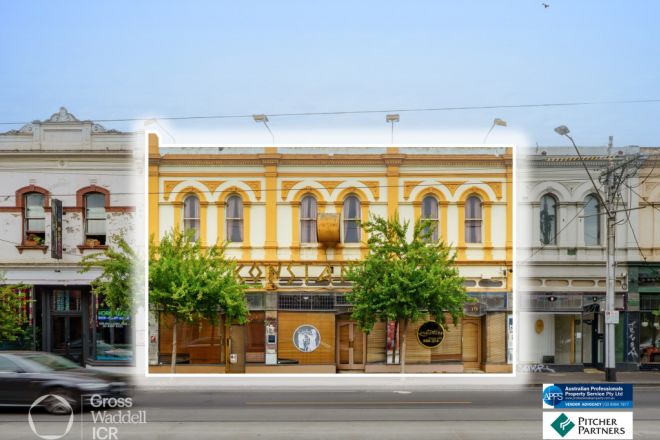
A prime commercial site in Fitzroy North, crowned the most liveable suburb in Melbourne in 2025, is attracting strong interest from buyers keen to capitalise on the area’s thriving village retail scene.
Once home to the popular Konstantine Gallery Restaurant, the three double-storey shops (on one title) at 169-173 St Georges Road, sit at the gateway to the Fitzroy North Village, which is anchored by Piedimonte’s Supermarket.
Set on a 625-square-metre site, the properties provide a combined building area of 490 square metres over two levels, a 15.5m frontage, rear access, and car parking at the rear.
Director of selling agency Gross Waddell ICR Andrew Greenway said the shops had been empty for more than a decade and, while they required substantial work, buyers could see their potential as retail or hospitality ventures.
“The buyers that have shown interest are either an owner-occupier – whether it’s commercial, retail, or hospitality use – to come in and do something really special with it, or an owner-occupier who will obviously put some money into it and do it all up, and occupy it for whatever their use may be,” Greenway said.
“We’ve also got a group that thought it might be a good location for a boutique hotel. So, it is attracting a really broad market.
“We’re seeing really good activity out in some of the suburban strips at the moment, whether it be commercial or retail,” he said.
The affluent suburb of North Fitzroy has Edinburgh Gardens at its heart, leafy streets lined with heritage homes and two main retail strips – St Georges Road and Queens Parade – that feature independent boutiques, artisan bakers and high-quality cafes.
The suburb’s median house price lifted 8 per cent in the past 12 months, to sit just under $1.7 million.