Shop-top developments command premium apartment prices
Shop-top developments are fetching premium apartment prices as big supermarkets take a firm foothold in the housing market.
High-density residential projects with a major anchor, such as Woolworths or Coles, at ground level are becoming more prevalent as state governments and local planning authorities fast-track developments to ease the nation’s critical housing shortage.
The growing premium on urban convenience
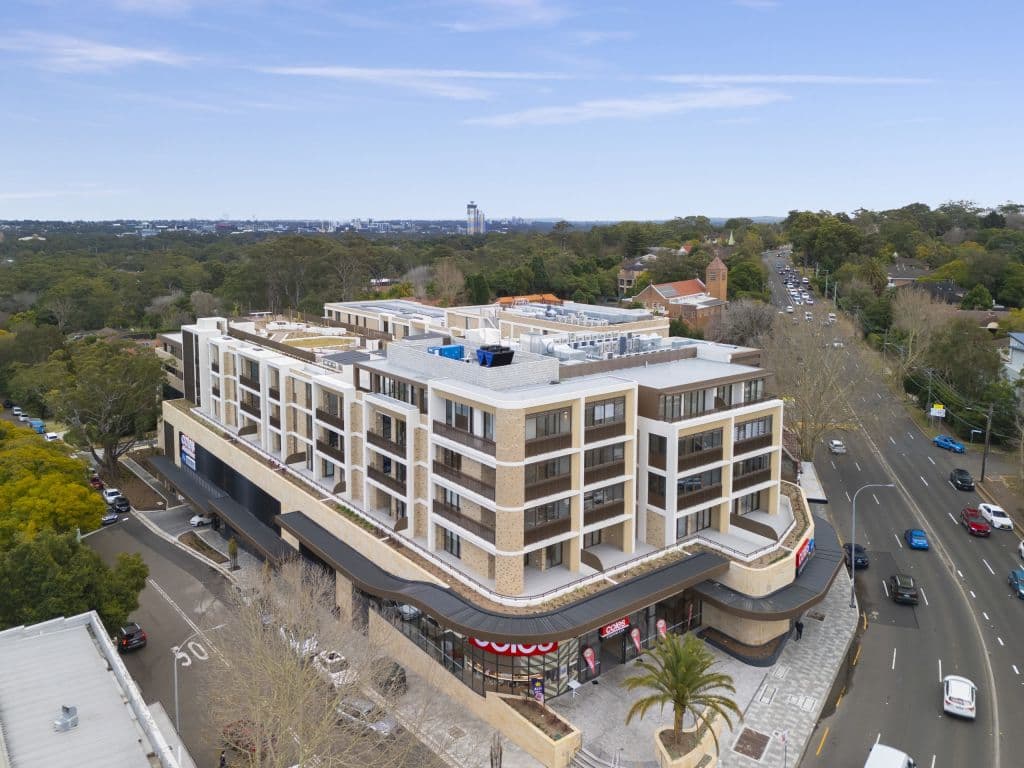
Beneath the 59 apartments in the newly constructed Balfour Place in Lindfield is a full-line Coles supermarket with 250 car parks
The pulling power of Coles translated into higher apartment prices when compared to residential developments without a supermarket attached, says Luke Berry, co-founder of the developer, Third.i.
“The apartments above Balfour Place sold for 16 per cent premiums to a similar product that wasn’t above a Coles in the same LGA,” he says.
“People are willing to pay a premium to live above a Coles or a Woolworths or something that makes their life easier. And when you think about the cycle right now, the most active buyers are discerning downsizers and rightsizers, and they want convenience.
“They want to be able to hit a button, go downstairs, and buy fresh produce and a coffee and a bottle of wine, and then go back up and not have to get in the car and drive and buy their groceries.
“So there’s a massive shift towards that convenience.”
Aligning planning policy with the 20-minute neighbourhood
The streamlining of planning applications has seen the approval of a wave of shop-top developments.
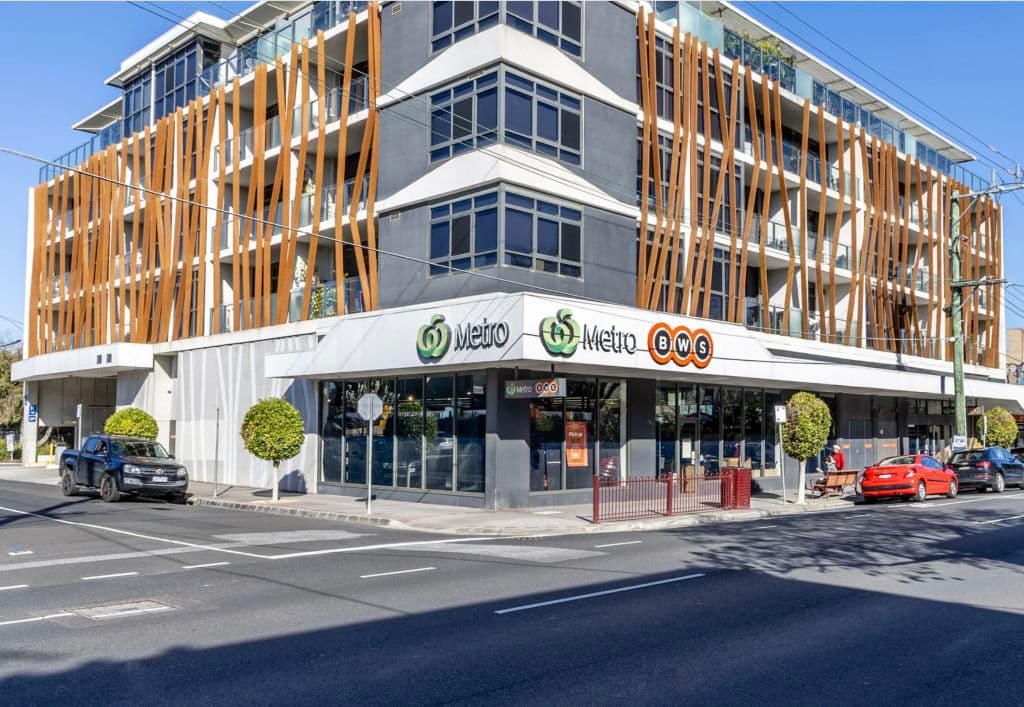
In Melbourne, a full-line Woolworths will be located beneath a five-storey apartment building in Glen Iris by Time and Place, and Coles will be at street level in White & Weston, a 45-apartment project in Balwyn by Dimas Property Group.
In Sydney, Caringbah Pavilion by NSW Housing Corporation will comprise 188 apartments above a Coles supermarket. Like many similar shop-top projects, it is just 200 metres from a train station.
This layering of retail and transport accessibility ticks many boxes for planning authorities and their visions of 20-minute neighbourhoods.
“As urban populations continue to grow across the country, these types of projects ultimately mean improved convenience and amenity for these communities, and we expect to see more of these mixed-use developments in key growth areas,” says Fiona Mackenzie, Coles general manager property.
Supermarkets and residential developers often work together to ensure the project is in the right location to meet demand, she says.
“The Coles property team works hand-in-hand with the supermarket business to help secure and deliver the right sites so customers can access a Coles store where they live, work and shop,” Mackenzie says.
“We do this in different ways, depending on the site. In some cases, we lease space from third-party developers, and in others, we may acquire or develop a site.”
Overcoming community pushback through retail curation
These mixed-use developments are not always welcomed by communities, however.
In Sydney, Woolworths is battling opposition from the local council and residents of the affluent suburb of Rose Bay to its plans to build a small-format shop beneath 13 apartments.
Woolworths’ property arm, Fabcot, declined to comment when contacted by this publication.
Diana Sarcasmo, managing director of residential at Colliers, says landlords need to get the retail curation right or risk the failure of their shop-top developments.
“I think with any new projects, there’s always going to be pushback because people are always worried about the unknown, but once they arrive, the community is the one that uses them and absolutely thrives,” she says.
“Green Square is an example of that. All the new amenities come in, the big supermarkets come in, and you see the trail of people walking from the train station via the supermarket at Green Square. They can see the benefits.”