LIVE: RBA lifts interest rates to 4.6 per cent in 'devastating' September 2026 announcement
Thank you for following our live coverage of today’s RBA interest rate decision.
What happened today? The RBA hiked interest rates 25 basis points to 4.6 per cent – the highest cash rate since late 2011. Perhaps more importantly, the last time interest rates were this high, Sydney’s median house price was $634,000.
Below is how today’s interest rate announcement unfolded.
KEY UPDATES
4.58pm: Bullock skirts around the prospect of a recession – and that concludes our live blog
4.31pm: Do we have to just get used to these higher interest rates?
4.10pm: Bullock tells Australia: ‘Interest rates still work’.
4.00pm: ‘We’re not going back to the 1990s’.
3.44pm: Bullock leaves door open to more rate hikes.
3.18pm: Jim Chalmers answers to another rate hike.
3.14pm: RBA is world-famous for being “hawkish”.
3.05pm: Australia’s cash rate now the second-highest in the world.
2.53pm: RBA’s decision to hike rates unanimous.
2.30pm: RBA lifts cash rate 25 basis points to 4.6 per cent.
2.15pm: Home owners told to brace for back-to-back rate hikes.
2.10pm: HIA warns the RBA may ‘rip the Band-Aid off’ with a 50-basis-point hike.
2.00pm: Some experts believe RBA will leave rates unchanged.
1.45pm: Mortgage holders brace to shell out hundreds more in repayments.
1.30pm: Slowing economy unlikely to result in interest rate reprieve.
1.15pm: Young Aussies may wait for rates to drop before jumping into housing market.
1.00pm: Housing market king-hit by rate increases and tax reforms.
12.45pm: Big Four banks tip rate hike today to 4.6 per cent.
12.30pm: House prices under pressure as RBA fights inflation
12.15pm: Economists tip 25-basis-point hike today likely.
12.02pm: Welcome to our live blog on the RBA rates decision.
Our live coverage concludes as Bullock skirts around the question of a recession
4.58pm
Thank you for joining our live coverage of this very important interest rate decision. Today the RBA announced the cash rate would lift from 4.35 per cent to 4.6 per cent, effectively adding another $100 a month to the average home loan of $600,000. This brings interest rates to a 15-year high.
Bullock spent an entire hour in a press conference answering questions from journalists after the announcement was made – and was pressed quite heavily on whether interest rates still work, as well as whether a recession could still be on the cards.
She evaded answering the question directly, instead saying: “If inflation expectations get away from us – if people say ‘3.5 per cent is fine’, if that gets away, then that’s a circumstance where you might need quite a dramatic slowdown in the economy.
“I know they [Australians] don’t understand why we have to do this but the point is if we don’t address this, inflation will get worse, rates will have to get higher – and the economy will be in a worse position.”
In other words, avoiding a recession can’t be ruled out if inflation does not get back to 2.5 per cent.
The November rate decision – a Cup day announcement – will be one to watch.
Thanks for joining us.
Do we just need to get used to interest rates being this high?
4.31pm
Do we just need to get used to interest rates being higher? A reporter asked whether households need to get the message that rates won’t be going down anytime soon.
Bullock was swift in her response: “What I do know is that we’re not going to go back down to interest rates close to zero,” she said.
The RBA governor explained that interest rates pre-Covid were historically low due to an “anaemic” economy, and then sunk even lower – to nearly zero per cent – during Covid, adding that those levels are not normal.
“I don’t know if this particular level is the new normal.”
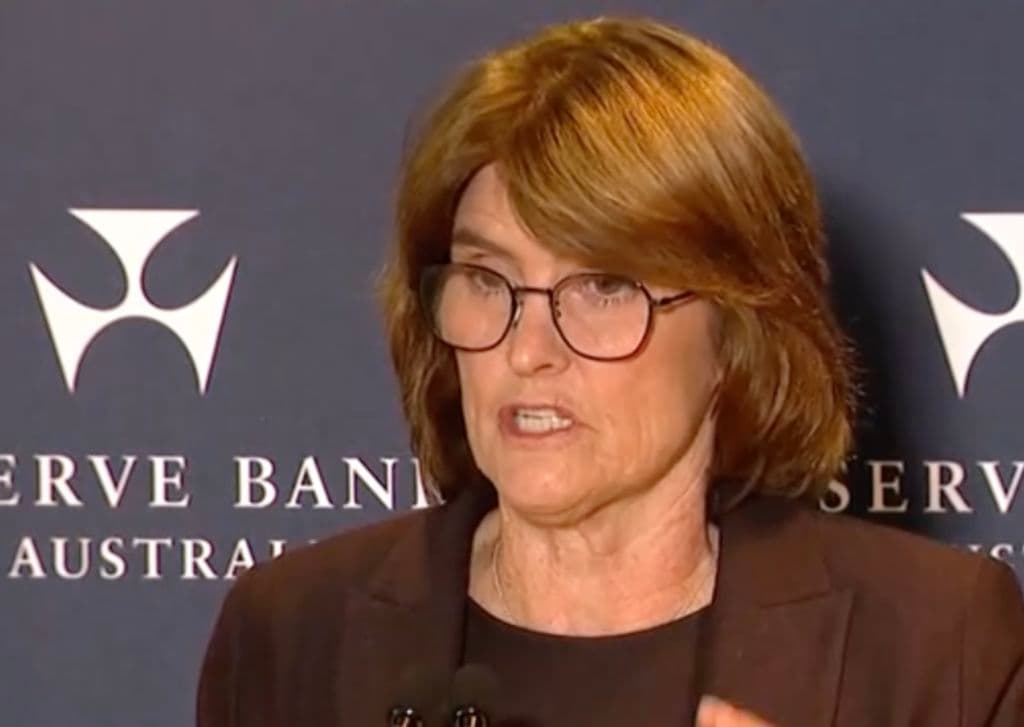
Bullock tells Australia: ‘Interest rates still work’
4.10pm
For anyone who feels like we’re getting nowhere with all these interest rate rises – other than feeling like life is getting harder with every grocery shop – you are not alone. Chris Kohler from Nine asked Bullock whether another interest rate was even going to work.
“I understand why the people who are impacted and are carrying the burden feel like this but actually the interest rate increase gets into all sorts of cracks,” she said.
“Interest rate rises still work and they work because there’s other channels that interest rates impact. People don’t see those things.
She says Australians are “quite rightly very annoyed and upset” about the rising cost of living.
“This is tough. The board did not take this decision to (hike rates) lightly,” Bullock said.
“There’s nothing I can say to make this better for households. We knew this was going to hit some people pretty hard. But we have to do it.”
Bullock says the best thing the RBA can do is return inflation to 2.5 per cent, noting that price pressures are being driven by both offshore factors and domestic demand.
She says that higher interest rates will take time to flow through the economy.
“It does not happen overnight and can take 12–18 months for the full effect of rate rises to be felt,” Bullock said.
“We have to see how these four interest rate increases are going to affect the economy over the next few months.”
Interest rate rises: ‘We’re not going back to the 1990s’
4pm
Speaking to media, Bullock was asked by a journalist whether Australia was in danger of going back to the double-digit interest rates of the 1990s – but quickly shot it down.
“Inflation back in the 1990s was double digits as well,” she said. “Inflation is not in double digits – inflation is about three-and-a-half per cent. It’s a percentage point above our target.
“Inflation is nowhere near what it was in the 1990s so I think we’re in a good position at the moment … we think that financial conditions are restrictive.”
Bullock also revealed that the Board had not even considered a double rate hike today.
“We considered holding [rates] and 25 basis points,” she said.
Bullock leaves door open to further rate rises after latest RBA hike
3.44pm
Reserve Bank Governor Michele Bullock says the bank will raise interest rates again if needed to bring inflation down.
Bullock told a media conference after the bank announced it was hiking the cash rate to a 15-year high of 4.6 per cent that inflation hurt everyone, especially the less well-off in the community.
“I’m not going to forecast where interest rates are going to go to,” she said. “If it turned out the restrictiveness is enough, maybe there does not need to be any more rises.”
She says the conflict in the Middle East had made things “much worse.”
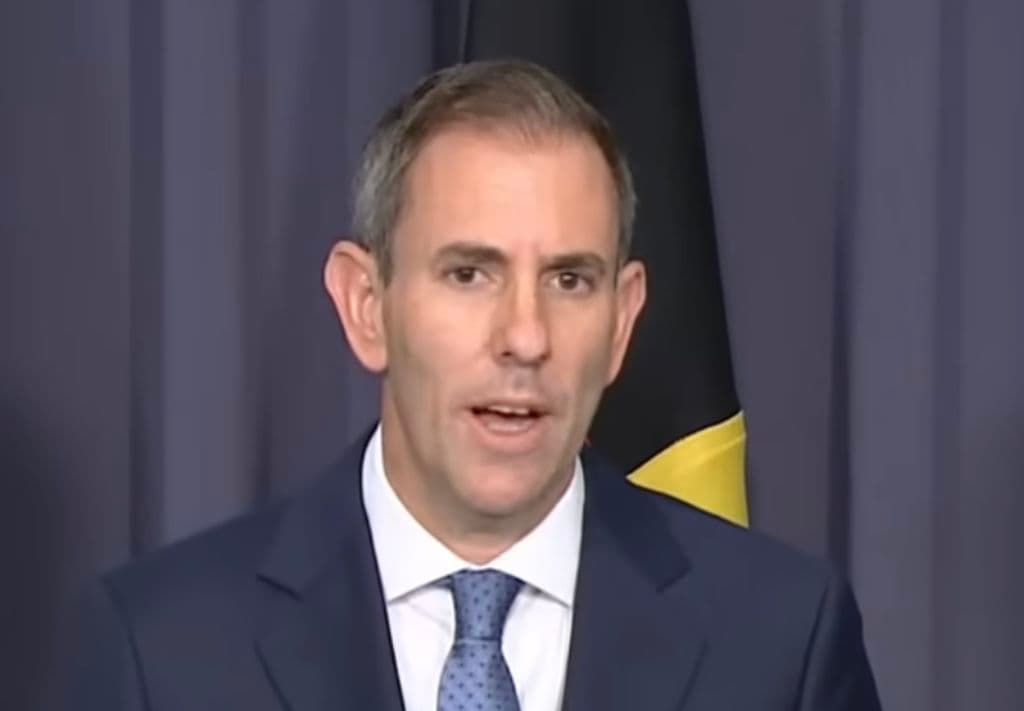
Jim Chalmers answers to another rate hike
3.17pm
Federal Treasurer Jim Chalmers is under fire off the back of today’s interest rate rise, but when facing reporters in a post-announcement press conference, simply said the war in the Middle East and rising global oil prices were the major contributor to Australia’s inflation challenge.
“Australia has an inflation problem,” Chalmers says.
Chalmer says the war was a “very, very big factor” driving inflation, with higher global oil prices flowing through the Australian economy.
Chalmers defended the government’s response to cost-of-living pressures, pointing to budget restraint, previous surpluses, smaller deficits, measures aimed at lifting productivity and efforts to slow public demand.
He declined to say whether he believed more interest rate hikes were needed.
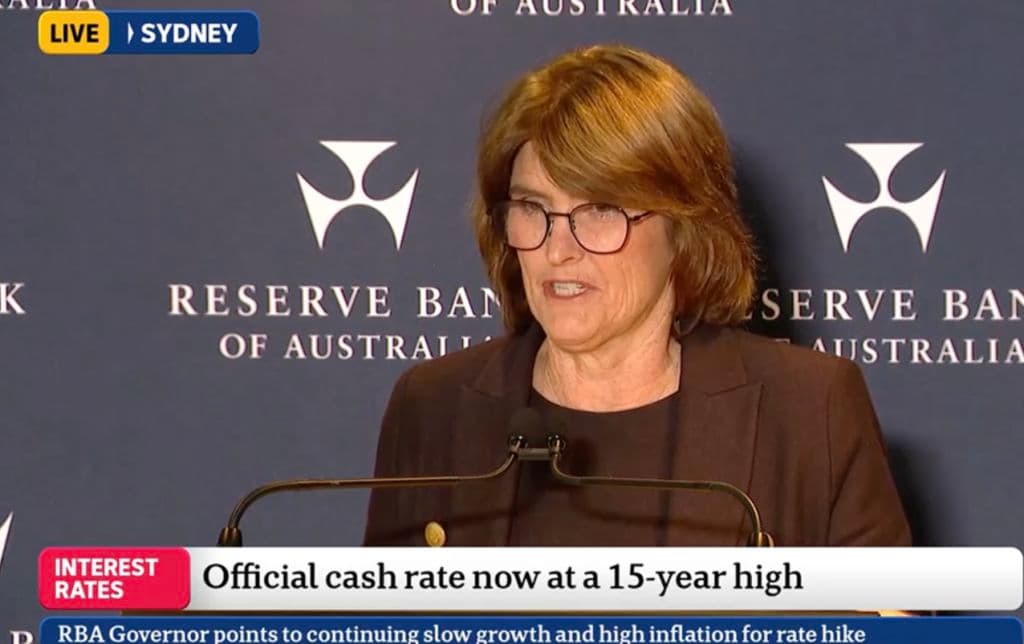
RBA is world-famous for being “hawkish”
3.14pm
The RBA’s punishing approach to rate rises is now widely recognised.
Krishna Bhimavarapu, APAC economist at American global asset management firm State Street Investment Management, says, “The RBA has emerged as one of the most hawkish developed market central banks, and today’s statement strengthens the case that rates may need to move higher still.”
Bhimavarapu says a lot hinges on Wednesday’s inflation figures.
“Tomorrow’s CPI release is now critical. If inflation surprises on the upside again, the path towards additional hikes becomes much clearer. Our base case remains for two more increases, with the cash rate eventually peaking around 5 per cent, but our higher-than-the-consensus pick now has clear upside risks.”
Australia’s cash rate the second-highest in the world
3.05pm
Australia now has the second-highest cash rate in the developed world.
Interest rates in the UK, the United States, New Zealand, Canada and Sweden are lower than Australia’s. Only Iceland has a higher central bank policy rate.
Australia’s cash rate is at a 15-year high – interest rates are back at levels not seen since near the end of 2011.
The last time interest rates were this high, the cost of housing was astronomically more affordable; Sydney’s median house price was $634,000. As of today, the median house price in Sydney is $1.73 million, according to Domain’s latest House Price Report.
RBA’s decision to hike rates unanimous
2.53pm
A statement released by the Reserve Bank revealed their decision to lift the cash rate to 4.6 per cent was unanimous because inflation is still too high – and that there could be more hikes to come.
“The three increases in the cash rate target since the beginning of the year have tightened financial conditions and the economy appears to be slowing. But inflation is still too high and the Board judged that, in light of recent developments, a further tightening in financial conditions is warranted to support a return of inflation to target in a reasonable period,” the statement said.
“The Board will continue to do what it considers necessary to bring inflation sustainably back to target, including increasing the cash rate target further if needed.”
Finder’s RBA Cash Rate Survey found 48 per cent of experts are tipping another rate rise before the end of the year, and most likely in November.
Richard Whitten, home loans expert at Finder, said the fourth hike of the year would push some already stretched borrowers to breaking point.
“Mortgage holders have now had a full percentage point (100 basis points) added to their rate in less than a year. For some families, this will be the difference between just getting by, and going backwards.”
RBA hikes cash rate 25 basis points to 4.6 per cent, a 15-year high
2.30pm
The Reserve Bank of Australia (RBA) has lifted the key cash rate 25 basis points to 4.6 per cent, the highest since October 2011 and the fourth such hike this year.
The latest hike means the average borrower with a home loan of $736,259 is paying an extra $427 a month compared to January 2026, or roughly $5124 a year.
The decision to increase the cash rate today underscores policymakers’ continued concerns about inflationary trends in the Australian economy, particularly given the recent spike in oil prices flowing from the ongoing conflict in the Middle East.
RBA governor Michele Bullock is expected to address the media at 3.30pm on the reasons for the decision and whether inflationary pressures remain embedded in the economy.
What she says will be closely examined for clues as to whether the RBA will follow up with another rate hike in November.
Home owners told to brace for back-to-back rate hikes
2.15pm
Almost half of financial experts surveyed by Finder say mortgage holders should brace for another rate hike in November.
Richard Whitten, the company’s home loans expert, says the reprieve from rate hikes over the past few months is over.
“Households got a short break over winter, but the data has turned, and the experts think the RBA has no choice but to move again,” he says.
“Another hike would take the cash rate to its highest level in over a decade, and for a lot of borrowers who are already stretched, this one will really hurt.
“If your rate already starts with a six or a seven, it’s worth picking up the phone. A quick call to your lender, or a switch to a more competitive loan, could save you more than the RBA is about to cost you.”
HIA’s Reardon says RBA ‘may rip Band-Aid off’ with 50-basis-point hike
2.10pm
Housing Industry Association (HIA) chief economist Tim Reardon says there is a real possibility of a 50-basis-point hike today, an approach he describes as “ripping the band-aid off” inflation.
Reardon says a big hike today could mean that rate cuts will occur as early as 2027, meaning more short-term pain now could result in earlier relief for long-suffering mortgage holders.
Reardon does not believe any further rate hikes are needed and warns higher rates will further weaken demand. New home sales have fallen about 20 per cent since the federal budget, when a raft of property tax reforms were announced.
He is particularly concerned about the housing markets in Sydney and Melbourne, which are most sensitive to interest rate movements and account for the majority of home-building activity.
Reardon is more optimistic about Brisbane, Adelaide and Perth, where strong population growth, low unemployment and an ongoing housing shortage should mean a return to price growth sooner.
Some experts believe RBA will leave rates unchanged
2.00pm
A small number of experts believe the Reserve Bank of Australia (RBA) will leave interest rates on hold.
Of the 41 experts surveyed in the Finder RBA Cash Rate Survey, 37, or 90 per cent, expect the RBA to increase the cash rate.
However, some experts say the RBA is worried about slowing the economy too much.
UNSW’s Evgenia Dechter says weak economic growth and rising unemployment are forcing the RBA to weigh the risk of persistent inflation against slowing growth
Monash University’s Mark Crosby says that despite indicators of rising inflation, there is also evidence of a weakening economy that warrants a wait-and-see approach for another few months.
Fresh Economic Thinking’s Cameron Murray says momentum in the economy is not picking up, and conditions are expected to continue softening in line with global trends.
Mortgage holders brace to shell out hundreds more dollars in interest repayments
1.45pm
A fourth rate increase this year would add roughly another $100 a month to repayments on a typical $600,000 mortgage, taking the cumulative impact of this year’s hikes to around $400 a month.
“That’s quite a big increase in the current environment,” says AMP chief economist Shane Oliver.
For property markets, Oliver says higher rates will continue to weigh on prices, arguing Australia is less than halfway through the current housing downturn, which could persist until around the June quarter next year.

NAB senior economist Taylor Nugent says higher interest rates are contributing to falling house prices, but the RBA is unlikely to cut the cash rate because its primary focus remains inflation.
Nugent says housing weakness is effectively supporting the RBA’s goal of slowing the economy, with prices expected to keep falling for the next few months before the market bottoms out early next year.
He says the underlying housing shortage will eventually provide support for prices.
Slowing economy unlikely to result in interest rate reprieve
1.30pm
There is no doubt the Australian economy is slowing, but is it enough to stave off further rate hikes? The slowdown in the economy was confirmed last week when the country’s unemployment rate rose to a five-year high of 4.6 per cent.
KPMG chief economist Dr Brendan Rynne says households are still feeling the pinch of high inflation and expectations of further mortgage rate increases.
This suggests many households are scrambling to generate additional income to help cover rising day-to-day expenses and future increases in mortgage repayments.
The Reserve Bank has previously acknowledged that unemployment may need to rise to 5 per cent in order to break the back of entrenched inflation.
Young Aussies may wait for rates to drop before jumping into housing market
1.15pm
Young Australians do not appear keen to enter the property market while interest rates continue to rise.
Equifax data reveals mortgage demand across Australia dropped by 14.1 per cent year-on-year in August.
“We may well be at, or near, rock bottom in terms of this contraction cycle, but any future interest rate rises will have the potential to reset that baseline,” says Moses Samaha, executive general manager at Equifax Australia.
Despite tax adjustments designed to level the playing field and entice first-home buyers into the property market, Equifax data shows no evidence of a lift in demand yet.
New mortgage applications from first-home buyers fell sharply, down 20 per cent year-on-year in August.
“One of the intended purposes of the changes was to level the playing field and assist first-home buyers in entering the market, but our data indicates those measures haven’t yet stimulated demand as hoped,” Samaha says.
He says a “wait-and-see” mentality is at play, with younger Australians appearing to hold off until they have some certainty that the market has stabilised.
“We won’t see that confidence return until rate cuts are back on the table,” he says.
Housing market king-hit by rate increases and tax reforms
1.00pm
House prices are under pressure after a combination of interest rate hikes and tax reforms hit buyer confidence.
After enjoying three rate cuts last year, mortgage holders now face ending 2026 with as many as five increases.
This comes as the property market reels from federal budget reforms that cut negative gearing benefits and capital gains tax concessions.
NAB says Sydney house prices are 7.1 per cent below their February peak, while Melbourne house prices are 6.5 per cent below their November 2025 peak.
House price declines are no longer confined to Sydney and Melbourne, with Brisbane, Perth and Adelaide also deteriorating faster than previously expected, making the downturn increasingly broad-based.
NAB now expects house prices to fall by 6 per cent this year, up from its previous forecast of a 5 per cent decline.
Here is what the Big Four banks are predicting today
12.45pm
1. Commonwealth Bank (CBA): hike to 4.6 per cent
CBA economist Luke Yeaman expects a 25-basis-point hike today and the risk of a follow-up increase in November as the RBA seeks to control inflation.
He says two consecutive hikes bringing interest rates to 4.85 per cent would see weaker house prices than the bank currently forecasts.
2. ANZ: hike to 4.6 per cent, November risk
ANZ head of Australian economics Adam Boyton is tipping back-to-back hikes due to higher global energy prices and concerns that inflationary pressures from the Middle East conflict will persist.
3. Westpac: hike to 4.6 per cent
Westpac says a follow-up hike in November is possible, but much will depend on economic data over the next couple of months.
4. NAB: hike to 4.6 per cent
NAB senior economist Taylor Nugent says there will be a hike today, with the risk of a follow-up hike in November.
House prices under pressure but RBA focused on fighting inflation
12.30pm
Inflation remains the number one economic enemy in Australia, and the RBA is determined to get it under control even if that means inflicting more pain on mortgage holders through higher interest rates.
Inflation, as measured by the consumer price index (CPI), is currently running at 3.5 per cent in Australia, a level the RBA says is too high.
Following its last board meeting in August, the RBA said it remained focused on ensuring that “high inflation does not become embedded”.
“To achieve this, growth in aggregate demand needs to remain subdued to reduce capacity pressures and bring inflation back to target,” the board said.
“Following three increases in the cash rate target since the beginning of the year, financial conditions are now tighter than they were, and the economy appears to be slowing as expected. But inflation is still too high.”
Ideally, the RBA wants annual CPI growth in a range of 2-3 per cent.
Economists say there is a 90 per cent chance of interest rate hike today
12.15pm
AMP chief economist Shane Oliver is forecasting a 25-basis-point RBA rate hike today, putting the probability at around 90 per cent.
His prediction is in line with fellow economists at the country’s major banks, including Commonwealth Bank (CBA), ANZ, Westpac and NAB. ANZ is the only bank officially factoring in another hike in November.
Oliver says the chance of a follow-up move in November is “close to 50:50”, but it is not his base case, with expectations that a slowing economy will allow the Reserve Bank to pause hiking rates after September.
The RBA is shifting to a more hawkish stance, driven mainly by stronger-than-expected inflation data released in late August, which suggested inflation risks continued to concern policymakers.
Higher oil and petrol prices are adding to inflation concerns, but Oliver says the RBA’s main worry is excess demand outstripping supply.
Welcome to our coverage of the RBA cash rate announcement
12.02pm
Thanks for joining us today for our live blog covering the Reserve Bank of Australia’s next cash rate decision.
The RBA board will make its announcement at 2.30pm, with most banks and economists expecting a 25-basis-point hike to a 15-year high of 4.6 per cent.
A hike today would be the fourth such increase this year, each equal to an extra $100 in repayments for a home owner with a mortgage of $600,000.
There is a small chance the RBA will keep rates on hold today, but given the central bank’s continuing concerns about inflation, that is considered unlikely.
There is an even smaller chance there might be a super hike of 50 basis points, but that is considered even more unlikely.