Private investors pour into fast-food chains in final rush before 2026

Cashed-up investors have poured nearly $50 million into fast-food restaurants, medical clinics and childcare facilities at a commercial property auction in Sydney as they look to lock-down “recession proof assets” before the end of the year.
At an auction held by Burgess Rawson From CBRE in Sydney on Tuesday, private investors spent about $49.96 million on commercial property assets, with the real estate agency’s total sales volume hitting about $1.75 billion already – about $250 million more than the 2024 total.
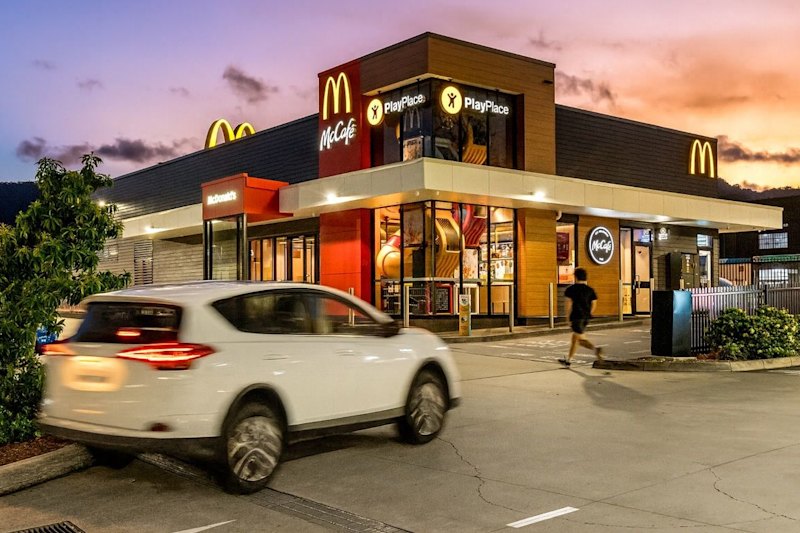
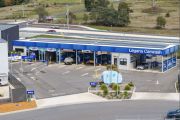
Fast-food outlets across Queensland and NSW sold for a combined $16.54 million, while childcare assets achieved about $9.07 million.
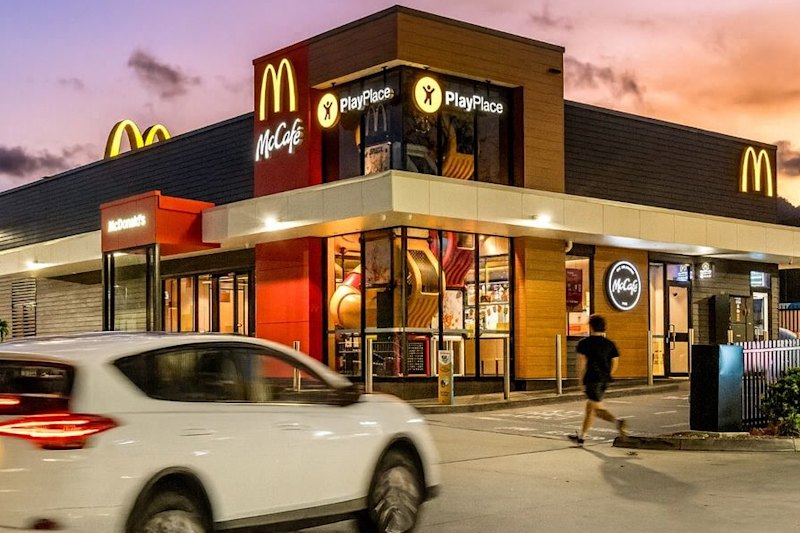
Melbourne syndicator Fawkner Property sold the ground lease of a McDonald’s in Cairns for $5.035 million at a yield of 3.38 per cent, while a Hungry Jack’s in Sydney’s north-west changed hands for $7.455 million at a 4.49 per cent yield.
Two outliers on the day include fast-food restaurant Oliver’s in Gundagai, NSW, which was sold for $4.05 million at a 9.44 per cent yield, while a retail centre in Bega on the NSW South Coast sold for $1.39 million at a 9.41 per cent yield.
Yosh Mendis, national partner at Burgess Rawson From CBRE, said fast-food, convenience, childcare and medical assets continued to perform really well, which had been a theme all year.
“Fast food is one of those markets that’s always performed. It’s always achieved similar yields. It’s always tightened as the products have got better and better,” he told The Australian Financial Review.
“You don’t get brand-new Hungry Jack’s, you don’t get brand-new McDonald’s very often. So when they come to the market, they certainly get a lot of investment interest.
“These are triple-A tenants, when you’re talking about the McDonald’s and the Hungry Jack’s of the world.”
In October, the freehold of a McDonald’s outlet in Melbourne’s south-east sold for $4.714 million at a super-low yield of 2.78 per cent, reflecting the investor appetite for such assets. The sale was one of the sharpest results ever achieved for a McDonald’s freehold investment nationally.
On Tuesday, Goodstart Early Learning in Idalia, south of Townsville, sold for $3.455 million on a 4.41 per cent yield. Little Seedlings in Wyee, in NSW’s Hunter region, also changed hands for $2.71 million at a 5.54 per cent yield.
Mendis said the rush from investors to buy across new convenience, retail, child care, fast-food and medical assets would continue in 2026, but supply would become more constrained.
“Because of the cost of construction and the cost of land at the moment, to get your hands on this brand-new product is very rare,” he said. “The more and more they sell, the less and less they become available.
“A lot of our fast-food owners have owned these properties for 30 years. People just call them recession-proof assets.”
It comes as retail property development across Australia is projected to drop by nearly three-quarters over the next five years, despite demand growing from global and national brands to find new stores in the nation’s CBDs.
Ben Martin-Henry, head of private assets research at MSCI, said transaction volumes across retail assets had picked up a lot this year.
“We have started to see some of the large institutions get back into the market,” he said. “Generally, when that happens, it means the market is coming off that bottom and we’ll start to see an increase in overall transaction volumes.”